
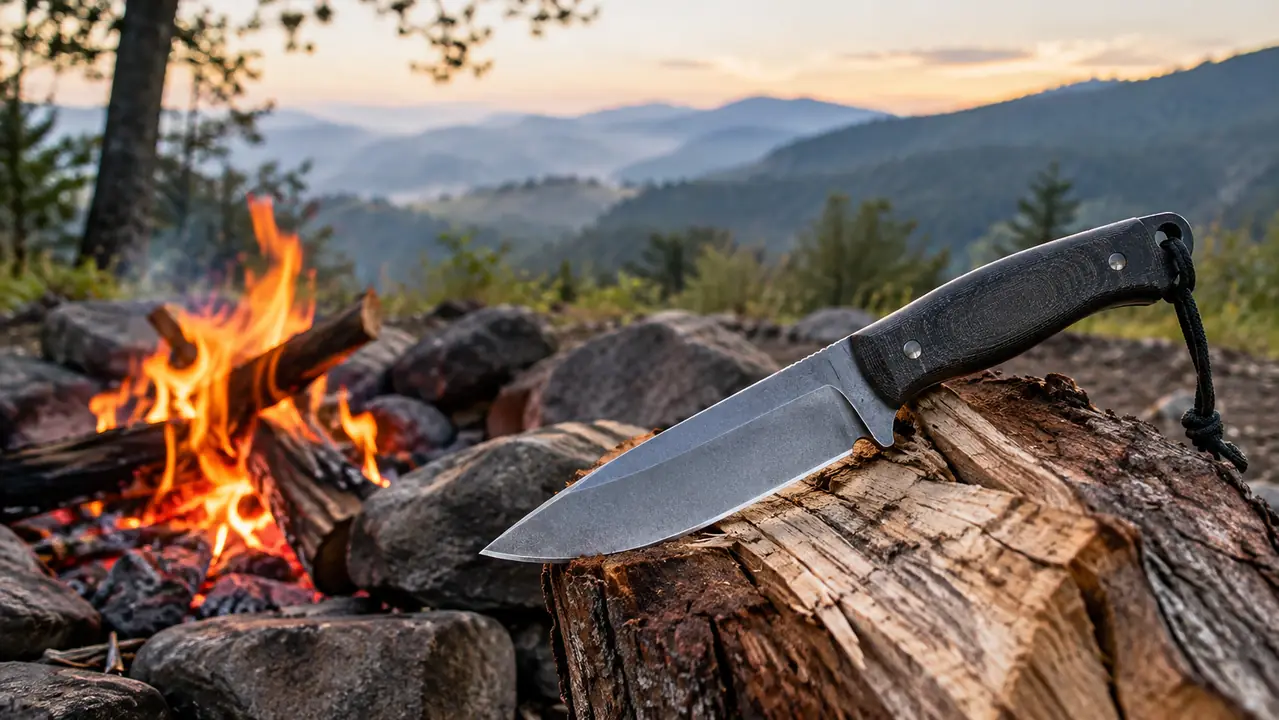
Two winters ago I bought a Morakniv Companion because I was tired of losing good knives. I had a folder in my pocket that cost five times as much, and I kept setting it down in the leaves, in the truck, on the porch rail, and walking off without it. I wanted something cheap enough to treat like a tool and good enough to actually use. The Companion has now spent two winters in my 2012 Tacoma, gone on every short overnight I do in the Smoky Mountain foothills, and split more kindling than I can count. It is not a perfect knife. It is the knife I reach for anyway.
The Quick Verdict
The Morakniv Companion is the best cheap fixed blade I have used in thirty years of carrying knives. It takes a scary edge, holds it through a weekend of camp chores, and costs so little that you will actually use it. The plastic sheath and the soft steel are the tradeoffs, and for most people they are worth it.
Amazon Check Today's Price →A fixed blade that earns its place in your kit
After two winters of kindling, cordage, food prep and truck duty, the Morakniv Companion is still the first knife I grab. Check today's price on Amazon and see why a knife that costs a fraction of the premium blades keeps beating them.
Amazon Check Today's Price on Amazon →How I've Used It
I am Wade Callister, 58, a retired electrical lineman who lives outside Knoxville, Tennessee. Thirty years of restoring power after storms taught me how long people can go without it, and an ice storm once left my own house dark for nine days. So I keep a 72-hour kit by the back door, and a few times a year I do a short overnight in the Smoky Mountain foothills to test gear. The Companion has come on every one of those trips since I bought it.
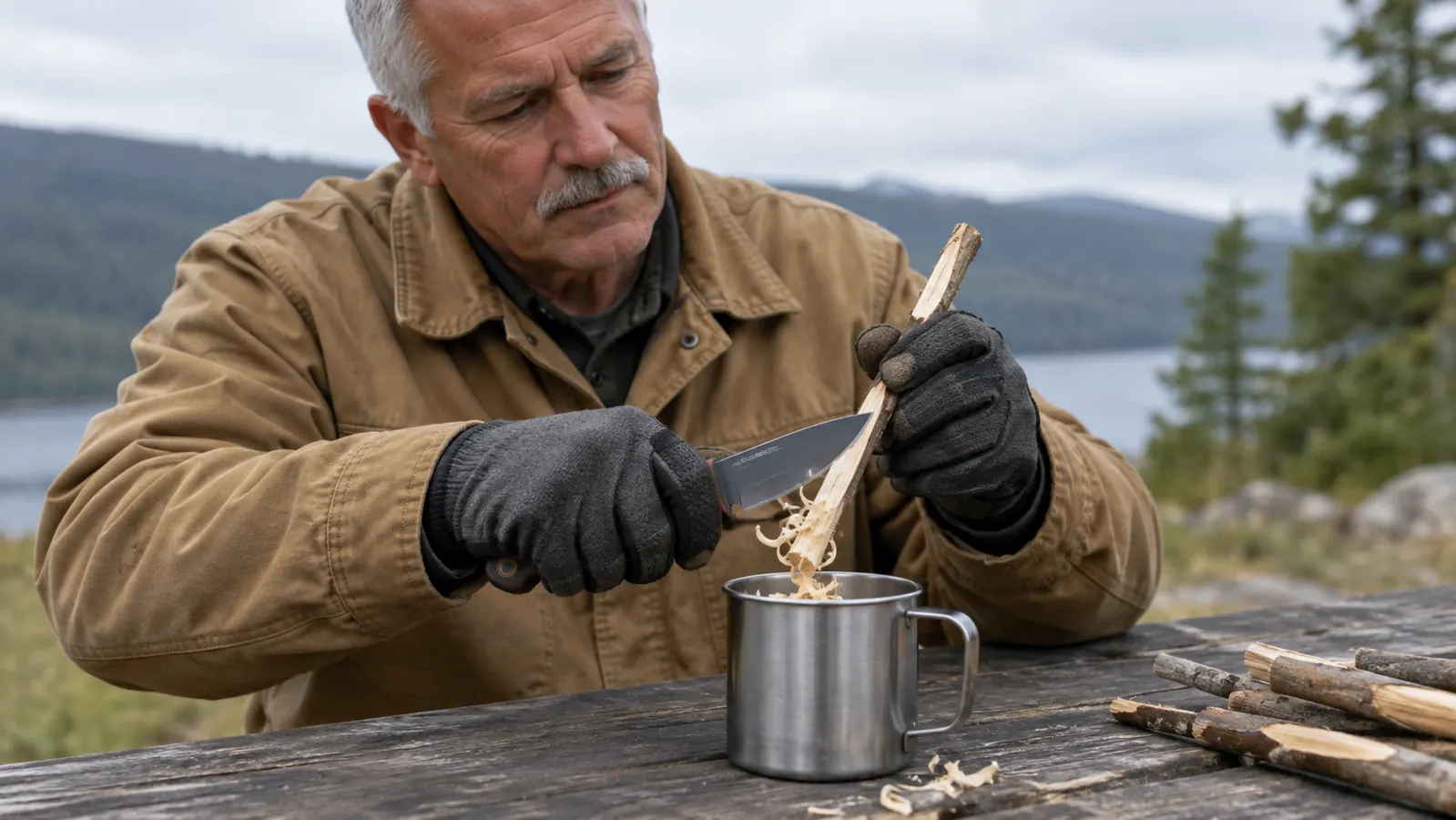
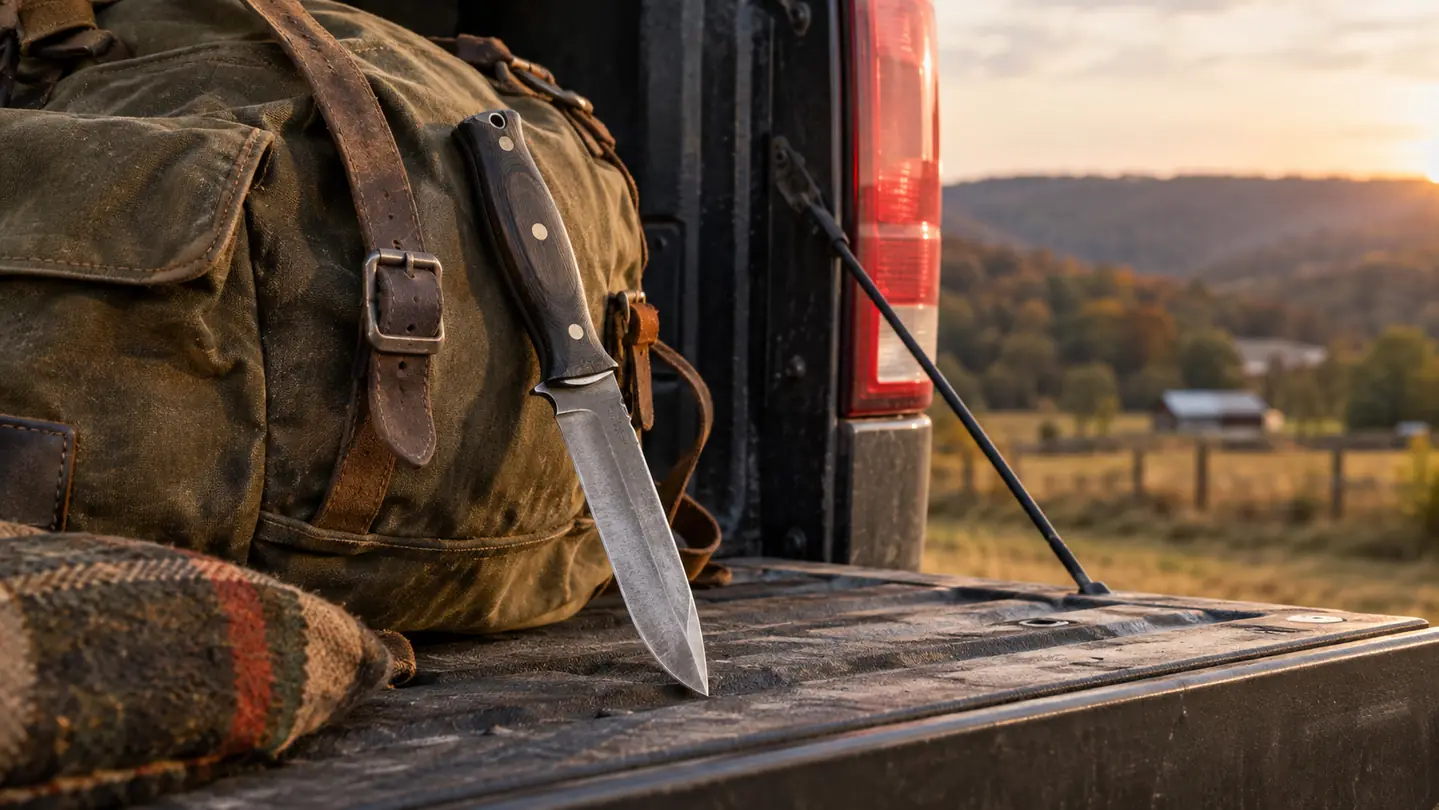
In two winters it has split kindling, shaved feather sticks, cut cordage, opened freeze-dried meal pouches, trimmed tent stakes, carved a tent peg or two, and once cut through a tangled mass of baling twine that had wrapped around a fence post. It has been dropped on gravel, left out in the rain, and carried in a truck door pocket where it rattled against a socket wrench for months. It has never failed me in a way that mattered.
The trip that sold me on it was a February overnight two years ago. We had a cold snap that put the fire danger high, and the ground was wet. I needed kindling from a dead oak limb, and the Companion batoned through the first splits without the edge rolling. That same night I used it to cut a strip of inner tube for a sling, trimmed the wick of a lantern, and opened two pouches of freeze-dried stew. It went from dry wood to wet rope to greasy food and back again, and the edge still caught on my thumbnail the next morning.
The blade is 4.1 inches of Sandvik stainless steel, and the handle is a molded polymer with a texture that stays grippy even when my hands are wet. The full tang runs through the handle, which is more than I expect at this price. The sheath is a plastic friction-fit that holds the knife securely, though it does not have a belt loop, so I carry it in a pack or a pocket.
The Edge That Keeps Coming Back
The first thing you notice about the Morakniv Companion is the edge. Out of the box it will shave hair off your arm. I have owned knives that cost ten times as much that did not come that sharp. The steel is on the softer side, which means it dulls faster than a premium steel, but it also means you can bring it back with a few passes on a sharpening stone or even the bottom of a coffee mug. I have never had to send it out or spend an hour with a diamond plate.
In practical terms, the edge lasts through a weekend of camp chores. I can split a pile of kindling, shave a dozen feather sticks, cut cordage, and prep a meal, and the knife will still slice paper cleanly at the end. It will not hold an edge like a high-end steel, and if you are the kind of person who wants to go a month without sharpening, this is not the knife for you. But for the rest of us, the ease of sharpening is a feature, not a flaw.
I have also learned that the Companion takes a very fine edge when you want one. I have used it to carve a turkey at a camp table, and it did the job better than the kitchen knife I left at home. The blade geometry is thin enough for food prep, which is not something I can say for most fixed blades in this price range.
In February I decided to test how long the edge would last under real use. I used the Companion for every cutting job on a three-day trip, no touch-ups, and kept a mental tally. It split maybe forty pieces of kindling, shaved a dozen feather sticks, cut a hundred feet of paracord into lengths, opened seven meal pouches, and carved two tent pegs. On the third morning it still sliced a tomato for breakfast. A premium steel would have held that edge longer, but I did not need it to. I needed a knife I could keep working with, and a minute on a stone fixed anything that slowed.
What It Does Well
The Morakniv Companion is a camp chore knife first. It excels at the jobs you actually do around a fire: splitting kindling, shaving feather sticks, cutting cordage, opening pouches, trimming stakes. The handle is comfortable for extended use, and the blade shape is versatile enough for both push cuts and draw cuts. I have used it to carve a tent peg, to cut a length of paracord, and to slice a block of cheese, all in the same afternoon.
It is also a knife you will actually carry. Because it costs so little, you are not afraid to use it, and because you use it, you get good with it. I have a drawer full of knives that are too nice to use, and they are useless. The Companion is the opposite. It is the knife I grab when I need to cut something and I do not want to think about it.
The grip is worth mentioning. The molded polymer handle has a texture that gives you a solid hold even when your hands are wet or cold. I have used it in a light rain to split kindling, and I never felt like the knife was going to slip. The finger guard is small but adequate, and the handle shape fills my hand well without being bulky.
The blade length deserves its own note. At 4.1 inches it is long enough for real work but short enough to control, and the curve lets you choke up near the handle for detail cuts. I have used it to strip wire, not because it is a wire stripper, but because it was the sharpest thing in reach and it did not slip. I have used the spine to strike a ferro rod, and while the handle blocks part of the strike surface, it works. None of this is what Morakniv advertises. It is just what a well-designed blade does when you carry it daily.
Where It Falls Short
The sheath is the weakest part of the package. The plastic friction-fit sheath holds the knife securely, but it does not have a belt loop, and the clip is not great. I carry the Companion in a pack or a pocket, which is fine, but if you want to carry it on your belt, you will need to buy a different sheath or rig your own. It is a minor annoyance, not a dealbreaker.
The steel is also on the softer side. It dulls faster than a premium steel, and if you are hard on knives, you will be sharpening it more often. I have found that a few passes on a sharpening stone brings it back, but it is something to know before you buy. The blade is also not stainless in the sense that it will never rust. I have seen a little discoloration after leaving it wet, but nothing that a quick wipe and a little oil did not fix.
The blade is also not a pry bar. I have seen people try to use a Companion to pry open a paint can or to dig a hole, and that is not what it is for. The blade is thin and will chip or bend if you abuse it. Use it as a knife, and it will last. Use it as a pry bar, and you will be buying another one.
One thing that caught me off guard was the clip. The plastic sheath has a belt clip molded into it, and it works fine on a pack strap, but it is not meant for a heavy leather belt. On a hike last spring the clip popped off my pack strap when I brushed against a tree, and I did not notice until I reached for the knife at camp. The knife was fine, sitting in the leaves where it fell, but it could have been lost. I now carry the sheath inside a pack pocket, and I would tell anyone else to do the same.
What I Liked
- Scary sharp out of the box and easy to bring back
- Comfortable, grippy handle that works wet or cold
- Full tang at a price that makes it a true beater knife
- Light enough to carry in a pack or pocket without noticing
- Versatile blade shape for camp chores and food prep
Where It Falls Short
- Plastic sheath has no belt loop and the clip is weak
- Softer steel dulls faster than premium blades
- Thin blade is not a pry bar and will chip if abused
- Not stainless enough to ignore after wet use
The Companion is the knife I grab when I need to cut something and I do not want to think about it. That is worth more than a fancy steel I am afraid to use.
Who This Is For
The Morakniv Companion is for anyone who wants a reliable fixed blade without spending a week's pay. It is for the person building a realistic emergency kit on a normal budget, the weekend camper who needs a knife that will split kindling and cut cordage, and the truck owner who wants a beater knife that will not hurt to lose. It is for the person who wants to learn to sharpen on a knife that forgives mistakes. It is for the person who wants a knife they will actually use.
If you are new to fixed blades, this is the knife to start with. It is cheap enough to learn on, sharp enough to teach you respect for an edge, and tough enough to survive the mistakes you will make. I have given three of them as gifts to people who were just getting into camping, and all three are still in use.
If your emergency kit is missing a knife, this is the one to put in it. A fixed blade does not rely on a pivot that can gum up, a lock that can fail, or a spring that can break. It is one piece of steel from tip to tang. For a 72-hour kit, that simplicity is worth more than a fancy mechanism. I keep my 72-hour kit by the back door, and the Companion sits in the top pouch.
Who Should Skip It
Skip the Morakniv Companion if you need a knife for heavy batoning or prying. The blade is thin and will not take the abuse that a thicker blade will. If you want to split logs by batoning, look at a thicker blade like the ESEE 4, which I have also tested. Skip it if you want a knife you can carry on your belt without buying a new sheath. Skip it if you want a premium steel that holds an edge for a month of hard use. And skip it if you want a knife that looks like it belongs in a tactical movie. The Companion looks like what it is: a working knife.
The Companion is also not the knife for you if you are the kind of person who loses knives. I am that person, which is why I bought it. But if you lose a knife every time you go camping, you will lose this one too, and you will have to buy another. At this price, that is a lesson you can afford to learn.
And if you are buying a knife to impress someone, skip it. The Companion is not a showpiece. It is a working knife that looks like it came from a hardware store, and that is exactly the point. The people who notice it are the ones who have used one.
Two winters in, I still reach for it first
The Morakniv Companion has earned its place in my kit. If you want a fixed blade that takes an edge, handles camp chores, and does not break the bank, check today's price on Amazon.
Amazon Check Today's Price on Amazon →