
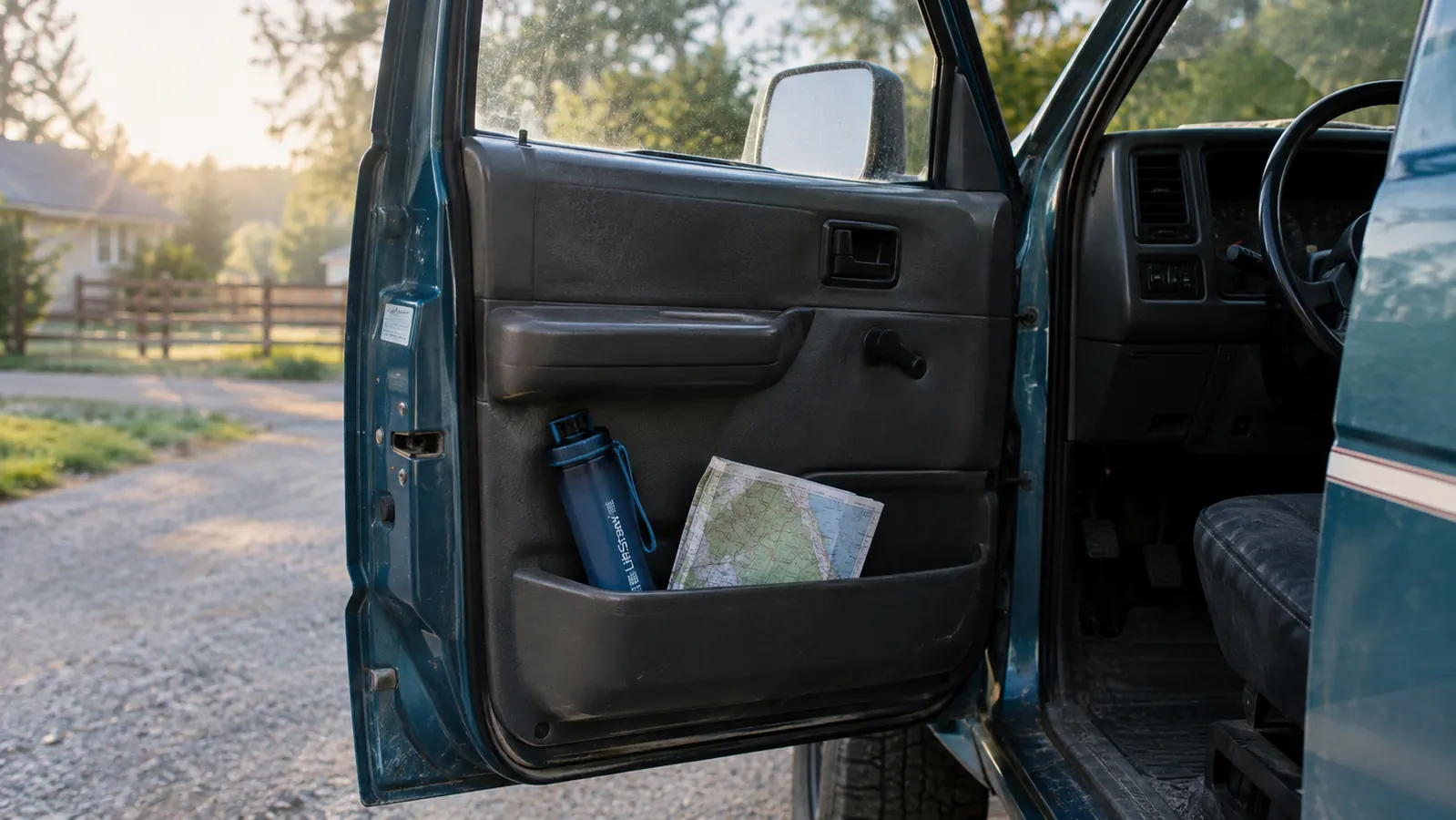
Two years ago I put a LifeStraw Personal Water Filter into the door pocket of my 2012 Tacoma. Carol said I was stocking for a disaster that was never going to happen. I get that. I spent thirty years restoring power after storms, though, and I have watched too many people run out of clean water while the lines were still down. Back in 2009 an ice storm left our house outside Knoxville dark for nine days. Since then I have kept a 72-hour kit by the back door, and the LifeStraw is part of that arrangement.
The filter is small enough to live in a truck door pocket and light enough that you forget it is there. No batteries, no pump, no moving parts. You sip from one end, or you attach it to a bottle if you have the right cap, and the water comes through clean enough to drink. In the two years since that first purchase, it has gone on half a dozen overnight trips in the Smokies, come out for a water main break that shut our neighborhood down for a weekend, and sat through Tennessee summers and mountain winters. It still filters today. That is the whole review in one paragraph.
The Quick Verdict
The best ten ounces of insurance in my kit. It filters creek water well enough to drink, lasts for years, and is simple enough that I actually carry it. It won't remove viruses or chemicals, and you have to keep it from freezing. Accept those limits and it's a buy.
Amazon Check Today's Price →One small thing that turns creek water into drinking water
No pump, no batteries, no ceremony. If you want a filter you will actually keep in a bag, this is the one I trust.
Amazon Check Today's Price on Amazon →How I've Used It
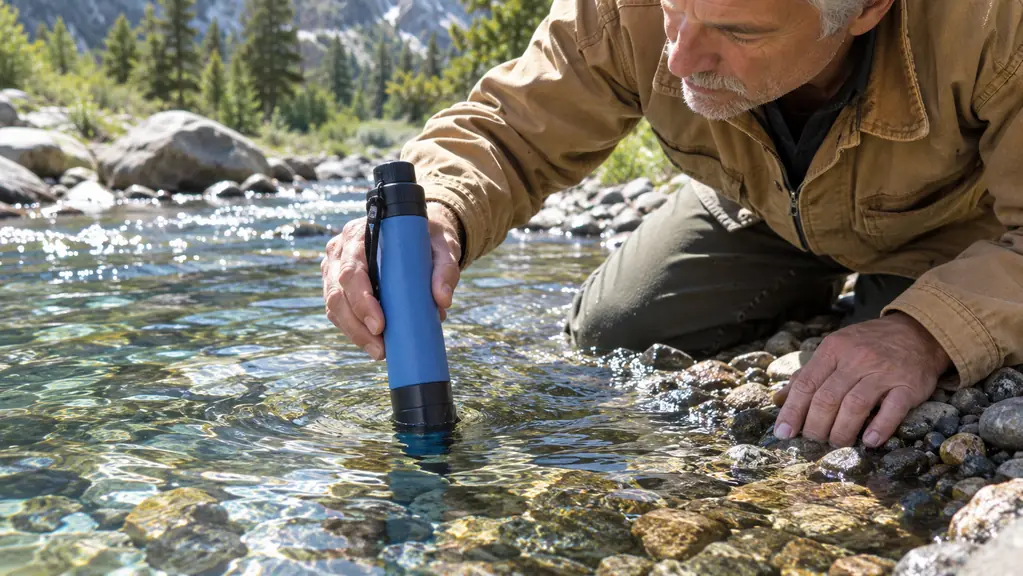
I test gear the way I live, which is not on a sunny demo day but during ordinary Tuesdays. The first run was a Tuesday in April. I hiked to a creek in the foothills that I would not normally drink from, one with silt and old leaves and a fair amount of shade. I knelt, put the intake end in the water, and drank through the mouthpiece until I was no longer thirsty. It tasted like creek water filtered properly, which means no grit and no aftertaste. I never got sick. I have repeated that scene maybe thirty times since.
The most useful run was not on a trail. After a water main break on our road, the county shut the lines off for a day and a half. We had jugs for cooking, but I wanted a way to use the spring-fed creek behind the property line. I took the LifeStraw down there, filled a clean pot, and Carol used that water for coffee. She admitted it was fine. That was the moment it stopped being a gadget in her eyes.
I have also used it on day hikes where I did not want to carry a full bottle. It rides in a hip pocket, and I stop at the first clear stretch to fill up. That is where it earns its keep, not as a main supply, but as a way to make a short stop productive.
Last summer I used it at a family picnic where the cooler ran dry and the only source was a spring a quarter mile down the hill. I walked over with a jug and came back with clean water. My sister-in-law asked if it was safe. I told her the truth, which is that I filter it and then I drink it, and I have for two years. She did not end up using it, but having the option meant nobody went thirsty.
What the LifeStraw Actually Does (and What It Does Not)
The filter element is a bundle of hollow fibers with pores rated at 0.2 microns. That is small enough to strain out bacteria, parasites, and the larger microorganisms that are the usual reason creek water makes people sick. LifeStraw also lists microplastic removal, which makes sense because the same pores catch that class of particles. The company rates a single filter for roughly a thousand gallons, and I believe it, because I have put maybe forty liters through mine and have not noticed any drop at all.
The honest limits matter more. It does not remove viruses. It does not remove dissolved chemicals, heavy metals, or salt. If the water has raw sewage, agricultural runoff, or mine drainage in it, this filter gets you partway to safe and no further. In those situations I would pair it with boiling or purification tablets, or carry a purifier certified for viruses. The LifeStraw is not a replacement for judgment. It is a tool that turns an unknown creek into a much less risky drink.
That thousand-gallon rating is worth pausing on. A filter that lives in a truck door pocket and never gets used is still ready the day you need it. The one in my bag has not been through a thousand gallons. It has been through two years of being there, and that is the point. Reliability is not about how many gallons you push through. It is about whether the filter still works the first time you need it.
How I Use It in the Field
I pick the clearest water I can find, then I think about it. A fast-moving stretch over gravel beats a stagnant pool every time. I look for a spot where the water is running rather than sitting, and where there is no obvious scum or livestock sign upstream. Then I put the intake end a few inches below the surface, tilt the mouthpiece down, and sip. The flow is a steady modest trickle, not a gusher. You pace yourself by sipping rather than gulping.
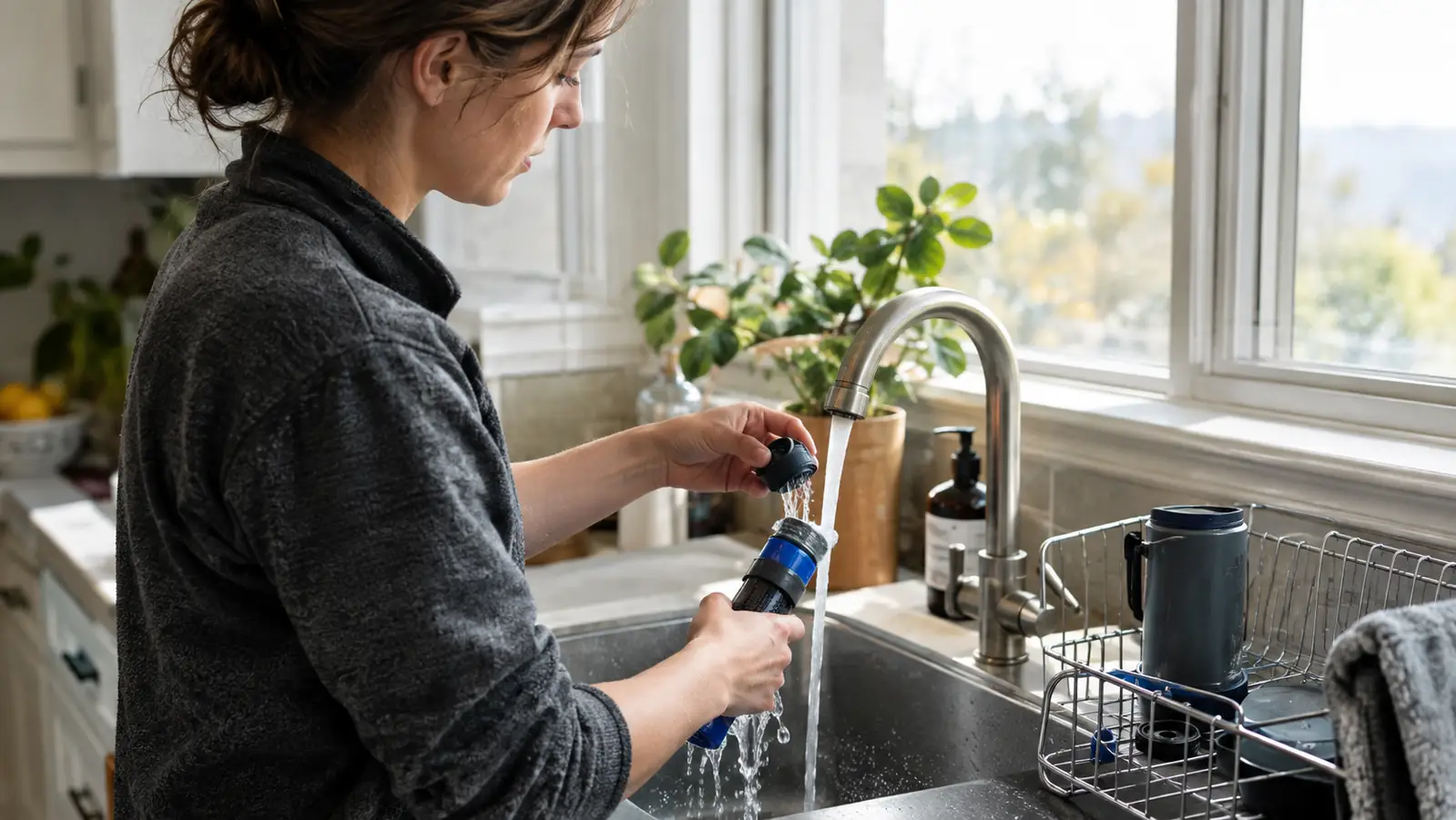
When the flow starts to slow, the membrane is clogging with silt, and the fix takes a minute. You take the filter out of the water, blow hard into the mouthpiece until water runs clear from the intake end, and rinse the outside. I have done this beside the creek and over a kitchen sink. It restores the flow every time. I have never had to replace the filter element, and I have never been sick from water that came through it.
One mistake I made early was trying to force it through coffee-colored water. It worked, but the taste came through and the filter slowed sooner. Now I wait for water to clear rather than forcing it. If the creek is running muddy after rain, I fill a pot and let it sit for half an hour, then filter the clearer layer off the top. That little step makes the LifeStraw last longer and the water taste better.
I also collect water when I see it, not when I need it. On a hot afternoon I will fill a bottle from a clean stretch even if I am not thirsty, because the next stretch may be muddy or dry. The LifeStraw makes that easy, and that is the real value of a filter like this.
Where It Struggles: Viruses, Chemicals, and Cold
The first gap is viruses. The 0.2 micron pores are too large to catch them, so the LifeStraw is a filter, not a purifier. If the local water may carry viruses, you have to boil, add tablets, or carry a purifier that is certified for viruses. For most of my use in the southeastern United States that gap is acceptable, because the sanitation infrastructure upstream is generally good. I still know the gap is there.
The second gap is chemistry. The filter does not pull out fuel, pesticides, or heavy metals. You should not draw from water near a mine, a farm field right after spraying, or a flooded industrial area. In those cases the right answer is stored water, not creek water through any filter. The third gap is freezing. If the hollow fibers freeze while they are wet, they can crack and let contaminants through. In winter I keep the LifeStraw in a pouch close to my body, and I never leave a wet filter in the truck overnight below freezing. It is a small habit, and it keeps the tool trustworthy.
If you want one blanket rule, here it is: in an emergency, the LifeStraw is far better than nothing, but a shelf of stored water is better than both. The filter is a bridge between the moment the tap stops and the moment you can get real water. I keep jugs in the garage for the same reason I keep the LifeStraw in the truck. The filter is not an excuse to skip storage.
Why It Still Lives in the Truck Bag
A bigger filter will move more water, faster. If I were filtering for a family for a week, I would want a gravity system or a hand pump, and the LifeStraw would be the backup rather than the main event. But my truck bag is a get-home bag for one person. Its job is not to supply a campsite. It is to make sure that if the tap stops working or the roads close, I can walk to the nearest creek and drink within an hour. For that job, small and boring wins.
I have tried the alternatives reviewers love. Squeeze-style filters are excellent, but they are bulkier and need clean bottles and a little more handling. Chemical tablets are light and cheap, but they leave a taste and make you wait. Pump purifiers are faster, but they are heavier and have more to break. Each has a place. For the truck door pocket and the 72-hour kit, the LifeStraw is the one I grab again and again. It has never let me down.
The clearest proof of its place is what I take out of the bag when the season changes. The LifeStraw never comes out. The hand warmer goes, the extra gloves go, the filter stays. It is not the most used thing in my kit. It is the thing I would replace first if it disappeared, and that is the real definition of essential.
What I'd Do Differently Next Time
If I were building my kit today, I would buy two of these instead of one, and I would put the second in the 72-hour kit by the back door before I bought anything else. They are inexpensive enough that the only real cost is remembering to pack it. I would also practice with it in clear water before I needed it, the way I did on that Tuesday in April. There is nothing tricky about the LifeStraw, but confidence comes from having done it once.
I would read the freezing warning earlier. I used mine through two winters before I understood how careful I had to be about leaving it damp overnight in the truck. Nothing broke, but now I push it deeper into the kit in cold weather. That is the kind of lesson you only get by carrying gear for a long time, and it is the reason I write the honest version of these reviews.
One more thing I would change: I would not wait for a water main break to explain to Carol why the filter is in the house. I would take her to the creek one afternoon and show her. Gear you have to justify in a crisis is gear you will not have with you. I missed that for a year, and the coffee pot convinced her faster than I ever did.
What I Liked
- Small enough to live in a truck door pocket until you need it
- No batteries, no pump, no moving parts to break
- Filters bacteria, parasites, and microplastics down to 0.2 microns
- Rated for roughly a thousand gallons, so one filter lasts for years
- Inexpensive enough that you can buy two and not wince
Where It Falls Short
- Does not remove viruses, so it is a filter, not a purifier
- Does not remove chemicals, heavy metals, or salt
- Flow rate is a steady trickle, not a stream
- Must be kept from freezing while wet, or the fibers can crack
- Not built to supply a family; it is a personal tool
Two years in a truck door pocket, maybe forty creek crossings, and I have never once been sick from water that came through it. That is the whole review.
Who This Is For
For one person who wants a lightweight filter in a get-home bag, a truck, a 72-hour kit, or a day pack, the LifeStraw is hard to beat. It suits the hiker who wants insurance rather than a hobby. It suits the commuter who keeps a bag in the trunk and wants a breakdown, a storm, or a closed road to end in waiting, not dehydration. It suits anyone who would rather buy one small thing and forget about it than learn the ritual of a pump. If you want to be able to walk up to a decent-looking creek and drink within a minute, this is the tool.
Who Should Skip It
If your water plan covers a whole family, skip it. You want a gravity filter or a countertop system that fills bottles for more than one person. If you are traveling somewhere viruses are common in the drinking water, this is not your only tool; you need a purifier, boiling, or tablets. If you expect to filter water that might contain chemicals or heavy metals, stored water is the safer answer. And if you know you will leave a wet filter in a freezing car, either commit to winter care or choose something that tolerates frost. The LifeStraw is honest about its limits, and you should be too.
The ten-ounce insurance policy I keep in the truck
Two years of creek stops, one water main break, and not one bad cup of coffee. If you want a filter you will actually carry, this is the one.
Amazon Check Today's Price on Amazon →