
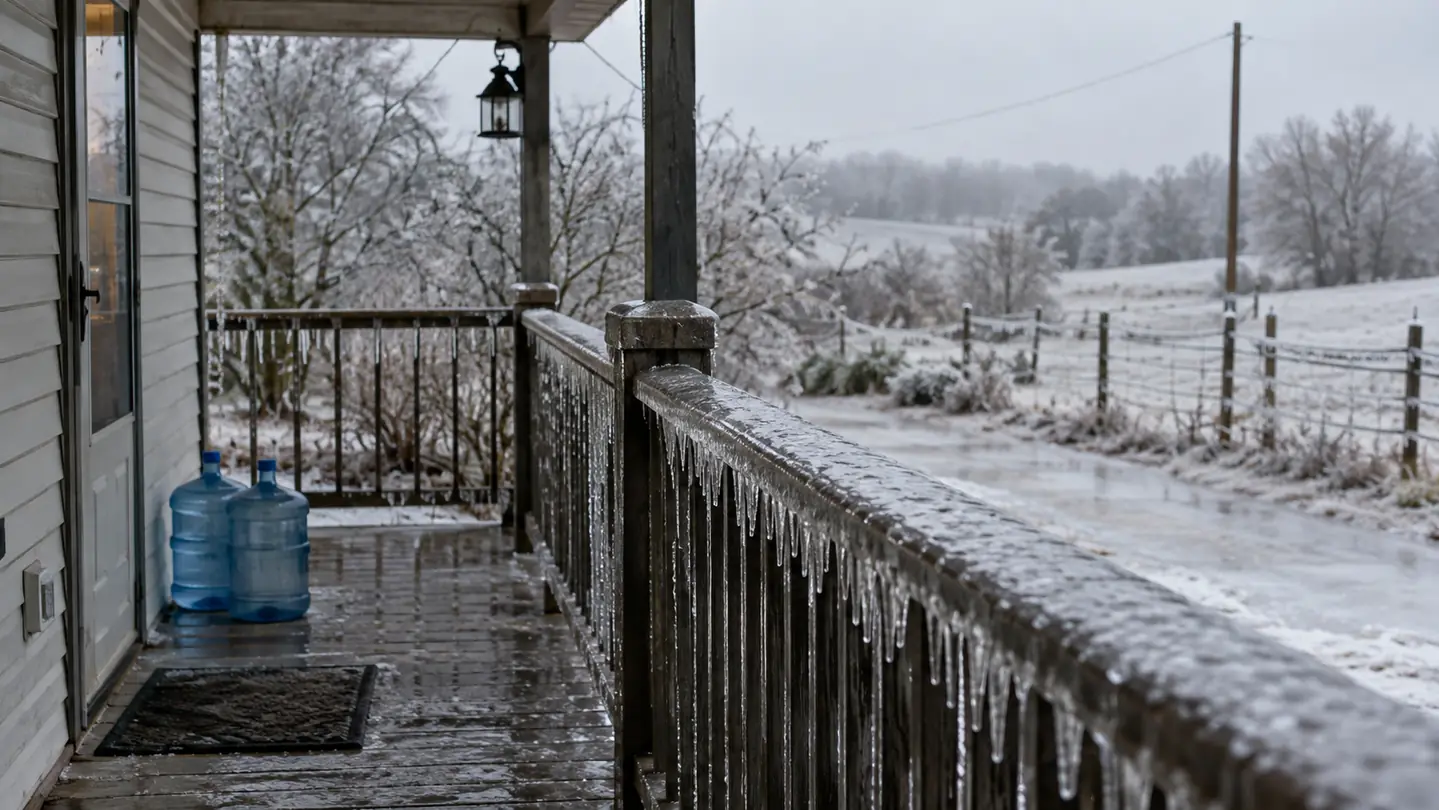
The ice storm hit on a Tuesday night in January. I spent thirty years as a lineman putting power back on after storms like that one, so I knew what was coming: days of darkness, frozen pipes, and a long wait for help. What I didn't expect was for the water to be the part that scared my wife Carol. By Wednesday morning the taps were dry, and the LifeStraw from our 72-hour kit was sitting on the kitchen counter, ready to earn its keep.
Most people outside Knoxville get water one of two ways: a well with an electric pump, or city lines that freeze when the ground shifts. We have a well, and the pump is useless without power. When the lights went out at 2 AM, we had whatever was left in the pressure tank, maybe ten gallons. That carried us through Tuesday. By Wednesday I was walking to the creek at the back of the property with two five-gallon jugs, and the LifeStraw was in my coat pocket.
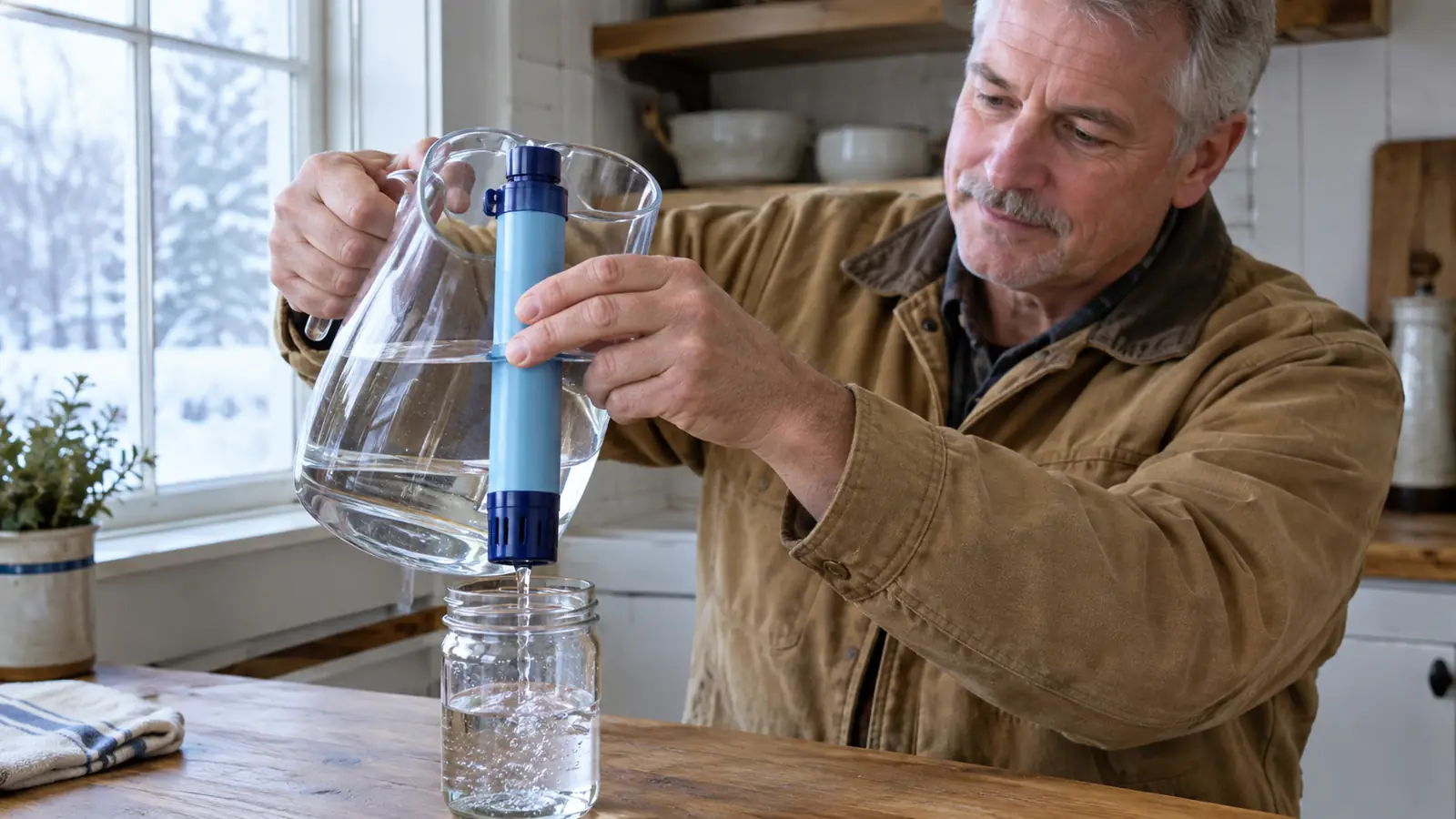
I'll be honest, I bought the LifeStraw years earlier because it was cheap and light and I wanted something in the kit that could handle water in a pinch. I'd used one on overnight trips in the Smoky Mountain foothills, mostly so I wouldn't have to carry a heavy filter. But a mountain creek in August is not the same as a creek in January with ice on the banks and your wife watching you fill a jug. I stood there a minute and checked the instructions printed on the tube, then put the bottom end in the water and drank.
Here's what the rest of the week looked like. Every morning I filled the jugs at the creek and carried them home. Carol filtered our drinking water through the LifeStraw into a big pot, a bottle at a time, and we used the unfiltered creek water for washing dishes and flushing the toilet. It was slow, simple work, and it never failed once.
That first drink was cold and tasted like creek water, which is to say it tasted like nothing a person should drink without thinking about it. But it was clean. We filled the pot, took it inside, and Carol and I looked at each other the way you do when a plan you barely remembered having actually works. From then on, the routine was simple, and simple is what you want when the temperature is in the teens.
Nine days without power, two people drinking every day, and the LifeStraw never missed a beat.
The filter that carried us through nine days without water
If you keep a 72-hour kit, or you just want a little insurance in the glove box, this is the piece of gear I'd add first. Nothing to charge, nothing to break, nothing to figure out in the dark.
Amazon Check Today's Price on Amazon →Now, I'm not one for the prepper aisle at the big box store. A lot of that stuff is made to look tough for a camera and never gets taken out of the package. The LifeStraw is the opposite. It's a plastic tube with a filter inside. There's nothing to charge, nothing to replace, nothing to figure out when your hands are cold. You put the bottom end in the water and drink. That's the whole operation.

A few things I learned that week. First, filter the water as you use it, not all at once. The LifeStraw is rated to handle a lot of gallons, and it handled everything we put through it, but I liked knowing each bottle was fresh. Second, keep it where you can grab it in the dark. Ours lives in a canvas pouch on top of the 72-hour kit, and after that week it stays in the same spot, always.
Third, this isn't the kind of gear that saves you in a movie. It's the kind that keeps you from making a dumb decision in real life. When people get desperate, they drink whatever is in front of them, and that's how you end up sick on top of everything else. Having the LifeStraw meant we never had to choose between being thirsty and being sorry. That peace of mind is worth more than any piece of gear in the kit.
I also learned to think about water before the storm, not during it. If you have a well, a generator or a few days of stored water buys you options. If you're on city water, know where the shutoff is and keep a filter handy for when the lines freeze. The storm doesn't care about your plans. It just shows up, and the people who come out the other side are the ones who did their thinking on a sunny day.
What I'd Tell You If We Were Sitting at My Kitchen Table
If we were sitting at my kitchen table with a cup of coffee, here's what I'd say. You don't need a basement full of gear to be ready for a bad week. You need a few things that work, that you know how to use, and that you can grab in the dark. A LifeStraw in the glove box or the back door kit is about the cheapest insurance I know. Buy one, put it somewhere you'll remember, and then forget about it until the day you need it. That day may never come. But if it does, you'll be glad you spent the few minutes it takes to understand how it works.
And one more thing. Test it once before you need it. Fill a glass from the tap, run a bottle through the straw, and see how it feels. It's not complicated, but you want the first time you use it to be in your kitchen, not in the dark with the ice coming down. That little bit of practice is the difference between owning gear and trusting it.
The cheapest insurance in my 72-hour kit
One small filter, no batteries, no moving parts, and it turned a frozen creek into drinking water for nine days. That's the kind of gear worth keeping by the back door.
Amazon Check Today's Price on Amazon →