
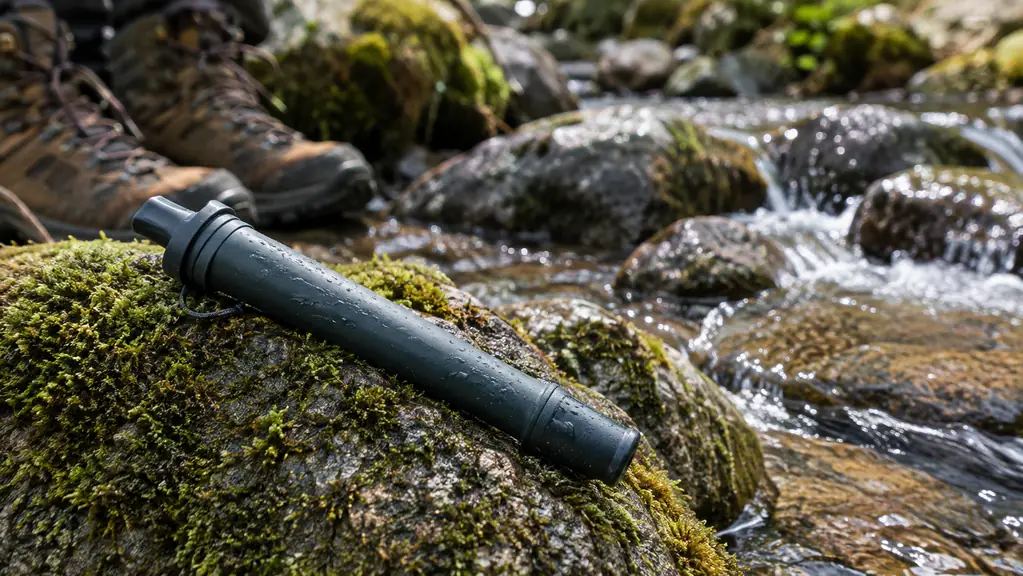
I have carried a LifeStraw in my get-home bag since the winter of 2019, and I have carried a Sawyer Squeeze on every overnight trip into the Smoky Mountain foothills for the last two years. They are the two filters people ask me about most, usually in the same sentence, usually because they are trying to decide which one earns the permanent spot in their own pack. People ask me at the hardware store, at church, and at the feed store, and the question is always the same: which one do I buy first? I have a bias I should put on the table before I go any further. An ice storm once left our house dark for nine days, and the well pump died with the power. That experience turned water filters from a camping accessory into something closer to insurance, and it is the reason I own more than one. Short answer: the LifeStraw is the better emergency filter for the way most families actually build a kit, and the Sawyer Squeeze is the better camp filter for people who treat water as a daily chore. I will show you the exact math I used to reach that conclusion.
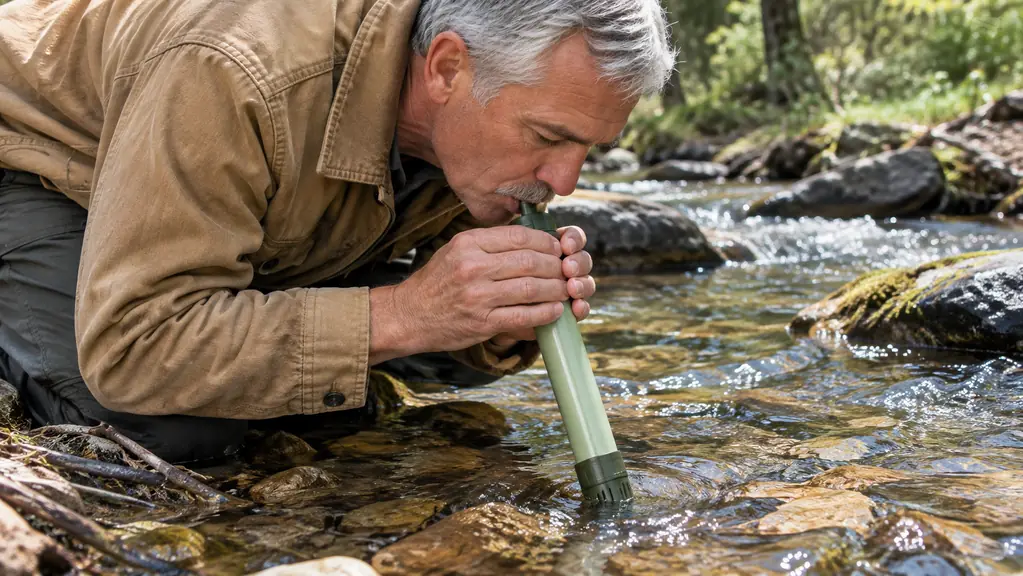
I tested both on the same creeks, the same weekend, with the same quart jar of water I scooped from a crossing on the Middle Prong of the Little River that had gone murky after an overnight rain. I drank through the LifeStraw directly from the source, kneeling on the bank the way I would in a real situation. I filtered the same water through the Sawyer into a clean bottle. Then I swapped them and did it again, and then I did it a third time with a stopwatch in my hand. I weighed both on the kitchen scale before I left the house: the LifeStraw at 2.1 ounces, the Sawyer filter at 3.1. I also tested the one scenario nobody likes to talk about, cold weather, and one of the two filters failed me on a cold November night. I will get to that story in the upkeep section, because it changed how I think about both of them. The differences between these two filters show up fast once you use them back to back. The flow rate surprised me, the upkeep surprised me, and the way each one handles winter surprised me most of all.
| LifeStraw | Sawyer Squeeze | |
|---|---|---|
| Price | Roughly a third to half the cost of the full squeeze kit | Costs two to three times as much for the full kit |
| Weight | About 2 ounces, disappears in a pocket | 3 ounces for the filter alone, more with syringe and bags |
| How you drink | Suck straight from the source, no bottle or bag required | Squeeze water through the filter into a bottle or drink bag |
| Flow rate | Steady sip, fine for one person drinking direct | Fast squeeze, fills a bottle in under a minute |
| Water storage | None, you drink as you go | Fills a bottle or bag so you can carry clean water |
| Upkeep | No routine maintenance, blow it out when you get home | Backflush with the syringe after heavy use and before storage |
| Field cleaning | None in the field, just the mouthpiece blow-out | Syringe restores flow on the trail in minutes |
| Best for | Emergency kits, day hikes, grab-and-go readiness | Group trips, base camping, longer backcountry stays |
Where LifeStraw Wins
The LifeStraw wins where it matters most to the person building a realistic emergency kit on a normal budget: cost, simplicity, and the fact that it works the moment you take it out of the package. It filters up to 1,000 gallons and removes 99.999999 percent of bacteria and 99.999 percent of parasites, including Giardia, which is the one you are most likely to meet in a Tennessee creek. Let me put that 1,000-gallon number in context. During the nine days our house was dark, Carol and I used filtered water for drinking and cooking, about a gallon and a half a day between us. That is roughly 14 gallons for the whole outage. The LifeStraw's rating is more than seventy times what we needed. The Sawyer's 100,000-gallon rating is a real advantage, but it only matters if you are filtering for a group or living off the filter full time. My own straw has been in the truck, the 72-hour kit by the back door, and on a float trip down the lower Clinch River without ever being babied, and it still draws clean water today. I have used it on clear mountain creeks and on a farm pond that had gone green with algae, and it has never given me a bad sip. The flow slows when the water is silty, sure, but it keeps filtering, and that is the whole job.
The upkeep difference is the one that convinced me, and it is where the cold-weather story belongs. The Sawyer needs to be backflushed with the little syringe it ships with, and if you let it freeze with water in it, you can crack the hollow fibers and ruin the filter. I learned that the hard way last November. I came home from a wet trip, rinsed the Sawyer, and left it in the Tacoma instead of bringing it inside. The temperature dropped to 19 degrees overnight. The next morning the flow had slowed to a trickle, and no amount of backflushing brought it back. I replaced it. The LifeStraw is not immune to freezing either, and I do not want anyone reading this to think it is. But its design is simpler to protect and easier to inspect. There is no squeeze bag to crack, no syringe to lose, and when I get home from a trip I dry it by blowing hard through the mouthpiece, the way the instructions say. For a filter that might sit in a go bag for a year before it gets used, the LifeStraw is the one I trust to be ready. It has no schedule. It does not need a field cleaning kit. It does not ask you to remember which bag is the dirty one and which is the clean one. It just sits there until you need it, and when you need it, it works. That is the whole argument for the LifeStraw in an emergency kit, and it is the reason it wins the upkeep row in the table above.
Where Sawyer Squeeze Wins
I will hand the Sawyer its wins, because it earns them. The flow rate is genuinely better, and I have the stopwatch numbers to prove it. At the same creek crossing, the Sawyer filled a 32-ounce squeeze bag in about 45 seconds. Drinking a liter through the LifeStraw took me close to four minutes of steady sucking, and my jaw was tired by the end. That difference does not matter much when you are kneeling by a creek and just need a drink. It matters a great deal when you are at a base camp and want to fill a two-liter bottle for cooking, washing dishes, and making coffee. The Sawyer does that in about two minutes of squeezing. The LifeStraw would have me lying on my belly sipping for a quarter of an hour. The Squeeze also stores water, which matters when you want to treat water for the whole group or carry a clean bottle back to camp instead of walking to the creek every time. On our last overnight in the foothills, Carol and I filtered two liters at dinner and another two for breakfast coffee and oatmeal, and the whole job took maybe five minutes. With the LifeStraw, that same water would have been twenty minutes of passing the straw back and forth. That is the real difference between a filter you drink from and a filter you work with.
The Sawyer is the better tool for the backcountry trip where water is your job for the day. It threads onto standard water bottles, so I have screwed it onto a disposable soda bottle and a Gatorade bottle, and filtered straight into each one. That means you do not have to carry its bags at all if you do not want to. You can filter into whatever bottle you already own. The included syringe makes field cleaning possible, and that matters more than people think. On an overnight trip last April I had to draw from a pool that had gone silty after a rain. The Sawyer slowed to a drip within a liter. Two minutes of backflushing with the syringe pushed the silt out the intake side, and the flow came right back. The LifeStraw has no equivalent field cleaning. You can blow hard through the mouthpiece to clear it, but you cannot force water backward through the fibers the way the syringe does. If you filter from silty water all week, the Sawyer is the one you can bring back to life on the trail. For the person who camps every other weekend and filters a gallon or two each trip, the Squeeze is the right call and I would not argue with it. It costs more and it asks more of you, but it pays you back in speed and in the ability to hand someone a full bottle of clean water.
The filter I keep in my own get-home bag
After two years of carrying both, the LifeStraw is the one that stays in the truck and the one I hand to a friend who asks where to start. It filters to the same standard, costs less, and never needs a squeeze bag or syringe to do its job. One less thing to think about when the lights go out.
Amazon Check Today's Price on Amazon →
Who Should Buy Which
Buy the LifeStraw if you are building an emergency kit for the family, keeping a filter in the car, or packing a day bag and want one simple tool you will never have to think about. My 72-hour kit by the back door holds two of them, one for me and one for Carol, because the ice storm taught me that the thing we both needed was drinking water we could get without electricity. Buy the Sawyer Squeeze if you are filtering water every weekend, treating water for a group, or spending multiple nights in the backcountry where filling bottles fast is the whole point. Most families I talk to want the first thing. They are not planning a thru-hike. They are planning for a power outage, a flooded road, a storm that keeps them home for a week. For that job, the LifeStraw's lack of parts is a feature, not a limitation. You do not have to learn which bag is dirty, you do not have to carry a syringe, and you do not have to remember to backflush it before you stash it in the closet. It does that job for less money and zero fuss. And when the power is out and the creek is running, simple wins.
My own setup is both, because they serve different jobs. The LifeStraw lives in the center console of the 2012 Tacoma, where it has been since 2019, and a second one lives in the 72-hour kit by the back door. The Sawyer lives in my overnight pack for the Smokies trips, where I know I will be filtering a gallon or more each day. I will be honest about the cost question too, because I know it is the real question for most families. A LifeStraw costs a fraction of what the full Sawyer kit costs once you add the bags and the syringe, which means you can put a filter in the car, one in the kitchen kit, and one in each day pack for less than the price of one complete squeeze system. That spread matters when you are equipping a household, not a single hiker. If you only buy one, start with the LifeStraw. Add the Squeeze later if you find yourself camping more than you expected, because that is the point where its flow rate starts to earn its keep. And if you already own a Squeeze, keep it. The point of this comparison is not to talk you out of a filter you already have. It is to help you decide which one to reach for first when you are building a kit from scratch.
Start with the one that is always ready
The LifeStraw is the filter I reach for when I need water and I need it now, and it is the one I recommend to anyone building their first kit. It is light, simple, and ready straight out of the package.
Amazon Check Today's Price on Amazon →