
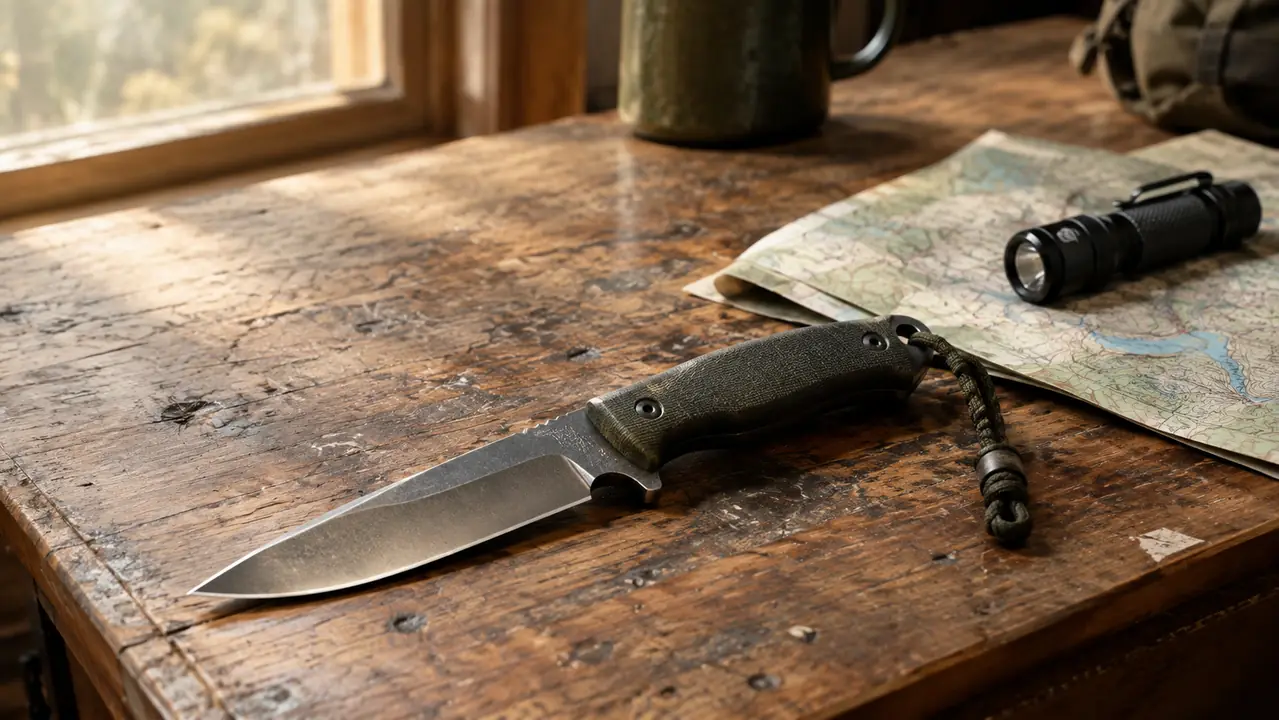
I have a confession to make. For years I told people the Morakniv Companion was the only knife a beginner needed, and I meant it. Then I spent a season actually pushing one hard, and I found the catch. The Companion is a genuinely good knife, maybe the best value in outdoor gear. It is also a knife with real limits, and nobody in the comment sections wants to talk about them. So here is the honest version, from a guy who has carried one for months and finally admits what it cannot do.
I am Wade Callister. I spent thirty years as a lineman restoring power after storms, and I have seen what happens to people who are not ready. These days I test gear the same way I used to work: I use it until it breaks or until I trust it. The Companion has been in my pack for the better part of a year, through overnight trips in the Smoky Mountain foothills and a lot of afternoons in the backyard. Carol and I keep a 72-hour kit by the back door, and the Companion is the knife that lives in it. It also rides in my get-home bag in the Tacoma year round, which means it is never far from me. This is what I actually found when I stopped treating it like a collectible and started treating it like a tool.
The Quick Verdict
The Morakniv Companion is the best budget fixed blade you can buy, as long as you treat it as a fine-edged tool for camp chores, not a pry bar or a baton.
Amazon Check Today's Price →The knife that belongs in every starter kit
Here is the thing about this knife: it arrives shaving sharp, it stays sharp, and it sharpens in minutes when it finally dulls. That is why the Companion is the first knife I recommend to anyone building a kit.
Amazon Check Today's Price on Amazon →How I've Used It
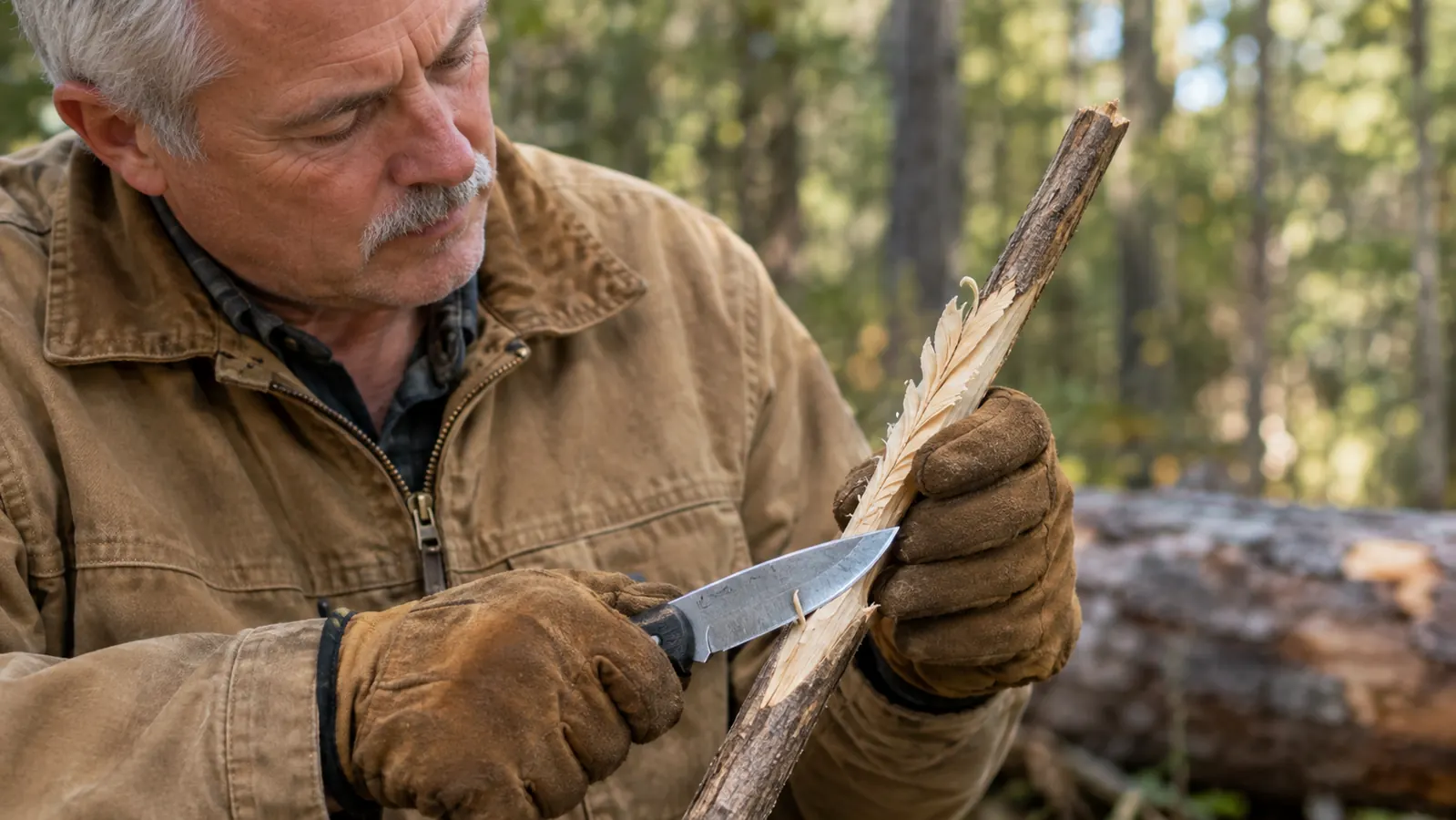
I did not baby this knife. Over the past year I used the Companion for the usual camp chores: slicing rope, opening stubborn packages, cleaning trout, making kindling, and carving more feather sticks than I can count. I also did things I would normally do with a heavier blade, just to find the edge of what it can take. I batoned small dead branches, pried a staple out of a pallet, and once used the spine to strike a ferro rod until my wrist gave out. What I learned is that the Companion is happiest when it is cutting, and that is what I use it for most.
The blade is 4.1 inches of 12C27 stainless steel, and Morakniv grinds it with a scandi edge that arrives shaving sharp. The whole knife runs about 8.7 inches long and weighs around four ounces with the sheath, light enough that I have heavier flashlights in the house. Out of the box it sliced paper and shaved arm hair. After a month of steady use it still cut through paracord and cardboard without complaint. The handle is a molded polymer with a textured grip, and even wet or gloved, it stayed put in my hand. The blade is full tang, which surprised me for a budget knife, though the tang is thin and the polymer handle hides most of it.
The sheath is where the honesty has to start. The plastic sheath holds the knife securely and clicks into place with a sound you can feel. But it is molded plastic, it rattles a little on a belt, and the belt loop is not built for hard use. After a few months the loop stretched, and I stopped carrying the Companion on my belt. It rides in my pack now, which is fine, because that is where I want it anyway. The rattle is a small thing, but it is the kind of small thing you notice in a quiet camp.
The day that sold me on this knife was a cold Saturday in early November. Carol and I drove the Tacoma to a trailhead in the Smoky Mountain foothills, and by the time we stopped for lunch a front had moved in. Rain came down hard for two hours. Everything was wet: the firewood, the ferro rod, my gloves. The Companion was the only knife I had, and it did everything I asked without a single complaint. I whittled the wet bark off a dead branch, split a dozen thumb-thick sticks for the stove, and sliced cheese and summer sausage for lunch without rinsing the blade. That evening I cleaned two small trout at the creek, and the thin blade made that job easier than any thick knife I own. I hung the knife on a nail in the tent overnight, and it was dry and rust-free in the morning. That is the unglamorous work a camp knife actually does, and the Companion does it well. The only thing it could not do was help me get the fire going: the stainless spine threw weak sparks off the ferro rod, and I burned through most of a magnesium bar before the tinder caught. That moment is the whole review in miniature, a great cutter with one clear limitation.
What Nobody Tells You About the Thin Spine
Here is the catch I mentioned. The Companion's blade is about 0.1 inches thick at the spine, roughly 2.5 millimeters, which is thin for a fixed blade. Most hard-use bushcraft blades run 4 millimeters or thicker at the spine, and that extra metal is what lets them take a pounding. That thinness is exactly what makes the Companion such a good slicer. It glides through food, rope, and wood fibers in a way that thicker blades cannot match. But it also means the knife has a ceiling. If you bear down hard on the spine, or twist the tip in a cut, you can feel the blade flex. I have not broken mine, but I have stopped doing the things that made it flex. That flex is the reason this will never be my only knife on a hard trip, but it is also the reason it will always be in my pack.
The internet is full of videos of people batoning logs with a Companion. I tried it, and I will tell you plainly: it works on small dry branches, and it is a bad idea on anything bigger. The edge is so acute that it bites deep, and then the thin blade wants to bend. A knife that bends is a knife that can snap. I have seen the pictures of snapped Companions, usually right at the handle, and every one of them was doing work the knife was not built for. For splitting kindling, I reach for a hatchet or a heavier blade. The Companion is a cutter, not a wedge.
The tip is another honest weak point. It is fine for piercing and detail work, but it is not a pry bar. I have seen people use a knife tip to open paint cans and scrape gaskets. Do not do that with this knife. The tip will chip or roll, and then you will be sharpening a knife that was perfect an hour earlier. I keep a screwdriver in the truck for prying, and that is the right tool for the job.
I found the ceiling on a Tuesday afternoon in the backyard. I had a length of seasoned oak, maybe two inches across, and I wanted to split it into kindling without walking to the shed for the hatchet. The Companion bit in on the first strike. On the second, I felt the blade give, a springy flex that ran from the tip back through the handle. I stopped right there. The edge was fine, but I knew that if I kept going, one bad strike on a knot would fold the tip or snap the blade. I walked to the shed, got the hatchet, and finished the job. That is the honest summary of this knife: it will tell you its limits, and you should listen the first time.
The Companion is a cutter, not a wedge. It will slice through rope, food, and wood fibers all day. It will not split a log or pry a staple without complaining.
The Steel and the Edge
Morakniv uses 12C27 stainless steel for the Companion, and it is a smart choice for a budget knife. It resists rust well enough for camp use, takes a keen edge, and sharpens easily on a flat stone. I have left it damp overnight by accident and found only a faint spot that wiped off. I have also sharpened it twice in a year, and both times it took a working edge in under ten minutes.
The scandi grind is the reason. A full flat grind that meets the edge at a single bevel is simple to maintain because you lay the whole bevel flat on the stone. There is no guessing an angle. That is a huge deal for a beginner, and it is the main reason I tell people to start with a Morakniv. You will learn to sharpen on a knife that rewards the effort.
The tradeoff is that a scandi edge is not the best for every task. It is a poor slicer on a cutting board because the thick bevel wedges into the cut. It is not ideal for skinning large game because the edge is so acute it can roll on bone. For general camp use, none of that matters. For specialized work, you might want a different grind. I own knives with different grinds for those jobs, and I reach for the Companion when I want an edge that just works.
The first sharpening session happened in February, after a weekend of carving stakes for a tarp shelter. I sat on the back step with a medium stone, laid the bevel flat, and made ten slow passes per side. That was it. The knife went back to shaving sharp, and the whole thing took less time than it takes to boil water for coffee. Try that with a hollow-ground blade and you will understand why so many people give up on sharpening. The stainless steel has one honest limitation: it does not throw sparks from a ferro rod the way carbon steel does. There is also a carbon steel version of this knife, which takes an even keener edge and throws better sparks, but it will rust if you neglect it. I chose stainless because I wanted a knife I could leave damp in a pack, and I carry a dedicated fire starter anyway. If you plan to start fires with your knife spine, buy the carbon version.
The Handle and the Sheath
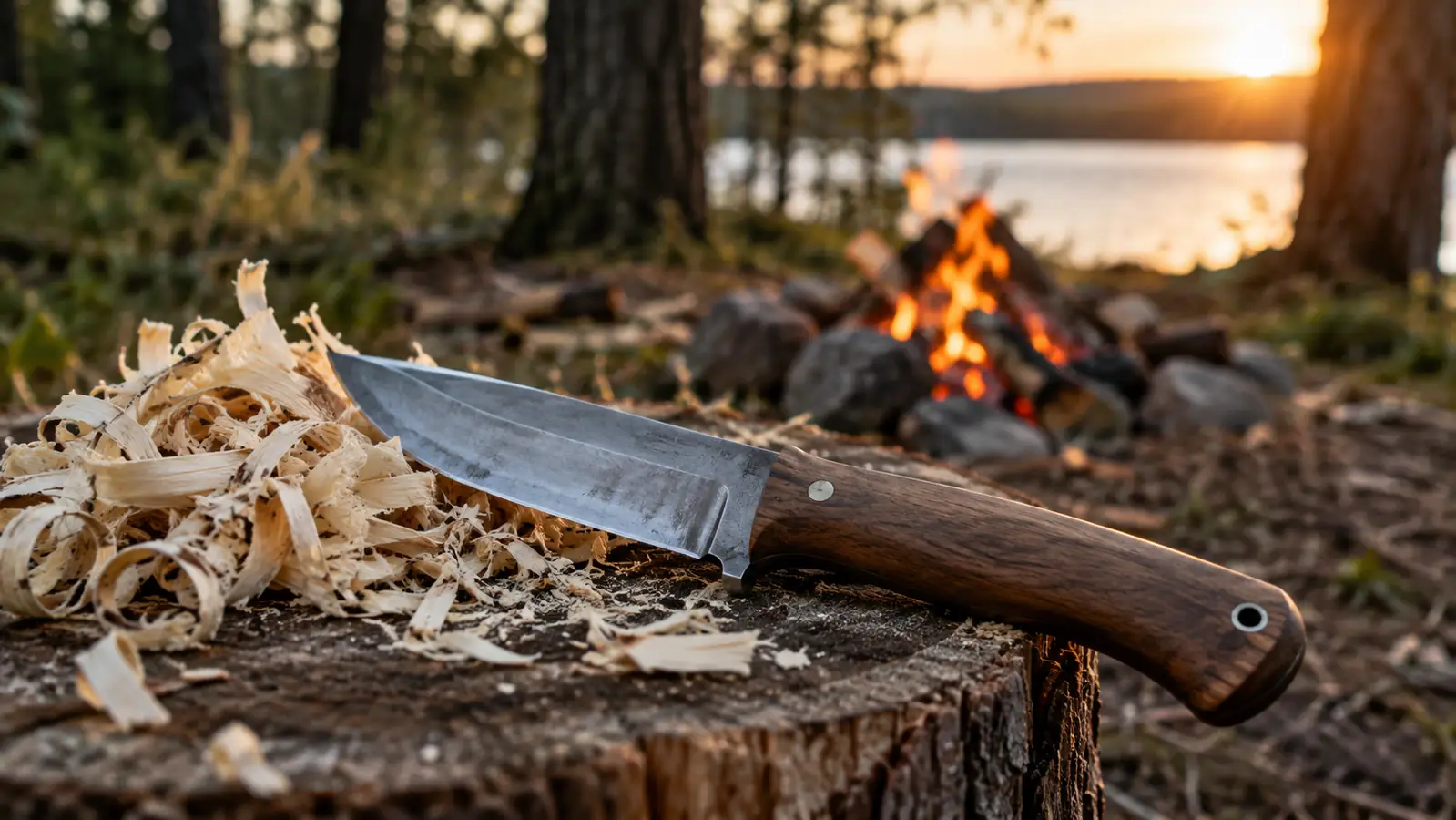
The handle is a molded polymer with a texture that gives a secure grip even when wet. I have used it in the rain and while wearing work gloves, and I never felt it slip. Old habits die hard: I have caught myself using the Companion to strip wire, a job I did for thirty years with a folding knife, and the handle never shifted in my hand. The finger guard is small but enough to keep your hand off the edge. The handle is also hollow, which keeps the weight down but means it can feel a little light in the hand. Some people like a heavier knife. I like that the Companion disappears in a pack.
The sheath is the weakest part of the package. It is a molded plastic sheath with a click lock that holds the knife securely. It does its job. But it is not a leather sheath, and it is not a kydex sheath with a positive retention system. It rattles a little, the belt loop is thin, and after a few months of belt carry the loop stretched. I now carry the Companion in my pack, which is honestly where a camp knife belongs anyway. If you plan to carry this knife on your belt every day, plan on a replacement sheath or make your own. It is a simple fix, and it turns the weakest part of the package into a non-issue.
The belt loop gave out in a way that is worth describing. Around the four-month mark, the loop had stretched from a snug fit over a 1.5-inch belt to something that flopped. By month six it would slip off the belt if I leaned forward. Nothing broke, it just wore out, which is what molded plastic does under constant load. I switched to carrying the knife in the side pocket of my pack, and honestly it is better there. It is light enough that I forget it is with me, and I reach for it a dozen times a day on a trip. The sheath still rattles if you shake it, but inside a pack that does not matter. A strip of tape over the snap would silence it, but I have never bothered, because the knife is doing its job where I keep it.
What I Liked
- Scandi grind arrives shaving sharp and takes a working edge in minutes on a flat stone
- Full tang and a textured polymer handle that grips well wet or gloved
- Light enough to forget in a pack, tough enough for years of camp chores
- One of the least expensive fixed blades that is still a real tool, not a toy
- Stainless steel resists rust with only basic care
Where It Falls Short
- Thin spine flexes under hard use; batoning anything bigger than a wrist-thick branch is asking for trouble
- Molded plastic sheath rattles and the belt loop stretches out within months
- Tip will chip or roll if you pry with it
- Hollow handle feels light in the hand, which some people read as cheap
- Stainless edge throws weak sparks from a ferro rod; the carbon version starts fires better
Who This Is For
The Morakniv Companion is for the person building a first emergency kit, the hiker who wants a reliable blade without a big investment, and the family that wants a working knife in the kitchen drawer and the glove box. It is for anyone who needs a knife that will cut, hold an edge, and sharpen easily, and who would rather put their gear money into water, food, and shelter. It is also the knife I recommend to people who have never sharpened a blade, because it makes the skill easy to learn. If that is you, the Companion is the right call.
Who Should Skip It
Skip the Companion if you need a knife for heavy batoning, prying, or hard abuse. The thin spine and acute edge are not built for that, and pushing it past its limits is how blades break. Skip it if you want a knife that feels substantial in the hand, because the hollow handle and light weight will disappoint you. And skip it if you want a premium sheath, because the plastic clip-on is functional, not fancy. The Companion is a camp knife, not a tactical survival tool, and that distinction matters. For the jobs it cannot do, step up to something like a beefier full-tang blade, and keep the Companion for the work it does best.
Start with the knife that teaches you right
The Companion is the knife I hand to anyone who asks where to begin. It cuts, it sharpens, and you will not cry if you ding it up while you learn. That is the whole point.
Amazon Check Today's Price on Amazon →