
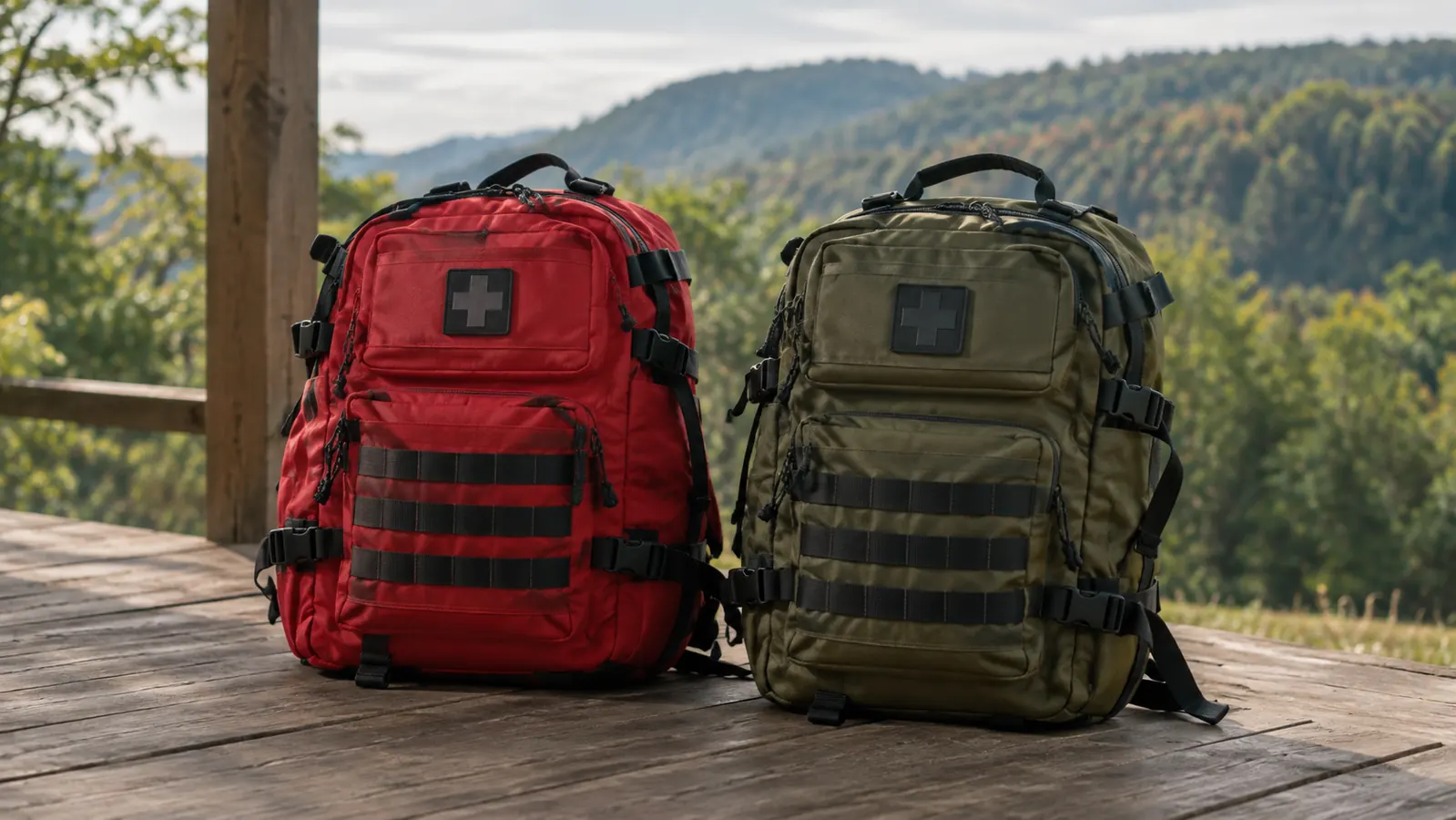
If you have ever sat down to build an emergency kit from scratch, you know how fast the list gets away from you. Water for three days, food for three days, first aid, light, warmth, sanitation, copies of important papers. It is a lot of small decisions, and most of us never finish. That is the case for buying a ready-made bug out bag. It gets you to a workable kit in one order instead of six. I spent the first three weeks of October testing two of the most common options side by side: the Ready America 2-person emergency backpack and a comparable Everlit bug out bag. Ready America has been selling these kits for years, and it is one of the names you will see on every list of prebuilt emergency kits. I am not a survivalist. I am a retired lineman who spent thirty years watching what happens to people who are not ready. I went through every item in both bags, weighed them on a luggage scale, repacked them a few times, and took each one on an overnight in the Smoky Mountain foothills. The short answer: the Ready America kit is the better buy for most families, but you need to know what you are adding to either bag before you trust it.
| Ready America 2-Person Kit | Everlit Bug Out Bag | |
|---|---|---|
| Best use | A whole household for the first 72 hours | One person who wants to pack their own gear around a solid shell |
| Contents included | Complete: food, water, first aid, light, shelter, hygiene, tools | Partial: bag, organizer, blanket, basic first aid, some accessories |
| Water storage | Bottled water plus a water bag per person | No water included, has a hydration sleeve and a bottle pocket |
| Food | 2,400 calories per person for 3 days, shelf-stable | None included, you supply your own |
| Bag quality | Sturdy, plain, comfortable enough for a short carry | Tougher zippers and heavier fabric, more comfortable when loaded |
| Room to customize | Some, but the kit is meant to stay intact | Lots, it is a real pack you can rebuild |
| First aid | Over a dozen items including a cold pack, ointment and bandages | A basic kit with bandages and antiseptic wipes |
| Best for | A family that wants one box to grab and go | A solo hiker or prepper who already has their own gear |
Where Ready America Wins
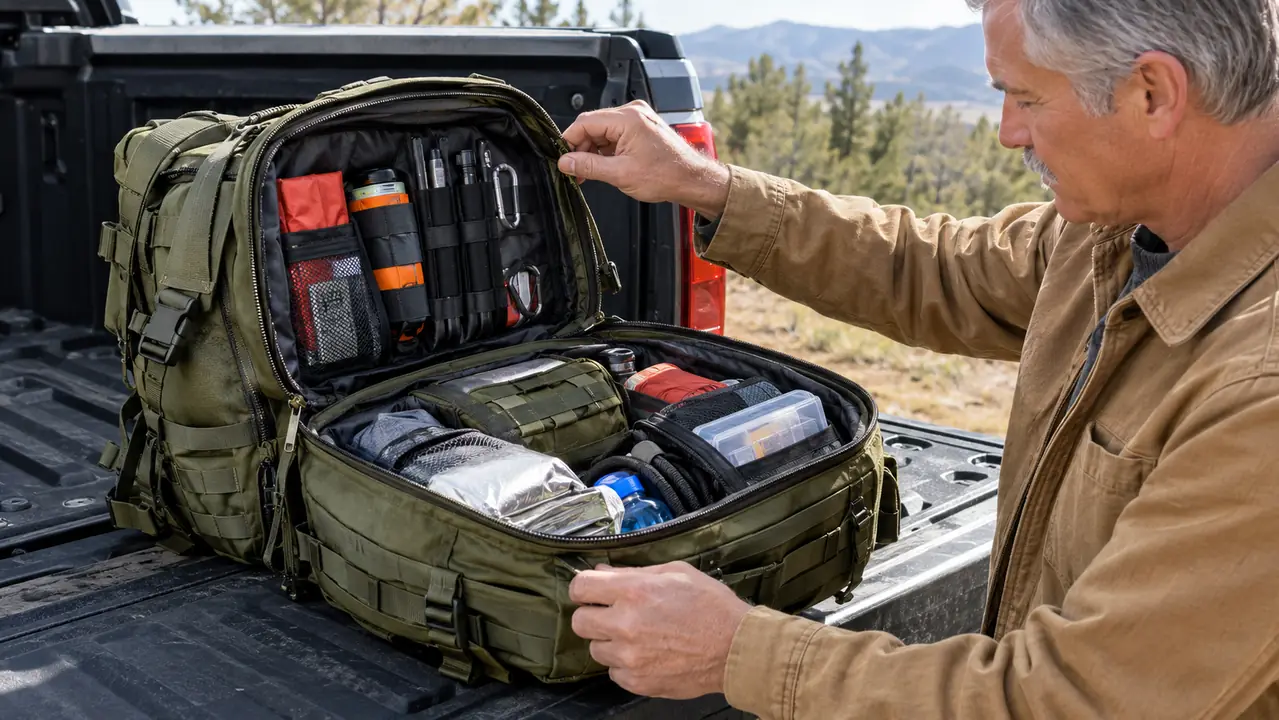
The Ready America kit wins on the only thing that matters most in an emergency: it is complete. Open the main compartment and you find food bars, water pouches, a first aid kit, a flashlight, a crank radio, emergency blankets, ponchos, a tube tent, hygiene supplies, a whistle, work gloves, and a multi-tool. It is designed for two people for three days, so it covers Carol and me with room to spare. On the morning of October 9, I laid everything out on the tailgate of my 2012 Tacoma and counted forty-one individual items before I stopped, including two foil blankets, two ponchos, a tube tent, a flashlight that takes AA batteries, a crank radio that can also charge a phone, a whistle, work gloves, a multi-tool, a first aid kit with a cold pack and antibiotic ointment, toothbrushes and toothpaste, soap, a pack of wet wipes, and a small roll of duct tape. The kit comes in a backpack rather than a plastic tote, which matters if you have to carry it more than a few steps. A tote stays in the trunk; a backpack makes it to the door. Carol came out to look and said it looked like I had dumped a camping store on the truck. She was not far off. The first aid kit alone has more than a dozen items: adhesive bandages in several sizes, gauze pads, tape, antibiotic ointment, a cold pack, tweezers, and a pair of scissors. That is the difference between a kit that makes you feel prepared and one that actually is. You are not buying a bag, you are buying a finished system.
The other big advantage is the food and water. The kit includes bottled water plus a collapsible water bag per person, and the food bars add up to about 2,400 calories per person per day for three days. I checked the math twice, because emergency food is where cheap kits cut corners, and this one holds up. The bars come sealed in foil pouches with a stated five-year shelf life, so a kit bought today can sit by the back door and stay honest for a long time. There is also a one-liter water bag for each person, which folds flat when it is empty. I filled mine from a kitchen tap to test the spout, and it held without leaking. The bottled water is the short-dated item in the kit, so I wrote the replacement month on the outside with a marker and set a reminder to swap it. I ate one of the bars on purpose, not because I was hungry, because I wanted to know what Carol would be eating if we ever needed them. It tasted like a firm, slightly sweet oat bar, and it went down fine. The Everlit bag includes no food at all. You would have to buy bars, pouches or meals separately, which means more decisions and more trips to the store. For a family that wants to be ready this week, the Ready America kit closes that gap the day it arrives.
Where Everlit Wins
I will not pretend the Everlit bag lost every round. It is a better backpack, and I say that as someone who carried a lineman's tool belt for thirty years and knows what good straps feel like. The fabric is heavier, the zippers are smoother, and the shoulder straps and hip belt spread the load properly. I loaded both bags to about the same weight, roughly eighteen pounds, and walked the same two-mile loop behind the house on two separate afternoons. The Everlit rode noticeably better, with less sway and less digging into my shoulders. It has an internal frame and a padded hip belt that stays put, and on that two-mile loop I did not need to stop and adjust it once. The Ready America pack is sturdy and plain and perfectly fine for carrying from the back door to the truck, but the Everlit is the one I would choose for a long walk. I also liked that the Everlit has a waist belt pocket and a sternum strap, small details that matter when you are actually carrying the thing, and zipper pulls you can grab with work gloves on.
It also wins on customization. The Ready America kit is designed to stay intact. You can add a few personal items, but you are working around a fixed layout, with everything tucked into its own spot. The Everlit bag is a real backpack you can rebuild from empty. The main compartment opens wide, the interior is a blank canvas, and the organizer panels give you places for a medical kit, a water filter, spare socks, a knife. One night I timed myself packing the Everlit from a pile of gear on the living room floor, and it took about forty minutes to get everything settled the way I wanted it. The Ready America kit took fifteen minutes to personalize, mostly because the layout was already decided. That is the right approach for someone who knows exactly what they need. It is the wrong approach for someone who needs a working kit by Friday. The Ready America kit is a finished product. The Everlit is a project, and a fun one if you enjoy that sort of thing, but a project all the same.
The fastest way to a complete 72-hour kit for two people
The Ready America 2-person backpack comes with food, water, first aid, light, shelter and hygiene gear already packed. You add your personal items and you are done.
Amazon Check Today's Price on Amazon →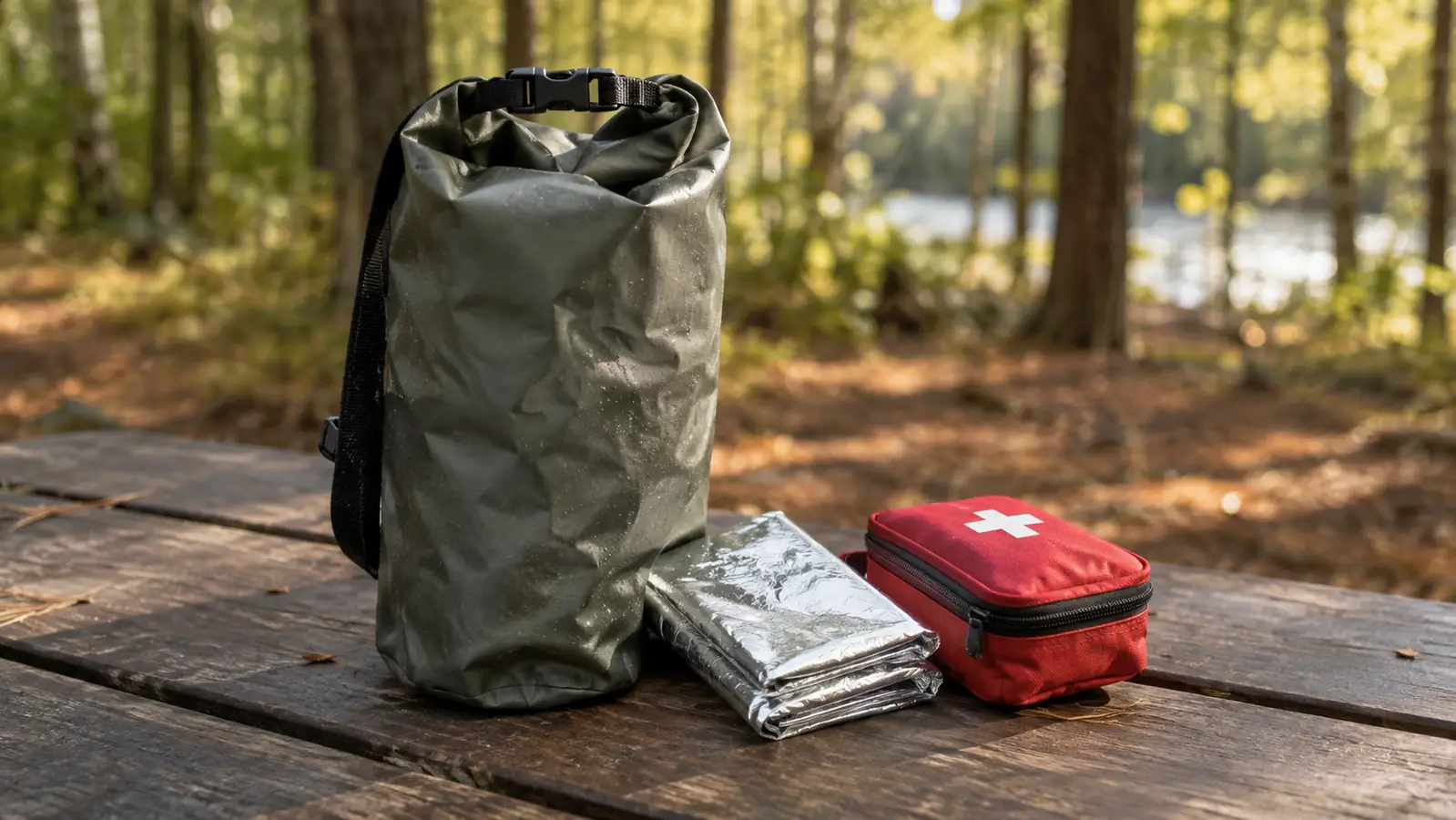
Who Should Buy Which
Buy the Ready America kit if you want one order to close the gap between nothing and ready. It is the choice for a couple, a small family, or anyone who does not want to research forty individual items. I think of it as the kit for the person who has been meaning to get prepared for three years and has not done it yet. You order it, you open the box, you spend an hour adding your own details, and you have a working 72-hour plan. It is also the better gift. You can hand it to a grown kid heading to their first apartment and know they have food, water, light and first aid the night the power goes out. That alone is worth the order. One more thing: the Ready America kit is the easier one to keep honest. Because it has a set layout, I can check it in about five minutes, making sure nothing got borrowed and nothing expired. The Everlit only stays complete if you keep rebuilding it, and busy people do not rebuild kits. If you are buying for someone else, the ready-made kit is also the safer choice, because it does not depend on the other person owning any gear to begin with. Buy the Everlit if you already own most of your gear and you specifically want a tougher, more comfortable pack to carry it in. It is a good bag. It is just not a complete emergency kit, and the difference matters when the lights are out.
One bag is a finished 72-hour kit you can grab and go. The other is a very good backpack waiting for you to finish it.
Before you order either one, take ten minutes to think about what a real emergency looks like for you. For us, it is an ice storm, because a bad one a few winters back left our house dark for nine days, and that is the reason the kit by our back door is not negotiable. The Ready America kit covers the basics better than most, but I still added a headlamp, a small solar charger, a roll of duct tape, and a copy of our insurance papers. I also swapped the included water pouches for a filter bottle so we can refill from a creek if we need to. That is not a criticism. Every kit needs personalizing. The difference is that the Ready America kit starts at about ninety percent done, and the Everlit starts at about thirty percent. If you have the time and the gear room, the Everlit path can get you to a more personal kit. If you want to be ready by the weekend, start with the Ready America, add your family's details, and then keep improving it the way every honest prepper does. One small note on the water: the included pouches are fine for the first day, but a filter bottle takes up the same space and gives you an unlimited supply from the nearest creek or pond. I have carried a filter bottle in my Tacoma for years, and it has never let me down. You can also keep a small notebook in the top pocket of either bag, with your family's medication list, blood types, and an out-of-state contact number. In my experience, that piece of paper is worth more than any single piece of gear in the bag. Whatever you choose, write your name and a date on the kit, check it twice a year, and replace anything with a date on it. A kit you forget about is just a heavy bag. There is no wrong choice between a finished kit and a good backpack, as long as you know which one you are buying.
Start with the kit that is already packed
The Ready America 2-person emergency backpack covers food, water, first aid, light and shelter out of the box. Add your family's personal items and you have an honest 72-hour plan.
Amazon Check Today's Price on Amazon →