
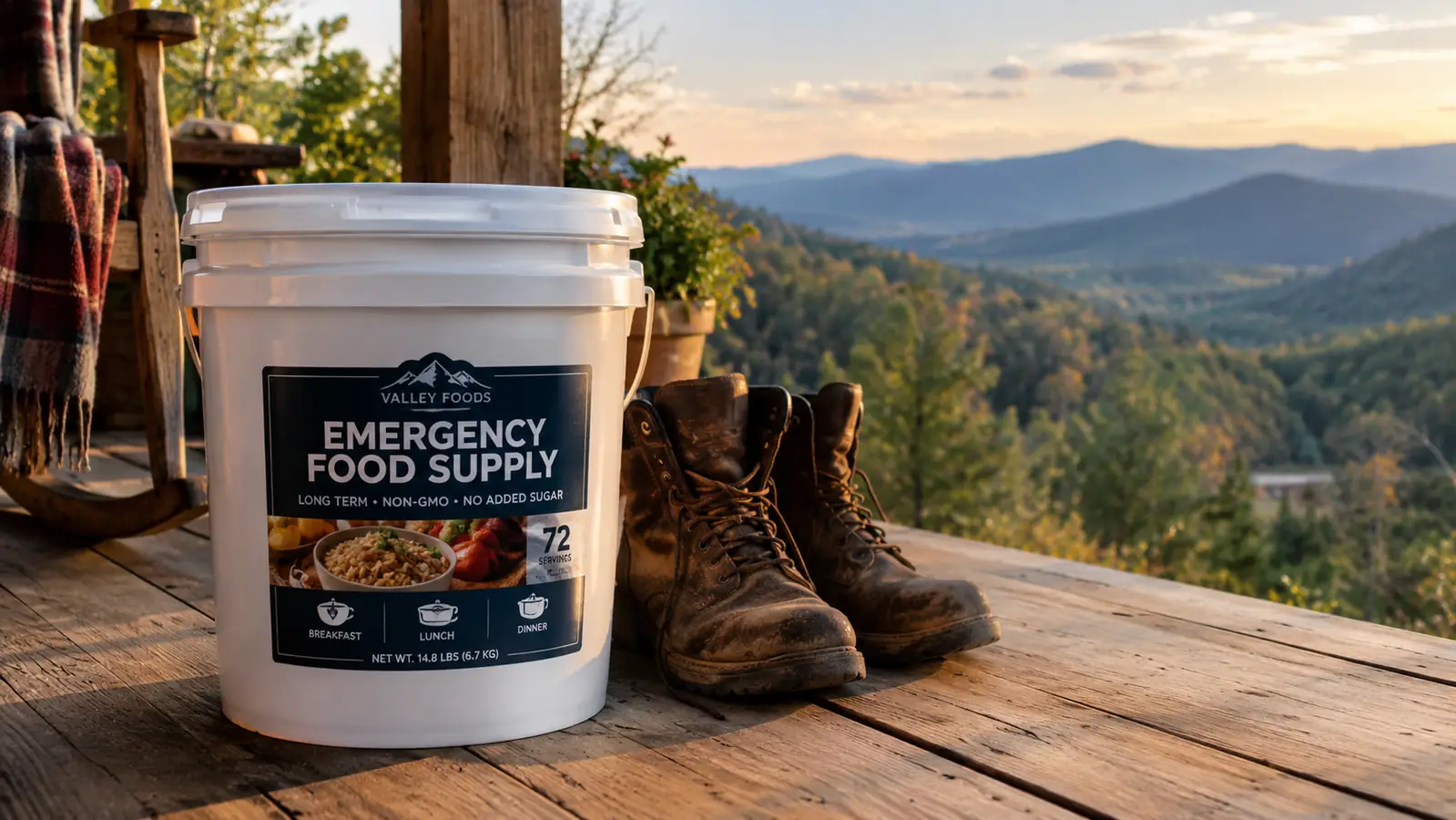
When the ice storm hit our ridge nine years ago, we lost power for nine days. Carol and I ate cold canned soup and peanut butter sandwiches, and I swore I would never let the pantry be that thin again. So when I decided to actually test the ReadyWise Emergency Survival Food Supply Favorite Sample Bucket, I did it the way I test everything: I ate from it, every day, for two weeks straight.
This is the 120-serving bucket from ReadyWise, the one with 80 entrees and 40 breakfast and drink packets. I wanted to know what it is actually like to live on it, not just what the label claims. Here is what I found after 14 days of breakfast, lunch and dinner from the bucket.
The Quick Verdict
A solid, honest emergency food supply that tastes better than you expect and stores for 25 years. It is not gourmet cooking, and the sodium is real, but for the price per serving it is one of the best ways I know to put a month of meals on the shelf.
Amazon Check Today's Price →Two weeks of meals, already on your shelf
The ReadyWise Favorite Sample Bucket covers breakfast, lunch and dinner for two people for about two weeks. I tested it for exactly that long. Check today's price on Amazon and see what a full emergency pantry looks like.
Amazon Check Today's Price on Amazon →How I've Used It
I set a simple rule for the test: every meal I ate for 14 days had to come from the bucket. No sneaking a snack from the kitchen, no running out for a burger when the pasta primavera looked sad. I kept a small notebook on the counter and wrote down what I made, how long it took, how much water it needed, and what it actually tasted like.
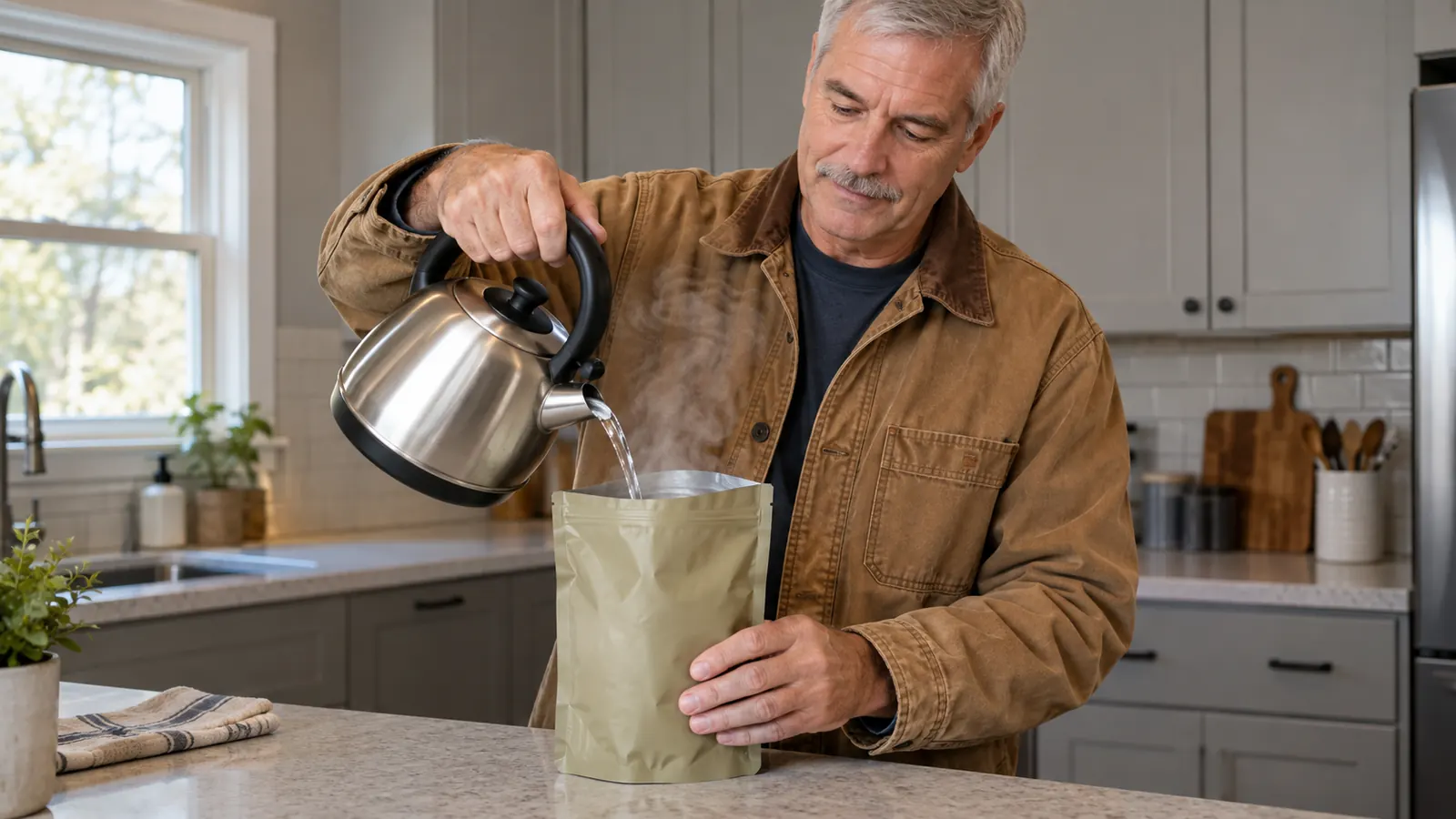
The bucket itself is straightforward. It is a sealed plastic pail with a handle, and inside are foil pouches. Most of the entrees are freeze-dried, which means you add boiling water, stir, and wait about 10 to 15 minutes. The breakfast items and drinks are mostly instant, so they come together in a couple of minutes. I used my camp stove on the back porch for the hot water, partly to keep the kitchen from turning into a steam bath and partly because that is how I would cook it in a real outage.
I also weighed a few servings before I cooked them, because the label says the bucket is about 25 pounds and I wanted to see how that breaks down. The entrees run roughly 1.5 to 2 ounces per serving, and the breakfast and drink packets are lighter. That matters when you are planning how much shelf space a real emergency pantry takes up.
I also ran the test in two week-long blocks, because one week of emergency food is not a fair sample. The first week I followed the pouch labels exactly, no added salt, no doctoring, because I wanted to know what the food was like straight out of the bag. The second week I allowed myself to season and adjust, which is what I would actually do in a real outage when the pantry is right there. I scored every meal in the notebook on a 1 to 10 scale. The first week averaged about 6.5. The second week came in closer to 7.2, and the difference was almost entirely a pinch of salt and a few extra minutes of sitting time. That split matters, because it tells you the food is not delicate. It takes rough handling and still comes out fine. I kept the bucket in the basement and carried it up to the back porch for every meal. At 25 pounds the handle is comfortable enough for that trip, though I would not want to carry it much farther than from a car to a cabin.
What's Actually in the Bucket
The Favorite Sample Bucket is a sampler, which is the smart way to buy your first emergency food. Instead of committing to 60 pouches of one entree, you get a mix. The entrees include things like pasta primavera, creamy pasta and vegetables, cheesy macaroni, teriyaki chicken and rice, and a few others. The breakfast side has things like apple cinnamon cereal and a couple of drink mixes.
I counted 80 entree servings and 40 breakfast and drink servings, which matches the label. The math works out to about 1,200 to 1,400 calories per day if you eat one of each, which is enough for a normal day around the house but a little light if you are doing hard physical work. For a couple like Carol and me, the bucket is roughly two weeks of meals. For a single person, it stretches closer to a month.
One thing I appreciated is that the pouches are labeled clearly with the entree name and the amount of water needed. When the power is out and the kitchen is dark, you do not want to be guessing which pouch is which. ReadyWise got that detail right.
Taste Test: 14 Days of Meals
Let me be honest about taste, because this is where a lot of emergency food reviews get fuzzy. The best entrees in this bucket are genuinely good. The pasta primavera has a real tomato flavor and a decent amount of vegetables. The cheesy macaroni tastes like a boxed mac and cheese, which is a compliment. The creamy pasta and vegetables reminded me of a decent canned soup poured over noodles.
The weaker ones are not bad, they are just bland. A couple of the rice dishes needed salt and pepper, and I learned to keep a small shaker next to the stove. The breakfast cereal is fine, a little sweet, and the drink mixes are what you would expect from a powdered drink. Nothing in the bucket made me want to stop the test. Nothing made me want to keep eating it after the two weeks were up, either.
My honest ranking after 42 meals: about a third of the entrees I would happily eat again, about half I would eat without complaining, and the rest I would eat only because the alternative was hunger. That is a better record than I expected from a 25-year shelf life product.
The best single meal of the test came on day six: teriyaki chicken and rice. It smelled like something from a takeout container while it was rehydrating, and the chicken pieces kept an actual texture instead of turning to mush. I wrote 'this one could fool a guest' in the notebook, and I meant it. Day nine was cheesy macaroni, and I ate the whole pouch without reaching for the salt shaker, which I cannot say for every entree in the bucket. The low point was day eleven, and it was my fault, not the product's. I tried to stretch a pouch of creamy pasta and vegetables into two meals by adding extra water. The sauce thinned out, the vegetables got lost, and I ate a bowl of vaguely creamy noodle water. The next day I followed the label exactly and the same entree was fine. That lesson is worth keeping: this food is portioned on purpose, and the portion is the serving. I also learned that the order you eat things in matters. I saved the two or three entrees I liked best for the second week, which gave me something to look forward to when the first week got repetitive. That is a small planning trick, but it is the kind of thing that keeps morale up on day four of a real outage.
After 42 meals from the bucket, about a third of the entrees I would happily eat again, and none made me want to quit the test.
Prep Time and Ease of Use
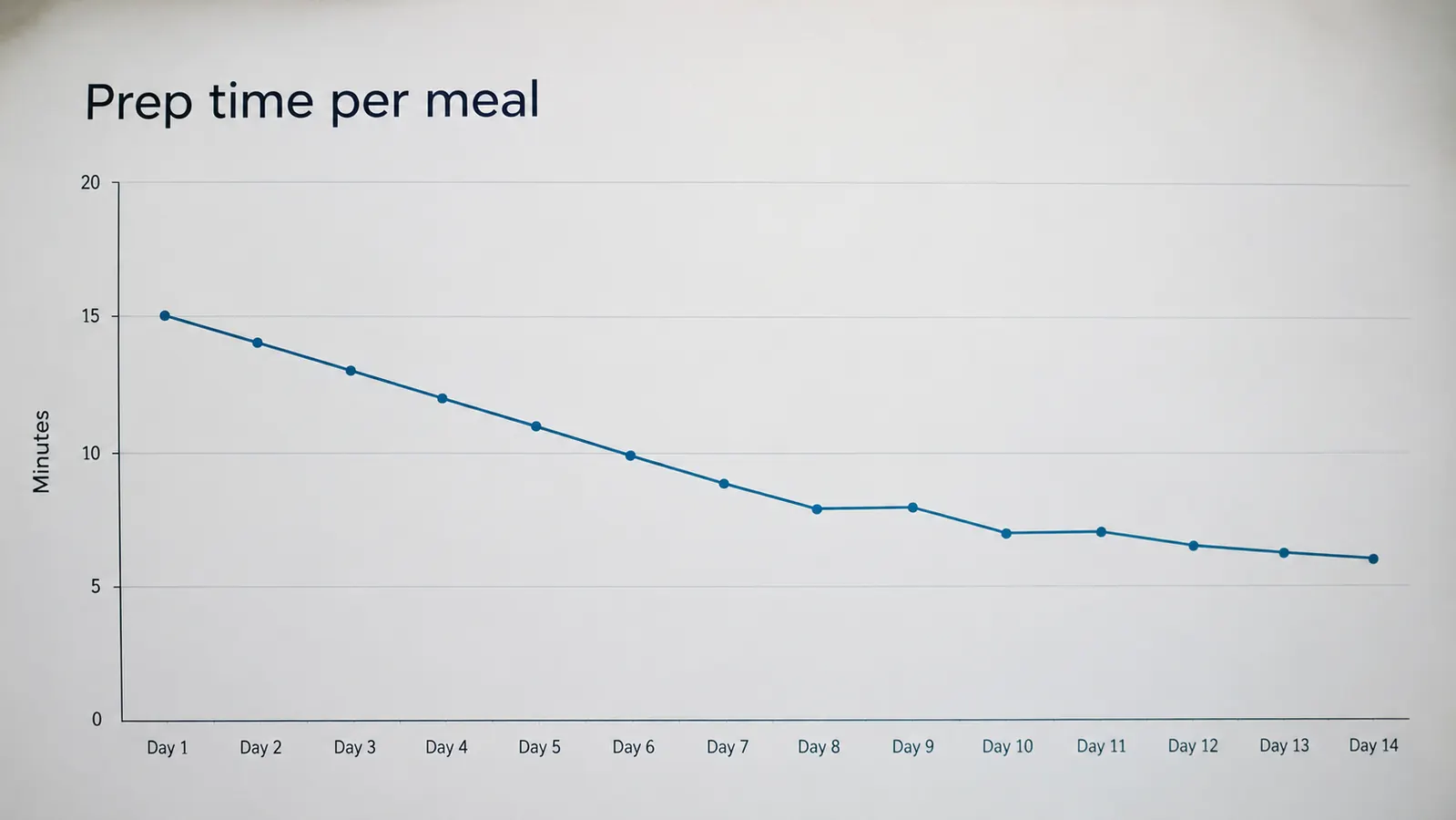
The first night, I fumbled. I boiled water, poured it into the pouch, sealed it, and waited. The instructions say to let it sit for 10 to 15 minutes, and they mean it. If you are impatient and eat at the 8 minute mark, the pasta is still chewy in the middle. By day three I had the rhythm down: boil the water, pour, seal, set a timer, and go do something else for 12 minutes.
Cleanup is the part that surprised me. You eat right out of the pouch, so there are no pots to scrub. The only dirty dish is your spoon. In a real emergency, when water might be scarce, that is a bigger deal than it sounds. I used about a quarter of the water for cooking that I would have used for washing dishes afterward.
The one thing I will flag is that the pouches are not resealable. If you do not finish a serving, you have to fold the top over and clip it, and it does not stay fresh as well. I learned to cook only what I would finish, which is easy because the serving sizes are reasonable for one person.
I timed the hands-on part of every meal, the minutes I was actually doing something, not the time the pouch sat rehydrating on the counter. Night one took about 15 minutes of that, most of it spent reading labels and second-guessing the water. By day three I was down to about 9. By the end of the second week I could do the whole job in about 6, because I had learned which pouches wanted a rolling boil and which were fine with water just off the boil. The pasta entrees want the full time the label promises. The rice dishes can get away with 10. The breakfast packets are happy with warm water and about 3 minutes. Getting that straight saved me more time than any equipment change could have. I ran the whole test on a single-burner camp stove with a 12-ounce kettle on the back porch. In a real outage, that same stove works on the tailgate of my Tacoma, which is where I would cook if the house was too cold to use. One more note: cold water rehydration works in a pinch, but it doubles the wait and the texture suffers. Boiling water is worth the extra minute.
Shelf Life and Storage
ReadyWise says the bucket has a 25 year shelf life when stored in a cool, dry place. I cannot test 25 years, but I can tell you the packaging is built for it. The bucket is a thick plastic pail with a gasket seal, and the individual pouches are heavy foil. I stored mine in the basement on a shelf, and after the two week test the remaining pouches showed no signs of moisture or damage.
A few practical notes. The bucket is about 25 pounds, which is manageable for most adults but not something you want to carry far. It is also not waterproof if you submerge it, so keep it off the basement floor in case of flooding. And once you open the bucket, the pouches are what protect the food, so treat them with care.
I also looked at how the bucket behaves as a piece of long-term storage, not just a box of meals. The basement shelf where I kept it stays around 62 degrees in the summer, which is comfortably inside the cool, dry range the label asks for. Each pouch has a best-by date printed on the back, and the ones I opened had years of margin left, so the rotation clock starts when you open the bucket, not when you buy it. I tested the pail's seal the way I test any piece of emergency gear: I closed the lid, tipped the bucket on its side, and left it that way for a week to see if anything crept out. Nothing did. The gasket does its job. I wrote the date I broke the seal on the lid with a marker, so I know which pouches to eat first as I work through the supply. One small warning: the bucket is not airtight once you open it, so do not store the opened pail somewhere damp and expect the remaining pouches to stay perfect. The foil pouches are doing that work, and they do it well.
The Pros and Cons
What I Liked
- Genuinely good taste for about a third of the entrees, and nothing inedible
- 25 year shelf life in a sealed, stackable bucket
- Simple prep with boiling water, and no pots to wash
- Clear labels on every pouch with water amount and instructions
- Good value per serving for a full emergency pantry
Where It Falls Short
- Sodium is high across most entrees, worth watching if you have blood pressure concerns
- Calories per day run light for hard physical labor
- Pouches are not resealable, so plan portions carefully
- A few rice dishes are bland without added salt and pepper
Who This Is For
This bucket is for the person who wants a real emergency food supply without spending a fortune or building a spreadsheet. It is for the family that wants two weeks of meals in the basement, ready to grab when the power goes out. It is for the person who has never bought emergency food before and wants to start with a sampler to learn what they actually like.
It is also for the person who wants peace of mind, not panic. I have spent 30 years restoring power after storms, and I have seen what happens to families who wait until the storm is on the news to go shopping. A bucket like this, sitting on a shelf, means you do not have to be one of them.
Who Should Skip It
Skip this bucket if you need more than about 1,400 calories a day. If you are doing heavy outdoor work in a real emergency, you will want to supplement with canned goods, peanut butter, or other calorie-dense foods. The bucket is a foundation, not a complete solution for every situation.
Skip it if you are on a strict low sodium diet. The sodium content is noticeable across most of the entrees, and while it is not outrageous for a shelf-stable product, it is something to plan around. And skip it if you expect restaurant quality. This is emergency food, and it tastes like good emergency food, not like a meal from a kitchen.
Put two weeks of meals on your shelf this week
I tested the ReadyWise Favorite Sample Bucket for 14 days so you do not have to guess. It stores for 25 years, preps in about 12 minutes, and cleans up with a single spoon. Check today's price on Amazon and start your emergency pantry with a sampler that actually tastes good.
Amazon Check Today's Price on Amazon →