
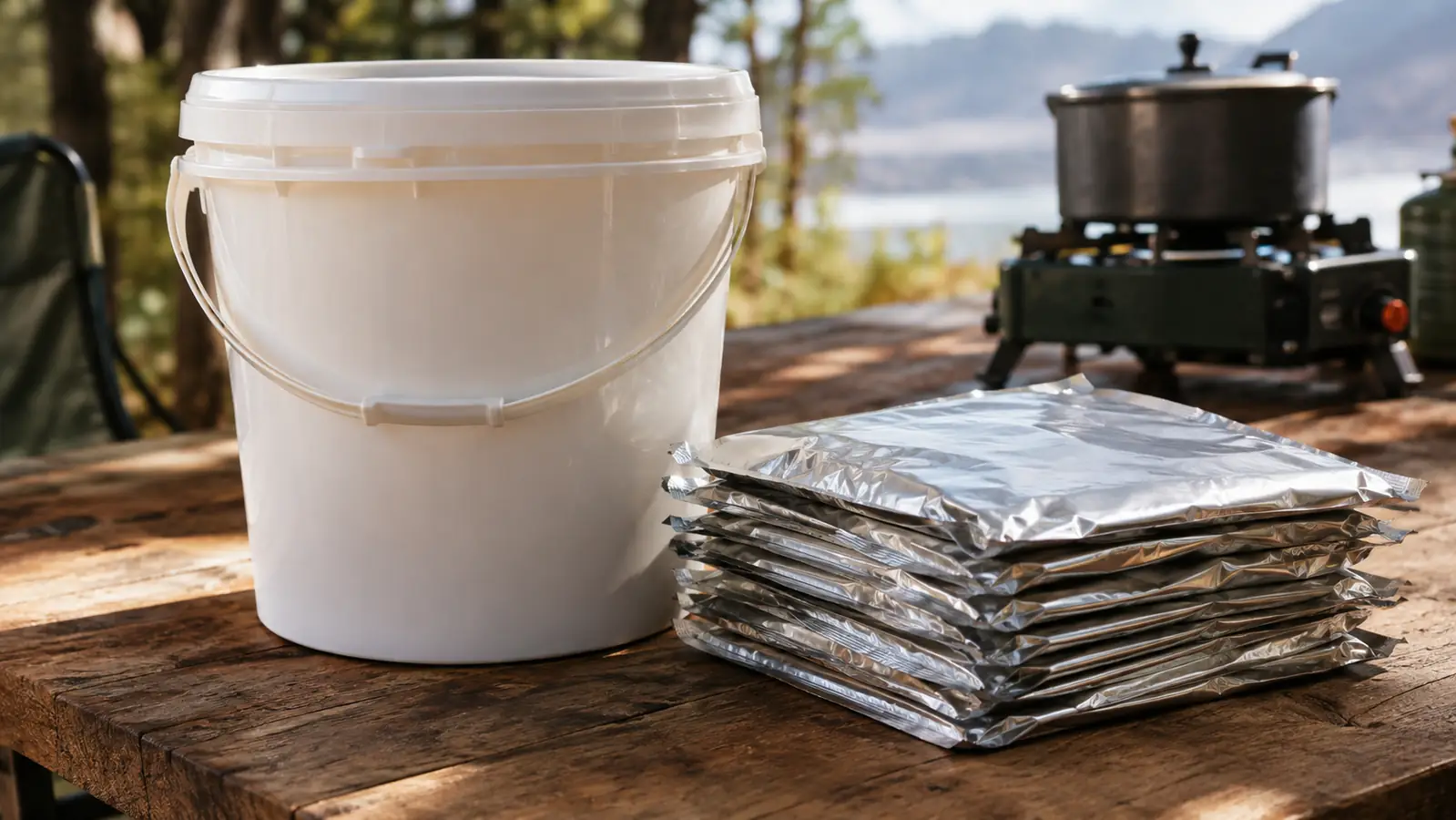
If you are building an emergency food kit on a normal budget, you have probably narrowed it down to two names: ReadyWise and Mountain House. I have eaten both, stored both, and taken both on overnight trips in the Smoky Mountain foothills. The short answer is that ReadyWise gives you more meals for the money and Mountain House gives you better taste and a longer shelf life. Which one you should buy depends on whether you are stocking a bucket for the pantry or building a kit you will actually eat from. I have been through enough storm seasons to know that the food you store only matters if you are willing to cook it and eat it when the lights go out.
I am Wade Callister, 58, a retired electrical lineman who spent 30 years restoring power after storms. An ice storm once left my own house dark for nine days, so I do not treat emergency food as a theory. I keep a 72-hour kit by my back door and a get-home bag in the 2012 Tacoma year round. For this comparison, I cooked both brands over a camp stove in the yard, served them to my wife Carol without telling her which was which, and tracked how they held up over time. I also packed individual pouches on two overnight trips into the foothills, because a food kit that only works on a kitchen counter has not really been tested.
| ReadyWise | Mountain House | |
|---|---|---|
| Price per serving | Lower cost per serving in a 120-serving bucket | Higher cost per serving in individual pouches |
| Taste | Decent, a few standouts and a few bland entries | Consistently the best tasting emergency food I have tried |
| Shelf life | 25 years from the date of manufacture | 30 years from the date of manufacture |
| Variety | One bucket with breakfasts, entrees, and sides | Individual pouches you can mix and match |
| Ease of storage | One stackable bucket, easy to grab | Flexible pouches need a box or shelf |
| Best for | Stocking a family pantry on a budget | Building a go-bag or a kit you will eat from regularly |
Where ReadyWise Wins
ReadyWise wins on the two things that matter most when you are stocking for a family: cost per serving and total calories in one purchase. The 120-serving bucket I tested covers breakfast, lunch, and dinner for one person for roughly 40 days, or a family of four for about 10 days. At today's price, the per serving cost is about a third of what you pay for most Mountain House pouches. When you are buying a year of food, that difference adds up quickly. For a family that wants a serious supply without a serious bill, ReadyWise is the practical choice.
ReadyWise also wins on convenience of storage. The bucket is a single, stackable unit. You can put it in a closet, under a bed, or in the back of the Tacoma without thinking about it. Mountain House pouches are flexible and need a box or a shelf to stay organized. For a 72-hour kit or a storm shelf, the ReadyWise bucket is the easier thing to grab when the lights go out.
The morning I tested the ReadyWise bucket, I skipped coffee until the water boiled. I measured two cups of water into the pouch, sealed it, and waited the ten minutes printed on the bag. The potato soup came out thick and hot, and Carol ate hers without a single complaint. The pasta side was less exciting, a little salty and soft, but it filled a bowl and held up fine when I packed the leftovers for a lunch the next day. That is what I want from emergency food: it does not have to win a cooking contest, it has to get eaten when the alternative is a cold kitchen.
The other thing I like about the bucket is that it does not assume you own fancy gear. You need water and a way to heat it. I used a plain camp stove the first time, then a kettle on the kitchen range, and both worked. The pouches are portioned for one adult, so there is no guessing how much to cook. If you have never cooked freeze-dried food before, the ReadyWise bucket is the easiest place to start.
Figuring out portions took me one failed attempt. The first night, I cooked a full pouch of creamy pasta for what I thought was a single serving and ended up with more than Carol and I could finish. The pouch actually held two servings. After that I started measuring with a kitchen scale, and the bucket went further than I expected. A 120-serving bucket is really 120 listed servings, and those servings are smaller than a restaurant plate. For a family of four, one pouch plus a side of canned vegetables is a solid meal. Plan for that and you will not run out as fast as you fear.
One detail that surprised me: the bucket arrived with the pouches packed loose inside, not in individual boxes. That means you should open it and take inventory before you put it on the shelf. I found the menu card on top, checked it against the pouches, and everything matched. A few of the pouches had sharp corners from shipping, so I moved them into a plastic bin to keep them from puncturing each other over time. Ten minutes of sorting saved me from discovering a torn pouch a year from now.

Where Mountain House Wins
Mountain House wins on taste, and it is not close. In my blind taste test, Carol picked the Mountain House beef stew over the ReadyWise equivalent every time. The ReadyWise entrees are not bad, but several are bland and the texture can turn mushy if you add too much water. Mountain House has a lighter, more natural flavor and better texture. If you are buying food you hope never to eat, taste matters less. If you are buying food you plan to rotate and actually use, Mountain House is the one your family will not complain about.
Mountain House also wins on shelf life. The pouches are rated for 30 years from the date of manufacture, while ReadyWise is rated for 25 years. Both are long enough for a realistic emergency kit, but the extra five years matters if you are buying in bulk and want to set it and forget it. Mountain House also has a wider selection of individual entrees, which makes it easier to build a kit around meals your family actually likes.
On the second overnight trip, I carried three Mountain House pouches in my pack: beef stroganoff, chicken and rice, and granola with milk for breakfast. The granola was the surprise. It rehydrated to something close to real cereal, and I ate it sitting on a log while the coffee brewed. The stroganoff had actual pieces of beef that kept their shape instead of dissolving. That texture is the reason Mountain House costs more, and for a go-bag that you might reach for on a cold night, it is worth the difference.
The tradeoff showed up when I emptied the pouch. A single Mountain House entree feeds one hungry adult, so feeding four people means boiling water for four pouches and waiting for each one. The ReadyWise bucket has the same per pouch reality, but the bucket's portions are smaller and easier to stretch with a can of beans or a handful of rice. If you are feeding a family from a camp stove, Mountain House is the better meal, but it is also the more careful meal to plan.
Here is the honest math problem with Mountain House: it costs more per serving, and when you multiply that across a year of food, the difference is real. That is why I do not think the two brands are competing for the same job. Mountain House is the better meal. ReadyWise is the better value. If you want both, use the bucket for the bulk and spend the extra on Mountain House for the breakfasts and the meals you know your family will eat first.
Another test worth doing is a cold soak. On a warm day I mixed one Mountain House pouch with cool water from a stream and let it sit for thirty minutes. It was not as good as the hot version, but it was edible, which is more than I can say for most ReadyWise sides prepared the same way. If you are packing a go-bag and you are not sure you will have a stove, that matters. I now keep a Mountain House pouch in the truck that I know I can eat without boiling water.
ReadyWise gives you more meals for the money. Mountain House gives you better taste and a longer shelf life. The right choice depends on what you are stocking for.
Stock a 120-serving bucket without blowing the budget
ReadyWise packs 40 days of meals into one stackable bucket. It is the most practical way I have found to get a family-sized supply on the shelf today.
Amazon Check Today's Price on Amazon →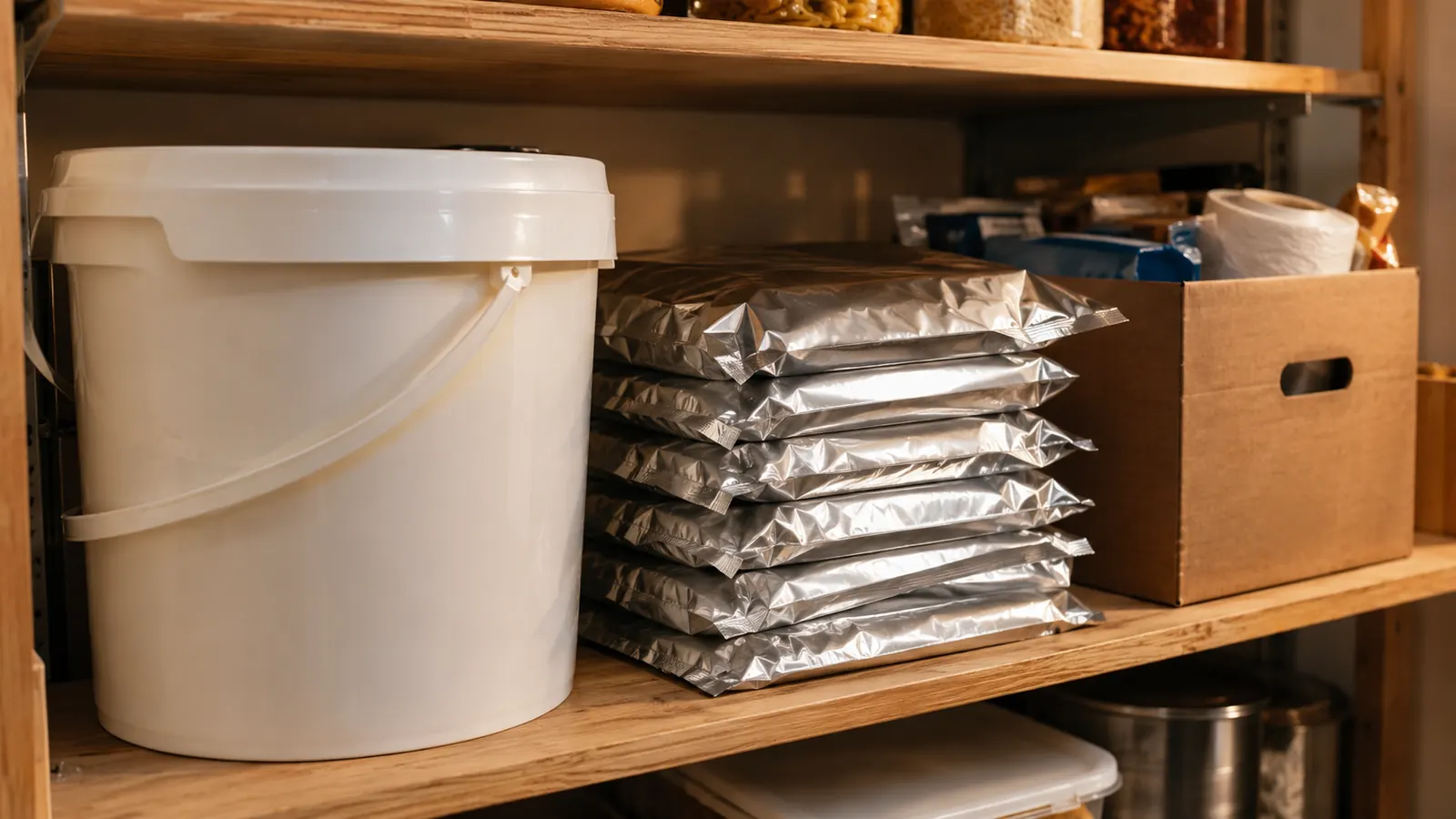
Who Should Buy Which
Buy the ReadyWise bucket if you are starting from zero and need a practical amount of food on the shelf today. It is the better value per serving, it stores in one stackable unit, and the 25-year shelf life is plenty for a storm kit or a first-year supply. I keep a ReadyWise bucket in my pantry for the same reason I keep a spare tire in the Tacoma: it is cheap insurance that takes up one spot and does its job when nothing else will.
Buy Mountain House pouches if you are building a go-bag, a bug-out kit, or a supply you plan to eat from regularly. The taste is better, the shelf life is longer, and the individual pouches let you pack exactly the meals your family will eat. It costs more per serving, but you are paying for food you will actually enjoy when the power is out for a week.
After a month of eating both, my advice is to do both on purpose. Put a ReadyWise bucket in the pantry for the bulk, then buy a small box of Mountain House pouches for the go-bag and the truck. That way the family meals are covered without spending a fortune, and the food you are most likely to eat first is the food that tastes best. I have a half dozen Mountain House pouches in a plastic bin in the Tacoma right now, and the ReadyWise bucket sits on the top shelf of the pantry closet.
One more thing I learned the hard way: write the date on the bucket the day it arrives. Both brands print a manufacture date on the packaging, but it is easy to miss, and you will not remember in year three whether that bucket is fresh or halfway through its life. I use a permanent marker on the lid. It takes ten seconds and saves a guessing game later.
Rotation matters more than the brand. I mark a date on every pouch and bucket, and I pull the oldest items for camping trips and weekend meals. That way nothing sits long enough to go stale. The ReadyWise bucket in my pantry gets rotated about twice a year. The Mountain House pouches in the Tacoma get swapped out every spring. It takes an afternoon, and it means the food I have stored is food I know how to cook.
Start with the bucket, then add the pouches you like
The smartest kit I have built combines a ReadyWise bucket for the pantry with a few Mountain House pouches for the go-bag. Start with the bucket to get the volume, then add the meals your family actually likes.
Amazon Check Today's Price on Amazon →