
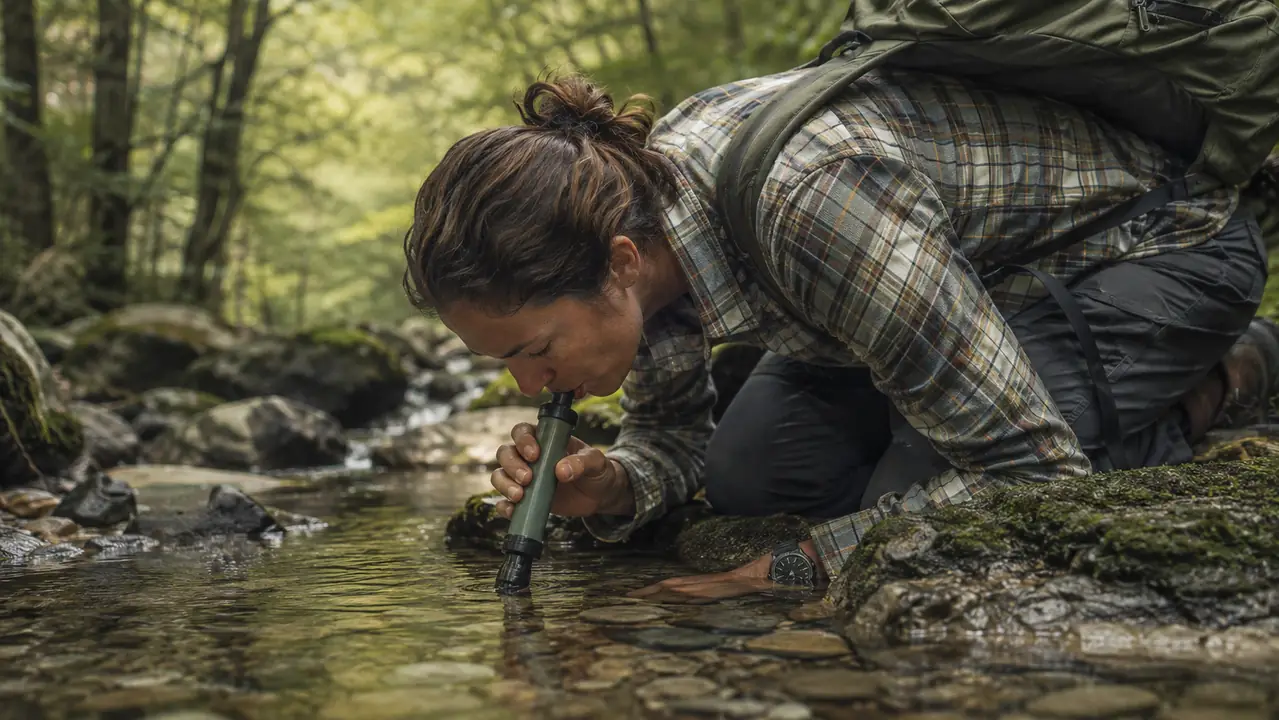
The ice storm that knocked our power out for nine days taught me something no amount of gear talk ever had. You notice water the day the tap stops working, and not a minute before. You can go a couple of weeks without food. You can go about three days without water, less if you're working or hiking in heat. When the tap goes dry, the nearest creek stops being scenery and starts being a resource.
That's why a LifeStraw has lived in my get-home bag for years. It is not the only filter I own, but it is the one that goes everywhere, because it weighs about two ounces and it turns almost any creek, stream, or spring into water you can drink. This guide is the exact process I use when I test gear on my overnight trips in the Smoky Mountain foothills, and it's the same process I'd use if the tap went dry tomorrow. I've used this filter on muddy trail creeks, on clear mountain springs, and on more than one dubious puddle after a hard rain. The steps below are the ones that have kept me healthy through all of it. If you follow them in order, you'll get clean water from almost any creek in the eastern half of the country, and you'll get it without carrying anything heavier than a water bottle.
Clean water from a creek, without a pump, a battery, or a wait
The LifeStraw Personal Water Filter filters down to 0.2 microns, which removes 99.999999% of bacteria and 99.999% of parasites. It needs no batteries, no pumping, and no chemicals. You kneel at the water, sip, and keep moving. Check today's price on Amazon and decide if it belongs in your kit.
Amazon Check Today's Price on Amazon →What You'll Need Before You Start
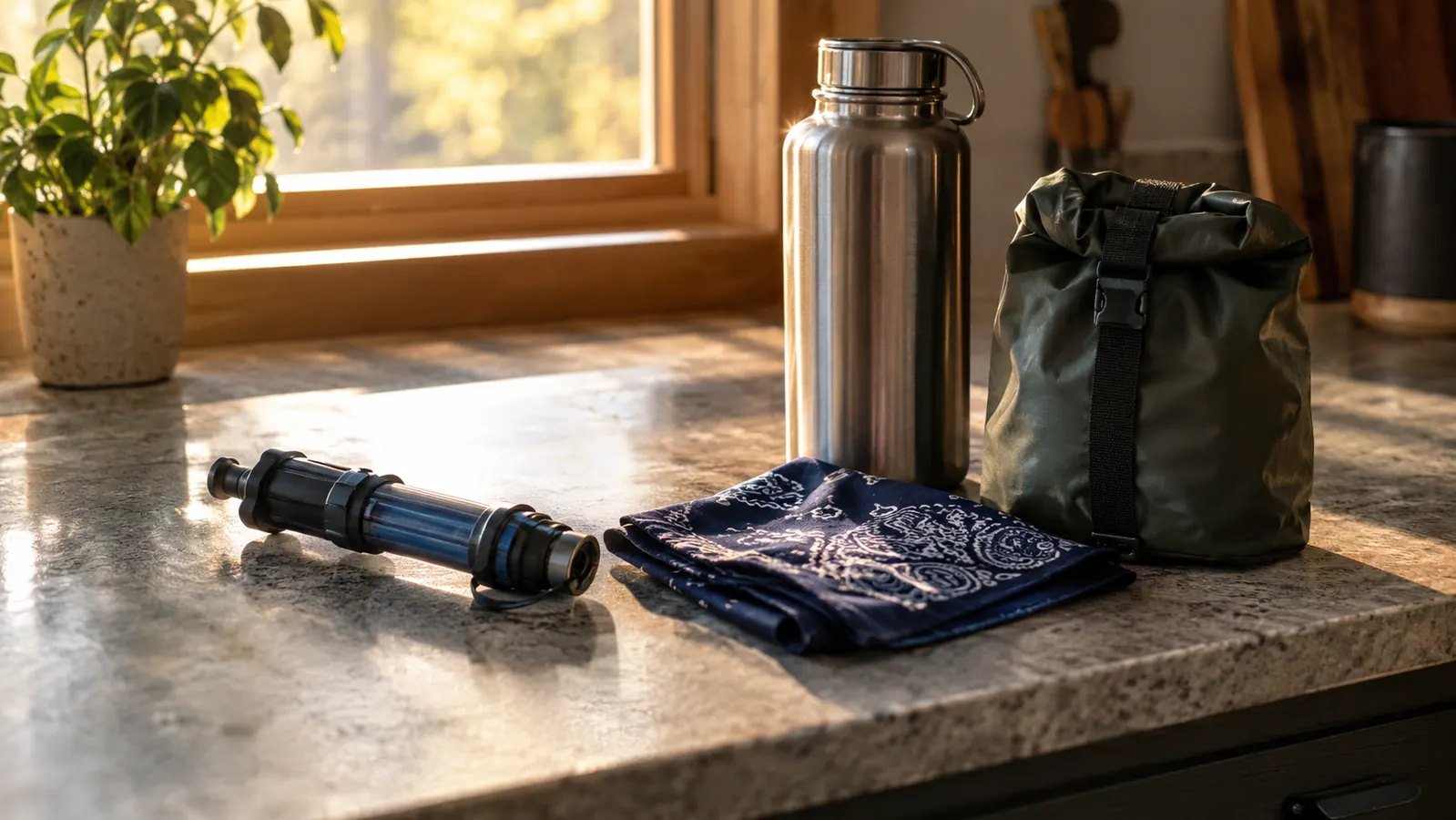
Before you head out, gather the handful of things that make creek filtering go smoothly. The LifeStraw itself, a wide-mouth bottle or clean cook pot, a bandana or coffee filter for pre-filtering, and a way to carry the clean water. That's it. No pump, no batteries, no chemical tablets required. I keep all of it inside a small dry bag in the truck, so I never have to remember it on the way out the door.
Step 1: Pick the Best Water You Can Find
The filter does the fine work, but you still have a job to do before it touches the water. Step one is choosing the best source available, because the easier you make it on the filter, the better it serves you. Moving water beats still water every time. A riffle where the creek runs over rocks and picks up oxygen is better than a slow, flat pool. Sunlight helps too, since a few days of UV exposure knocks back a lot of the biology floating around in open water.
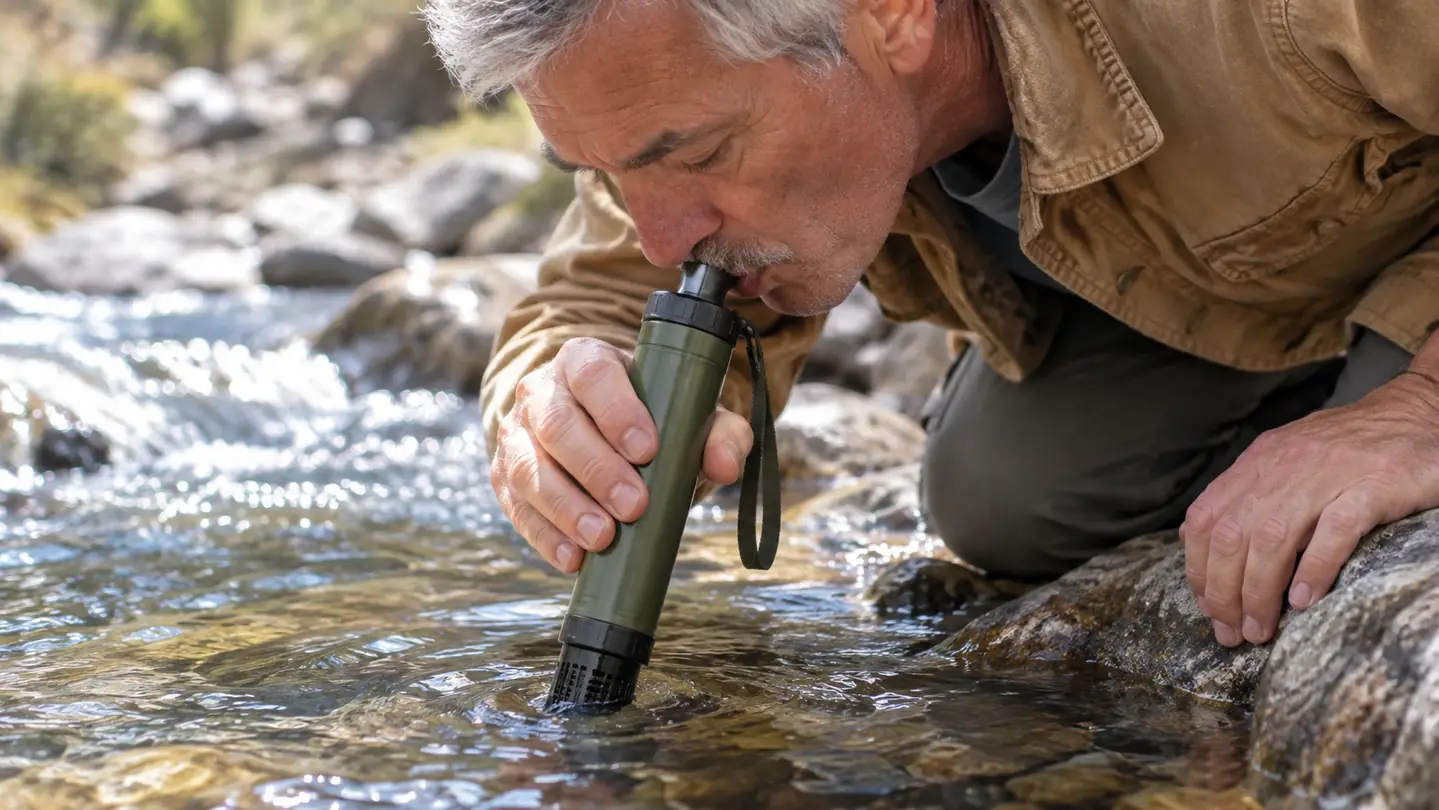
I look for a spot where the water is running clear and I can reach it without stirring up the bottom. The intake end of the LifeStraw goes in the water, and the mouthpiece stays in your hand until you sip. I kneel on a flat rock or the bank, put the intake in a few inches of moving water, and keep my boots out of the mud. If I have to stand in the creek to reach the water, I stir up silt with every step, and that silt is exactly what I'm trying to avoid.
There are also places I simply skip. Water with an oily film, water that smells like chemicals, water downstream of a beaver pond or a livestock crossing, and water that's been sitting in a stagnant pool all summer. The LifeStraw removes bacteria and parasites, but it does not remove dissolved chemicals, and it does not make foul water taste like anything but foul. Your nose and your eyes are part of the system. Use them before the filter does.
Step 2: Let Mud Settle, Then Pre-Filter
If the creek is running muddy, especially after a rain, don't hand the filter a job it doesn't need. Silt and clay clog the hollow fibers faster than anything else I've seen, and a clogged filter is a slow filter. The fix is simple and old. Fill a wide-mouth bottle or a cook pot and give it twenty to thirty minutes. The heavy stuff settles to the bottom, and you filter the clearer water from the top. I've seen people skip this step and pay for it later, not with a bad stomach but with a filter that takes five minutes to get a liter through. Mud is the enemy of flow rate.
If it's still gritty after settling, run it through a bandana, a coffee filter, or a clean sock into a second container. This is not purification, it's taking out the big particles so the LifeStraw can do its job without straining. I keep a plain cotton bandana in my kit for exactly this. It weighs nothing, it's good for a hundred other chores, and when it gets dirty I rinse it and hang it on my pack to dry.
One more trick that helps in a pinch: scoop from the surface rather than dipping deep. The clearest water in a muddy creek is usually the top inch or two, because the mud is heavier and sinks. If I can fill a bottle without disturbing the bottom, I'll take that over any amount of waiting.
Step 3: Position the Straw and Sip
Once you've got the best water you can find, the actual filtering is almost anticlimactic. Kneel at the bank, put the intake end in the water, and keep the mouthpiece above the surface. When you sip, the water draws up through the hollow-fiber membrane. There's no pumping, no priming, no chemicals to measure. It works the way a straw works, except the water comes out clean.
If the filter is brand new, the first sip or two might be nothing but air as the fibers wet out. Keep sipping and the water will flow. I also spit out the first mouthful from a new filter, mostly out of habit, since it can taste a little flat before the fibers are fully wetted. After that, it tastes like the creek it came from, which is to say it tastes like nothing much at all. It's a strange feeling the first time, drinking straight from a creek. Every instinct you've built since childhood says don't. But the filter does its job quietly, and after the third or fourth trip it feels completely normal.
Two habits keep the filter working. Don't let the mouthpiece touch the water, because that's the end that goes in your mouth and it's worth keeping clean. And don't blow back through it to clear it. The instructions advise against it, and I follow that advice. If the flow slows, the filter is telling you something. It might need a rinse, or the water you're filtering is carrying more silt than the fibers can handle.
Step 4: Drink Enough, and Plan How to Carry Water
The LifeStraw is built for drinking directly from the source, not for filling a bottle. Each draw gives you what you can sip, and that's the right tool for a day hike or an emergency stop at a creek. Drink your fill, then keep moving. For a base camp where you want water for cooking and washing, a straw is the wrong tool by itself. That's when I reach for a gravity filter or a hand pump, and I keep both in the house kit. The straw is what rides in the Tacoma.
The other half of the plan is carrying water after you filter it. The mistake I see people make is packing a filter but no bottle, then realizing they can't carry anything away from the creek. I carry a wide-mouth bottle and a three-liter bladder in my 72-hour kit. The straw gets me clean water at the source, and the bottle gets it home.
How much is enough? The old rule of a gallon a day per person covers drinking, cooking, and basic washing. In mild weather, a couple of liters over an afternoon is plenty. In summer heat, or if you're working hard, plan for more. When in doubt, drink before you're thirsty. Thirst is a lagging indicator, and by the time you feel it, you're already behind.
Step 5: Clean It, Dry It, and Put It Away Right
When you're done at the creek, shake the excess water out of the intake end and rinse the mouthpiece if you can. I keep the caps in my pocket while I'm drinking so they don't roll into the creek. Small habit, saves a search. Back at home, I let mine dry completely on the kitchen counter before it goes back into the truck bag. The single biggest cause of a ruined filter is being put away wet. Mold and mildew will grow on a damp filter, and that's the last thing you want to discover on a trip.
The LifeStraw is rated for 4,000 liters, which is a lifetime of personal use for most of us. But that rating assumes you take care of it. Keep the caps on both ends when it's stored. Don't leave it in a hot truck cab all summer. And don't let it freeze with water in it. Frozen water expands, and expanding water can crack the hollow fibers. If it freezes solid, the honest answer is to replace it. I don't gamble on a filter that may have cracked fibers.
I also write the date on the cap with a permanent marker when I buy a filter. Hollow-fiber filters don't have a hard expiration date, but they do have a service life, and knowing how old yours is helps you decide when it's time for a new one. A line from a marker takes the guesswork out of it.
What Else Helps
A LifeStraw is one tool in a water plan, not the whole plan. In my 72-hour kit I keep the straw, a three-liter bladder, a wide-mouth bottle, a bandana for pre-filtering, and a small bottle of purification tablets as a backup. The tablets weigh almost nothing, and they cover the case where the filter is lost or damaged. I also keep a second filter in the house kit, because the one in the truck is not coming back to get me if I forget it on the kitchen counter. If you're building a kit from scratch, start with the straw and the bottle. Everything else can wait until you've practiced with those two enough that the motions are automatic.
Practice matters too. I don't wait for an emergency to use this gear. Every couple of months I take the kit out to the foothills and drink a full meal's worth of water through the straw, just to keep the muscle memory fresh. Filtering water from a creek should feel as ordinary as filling a glass from the tap. If it doesn't, you haven't practiced enough.
One thing I won't do is tell you a filter makes every water source safe. It doesn't. Floodwater, water with a chemical smell, water you know came from a polluted area, none of those are made safe by a hollow-fiber filter. The LifeStraw is a tool for making good water safe to drink, not for making bad water good. Keep that straight and you'll stay healthy.
The single biggest cause of a ruined filter is being put away wet. I dry mine on the kitchen counter after every trip, and I don't put it back in the truck until it's bone dry.
The one piece of gear I'd replace first
After years of testing, the LifeStraw is the piece of water gear I trust most. It filters to 0.2 microns, removes 99.999999% of bacteria and 99.999% of parasites, and it's rated for 4,000 liters. See today's price on Amazon and decide if it belongs in your kit.
Amazon See Today's Price on Amazon →