
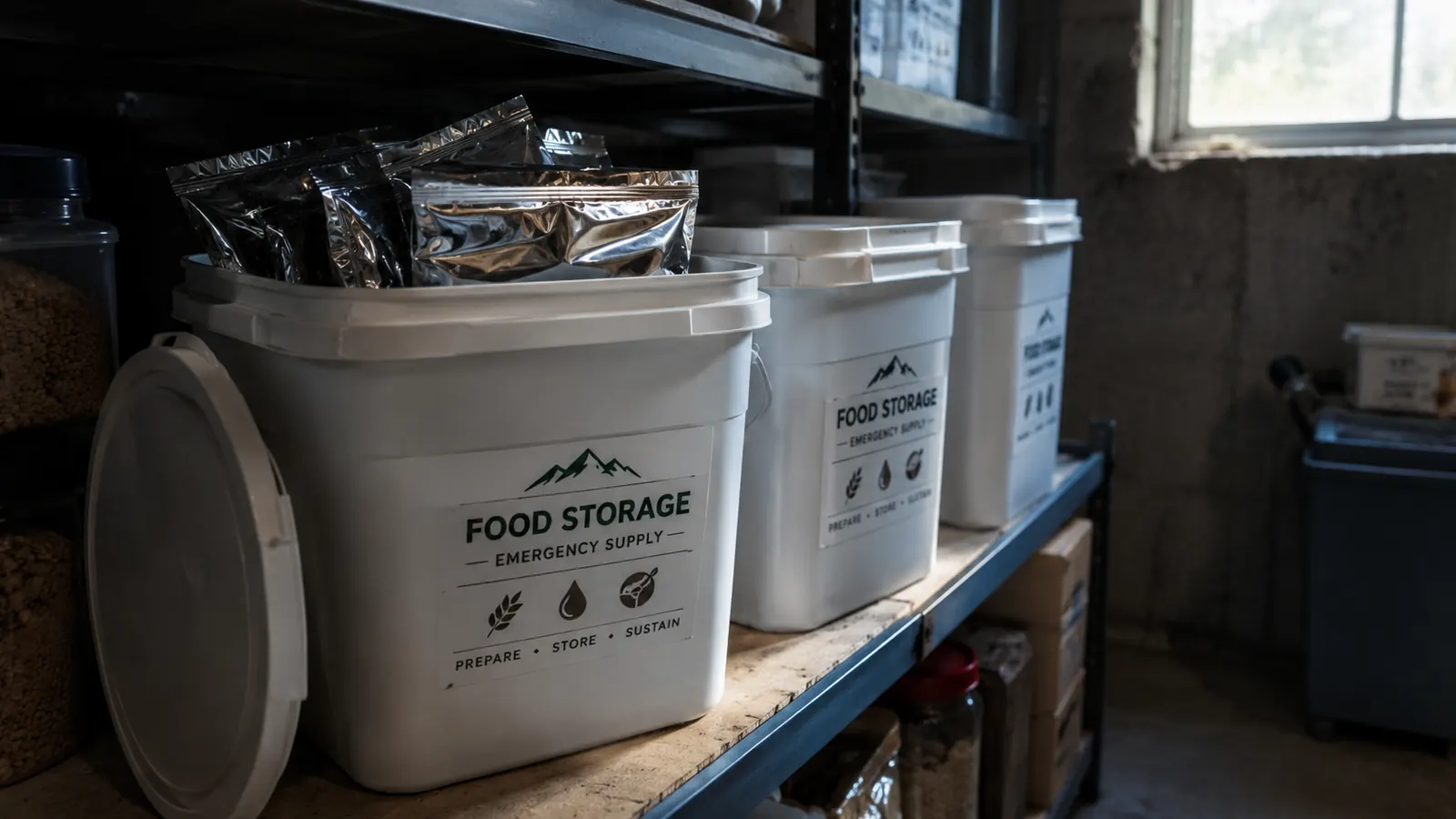
The ice storm of 2014 knocked our power out for nine days. My wife Carol and I are retired now, but before that I spent thirty years as a lineman restoring power after storms just like it. I've seen what a week without electricity does to a neighborhood. People start eating cold canned food, running out of fuel, and standing in line at the one gas station that has a generator. We got through that storm on a gas grill and a pantry full of cans, but by day six I was sick of soup. That's when I started taking long-term food storage seriously. I don't stockpile for the end of the world. I stockpile for the week when everything goes quiet and the grocery store shelves are empty. It's the same reason I keep a 72-hour kit by the back door. Peace of mind, not panic. Even the get-home bag in my Tacoma gets refilled the same day I use anything out of it. Same principle here.
If you've bought a ReadyWise bucket, you're already ahead of most people. The Favorite Sample Bucket packs 120 servings into a single pail, which covers two people for a month if you stretch it. The company promises a 25 year shelf life when stored correctly. I've opened older buckets that were stored badly, and the food was stale and chewy. I've also opened ones stored right, and they taste as good as the day you bought them. The difference is almost entirely in how you store them. So here's my system, built from years of testing and a few mistakes I don't want you to make. That's the promise, and the promise is real, but it depends on the storage. Do it right and it's there when you need it.
Start with a realistic 120-serving bucket
The ReadyWise Favorite Sample Bucket gives you a month of meals for two, with a 25-year shelf life when stored right. Check today's price on Amazon.
Amazon Check Today's Price on Amazon →Step 1: Pick a cool, dark, dry spot.
The three things that destroy freeze-dried food are heat, light, and moisture. Heat makes the fats in the meat and rice turn rancid, and it speeds up the breakdown of vitamins. Light does the same, and it also fades the labels on the pouches. Moisture is the worst of all. A single leak can turn a day's meal into a clump that is impossible to rehydrate. I had a neighbor who kept his bucket in an unheated garage through two Tennessee summers. When he opened it, the patties had melted into a solid block. That's the failure you're trying to avoid. I have a buddy who stores his in a garage in Arizona. It's not the same food after a summer. Trust me.
The ideal spot is a basement wall away from the furnace, or a closet on an interior wall of the house. Avoid garages, attics, and anywhere near a water heater. Those places get too hot in summer and too damp in winter. In my house, the back corner of the basement stays around 62 degrees all year, even in August, and the humidity runs low. That's where the ReadyWise bucket sits. I check the thermometer once a month, just to be sure.
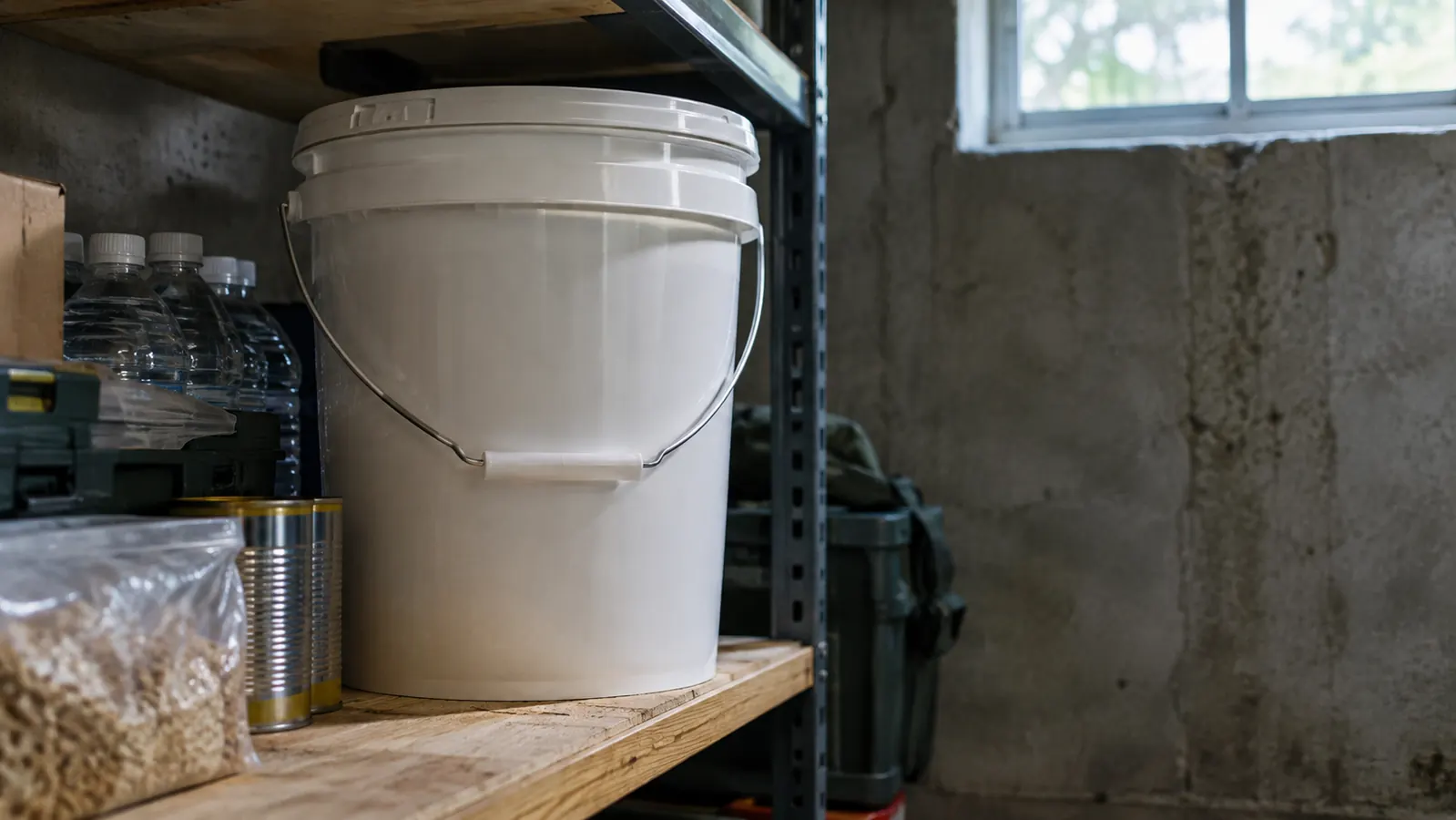
The other half of the spot is elevation. I keep the bucket on a shelf about three feet off the concrete floor. Off the floor matters. If a pipe bursts, or a storm surge pushes water into the basement, the bucket stays dry. A five gallon pail floats, but you don't want to explain to your family why dinner was in a puddle. Three feet is enough to keep it out of the small stuff, and it makes the bucket easy to grab without bending over.
Step 2: Keep the bucket sealed.
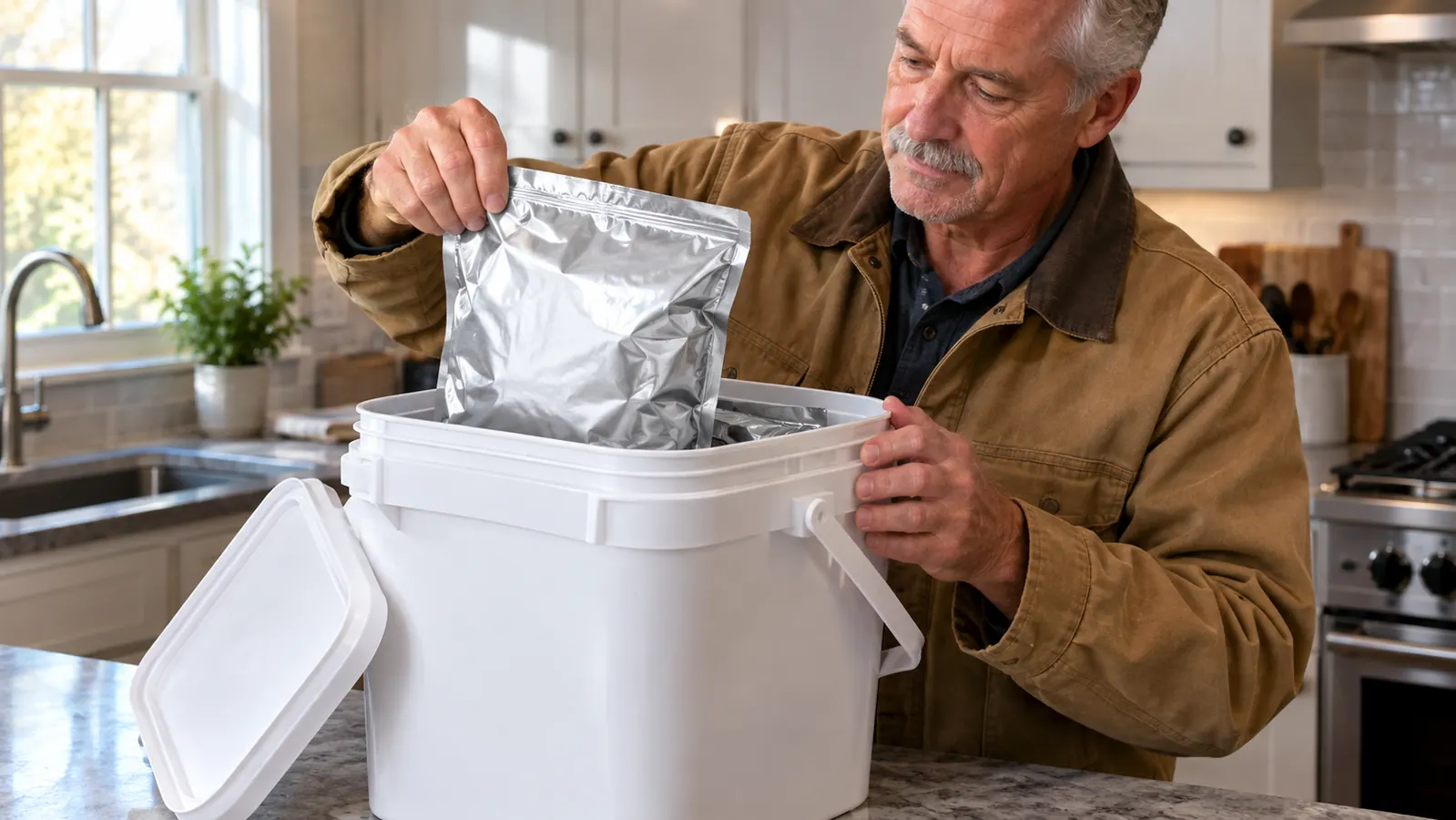
The bucket ships with a twist-on lid that seals well, but the real protection is the mylar pouches inside. Each pouch is a standalone package with its own oxygen absorber. Those pouches are your defense against air and moisture. The oxygen absorber only works when the pouch is sealed, so resist the urge to open one just to smell the food. I've seen people do that at trade shows, then wonder why the food doesn't taste right a few months later.
Once you open a pouch, the clock starts for that meal. The food is meant to be eaten within a day or two, not stored again. So I don't open a pouch until I'm ready to cook the whole thing. If I want to plan meals, I use the inventory list on the side of the bucket, not by tearing into the mylar. I keep the list taped to the lid so I can see what's inside without disturbing anything.
I also keep the outer gamma lid finger tight but not wrench tight. A hard seal is fine, but it makes you avoid touching the bucket. The goal is to use it, not protect it like a museum piece. If the lid is easy to open, you'll rotate the food more often. That's the point. A bucket you're afraid to open is a bucket that will fail you when you finally do need it.
Step 3: Rotate what you eat.
A 25 year shelf life is a promise, but it only means anything if you actually rotate the food. I have a simple system. Every time I use a pouch, I put a replacement order in before I finish that meal. That way the bucket never drops below 120 servings. It's the same rule I use for my truck's spare tire. When you only address it in an emergency, it's too late.
Rotation also means cooking what you store. I pick one night a month to cook a full ReadyWise meal, even when there is no emergency. It does two jobs: it tests the stove and the water supply, and it keeps the food fresh. The last meal I cooked this way was the chicken teriyaki, and we ate every bite. My wife Carol is not a fan of dried food in general, but she said the teriyaki was just as good as takeout. That's a high bar. I brought a pouch on an overnight trip last fall, and it cooked up just as well on a camp stove as it does on the kitchen range. That's the test that matters.
For the pouches, I don't store half-eaten ones. When I open a pouch, I cook the whole thing, and any leftovers go to the refrigerator for the next day. Re-sealing a partially used pouch is a failure waiting to happen. The oxygen absorber is dead once it has been exposed to air. A resealed pouch without a fresh absorber is just a bag of food that will spoil. So I don't do it.
Step 4: Label and track the dates.
I write the purchase year on the side of the bucket in permanent marker, and the date I first open it on the lid. That sounds small, but it is the difference between knowing your stash is good and hoping it is. A bucket with a blurred label is a bucket you can't trust the moment you need it. When the power goes out, you don't want to second-guess whether the food is safe.
Inside the lid I keep an index card with three numbers: the purchase year, the date I last restocked, and the count of pouches. I update it every time I add a pouch or take one out. This is the same habit I use for my freezer, and it takes thirty seconds. When you can see the dates, you rotate effortlessly.
I also keep the original list from the side of the bucket in that index card, in case the printing fades. The list shows which entree is in which mylar pouch, and it fits on a half sheet of paper. A little paper now saves a search later. I also write the date I first opened the outer seal, because that's when the 25 year clock starts in a real sense. Actually, the clock starts at the factory, but the seal date tells me how long it's been exposed to my house's air.
Step 5: Prepare meals properly.
The biggest mistake I see with freeze-dried food is treating it like instant noodles. You need the right amount of hot water and the right wait time. Read the packet. The chicken and rice dish, for example, asks for two cups of boiling water and a fifteen minute rest. Skip the rest and you get crunchy rice. Add too much water and you get soup. The packet tells you exactly what to do, and following it is the whole trick.
I have worked through every entree in the ReadyWise bucket, and the directions are reliable. Use a kettle with a dial thermometer if you have one, or just bring the water to a rolling boil. The key is not to microwave the mylar pouch. The foil lining is not built for that, and you will ruin the meal and start a small fire risk. I tested this once with an old pouch, and it sparked almost immediately. Don't do it.
A camp stove or a gas burner on the kitchen range works fine. I keep a small propane stove in the same basement storage area as the bucket, along with a can opener. When the power goes out, the stove gives me hot water in about four minutes. That turns a bucket of dry food into a warm meal without much fuss. I also keep a spare propane canister, because the bucket is useless if you can't heat water.
What Else Helps
The ReadyWise bucket handles the food, but water is its own full job. I store a gallon of water per person per day, separate from the food. For two people that means fourteen gallons for a week, which I rotate twice a year. The bucket's directions call for about two cups of water per entree, so the water supply is as important as the food. Without water, the best bucket in the world is just dry powder. I keep the water in the same room, near the buckets, so the whole system is in one place. That makes it easy to grab everything at once, which is what you want when the lights go out.
The second thing that helps is a simple way to heat that water. A small propane camp stove and a can opener will turn the bucket into a working kitchen. I also keep a few basic spices in a zipper pouch. The entrees are seasoned well on their own, but a little salt and pepper can make a week of emergency meals feel a lot more normal.
I also keep the bucket in the same place as my other emergency gear. That way, when I do my occasional overnight trip in the Smoky Mountain foothills for gear testing, I can grab a pouch and test it under field conditions. The gear only works if you practice with it. A bucket that sits untouched in a closet for a decade is a decoration, not a plan.
Off the floor matters. If a pipe bursts or a storm surge sneaks in, the bucket stays dry.
Here's the thing. The ReadyWise bucket is not complicated. It's 120 servings in a five gallon pail with a 25 year shelf life. The only way it works for you is if you store it right, rotate it, and actually use it. Do that, and you've covered the second week of the next bad storm. That's the week when most people run out of the food they thought was emergency food. A little planning now means hot meals later.
Store it right, and it'll be there when you need it
The ReadyWise Favorite Sample Bucket is ready to wait in your basement for 25 years. Get it at today's price on Amazon and start your rotation today.
Amazon See Today's Price on Amazon →