
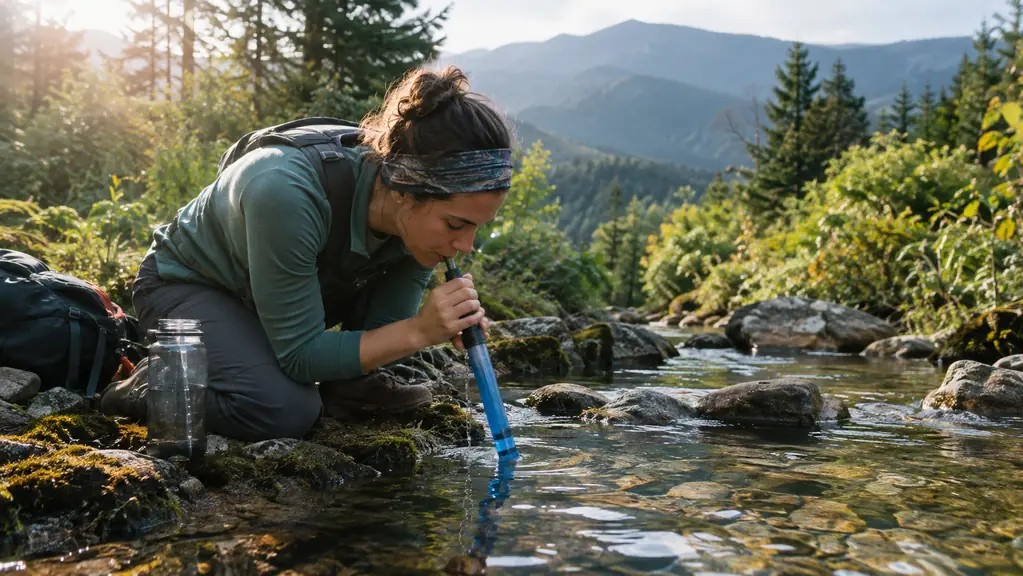
Read enough 4.8-star reviews and you start to notice what they do not mention. The LifeStraw has more than 125,000 ratings and a score most products would trade a limb for, and almost every review says the same three things: it works, it is small, and it is cheap enough to throw in a bag and forget about. All true. But I bought mine for the glovebox of my 2012 Tacoma and the 72-hour kit by my back door, and I have used it the way an emergency would use it, not the way a day hike would. After a year of that, I have a shorter list of things the stars do not tell you.
None of this makes the LifeStraw a bad buy. I keep one in my kit and I will keep buying them. But if you are building a real emergency setup on a normal budget, you deserve to know where this filter shines and where it quietly does not.
The Quick Verdict
A dependable personal straw filter that stops bacteria and parasites, as long as you understand it is one layer of a water plan, not the whole plan.
Amazon Check Today's Price →The filter that earns its place in any kit, if you know its limits.
LifeStraw stops bacteria and parasites down to 0.2 microns, weighs almost nothing, and is affordable enough to keep a spare in every bag. It is not a full water plan. It is the layer that goes where the stove cannot.
Amazon Check Today's Price on Amazon →How I Used It
I want to be clear about what I did and did not do. I did not send water samples to a lab. I am not a microbiologist. I am a retired electrical lineman who spent thirty years working in the rain, and who spent nine days without power one February when an ice storm took down the lines in my own yard. What I can tell you is how the LifeStraw behaves when you actually use it: how fast it flows, how awkward it is at certain angles, how it drinks from a creek versus a puddle versus a jug, and how it has held up after a year of being packed, dropped, and occasionally forgotten.
The version of this test you see in most reviews is a hiker kneeling at a clean mountain stream, drinking straight from the source. The emergency version is different. It is you, after dark, with a flashlight in your teeth, trying to fill a bottle from a creek you would not normally touch, because the tap stopped running. The LifeStraw handles both. But it handles them very differently.
I tested it three ways over about a year. On day hikes in the Smokies, drinking from the sort of clear streams the filter was built for. From a bucket in my own yard, the kind of standing water you might actually face after a storm. And I handed it to my wife Carol, because she has no patience for gear that needs a lesson to operate, which is the best usability test I know.
The most useful test was the overnight in the foothills last fall. I packed the LifeStraw as my only filter, and I made myself use it for every drop of cooking and drinking water for 24 hours. It did the job, and it also taught me the real rhythm of the thing: slow, deliberate, and fine for one person who plans ahead. It is not fast enough to fill a pot quickly, so I learned to start filtering early, before the stove was ready, not after.
What the 4.8 Stars Don't Tell You
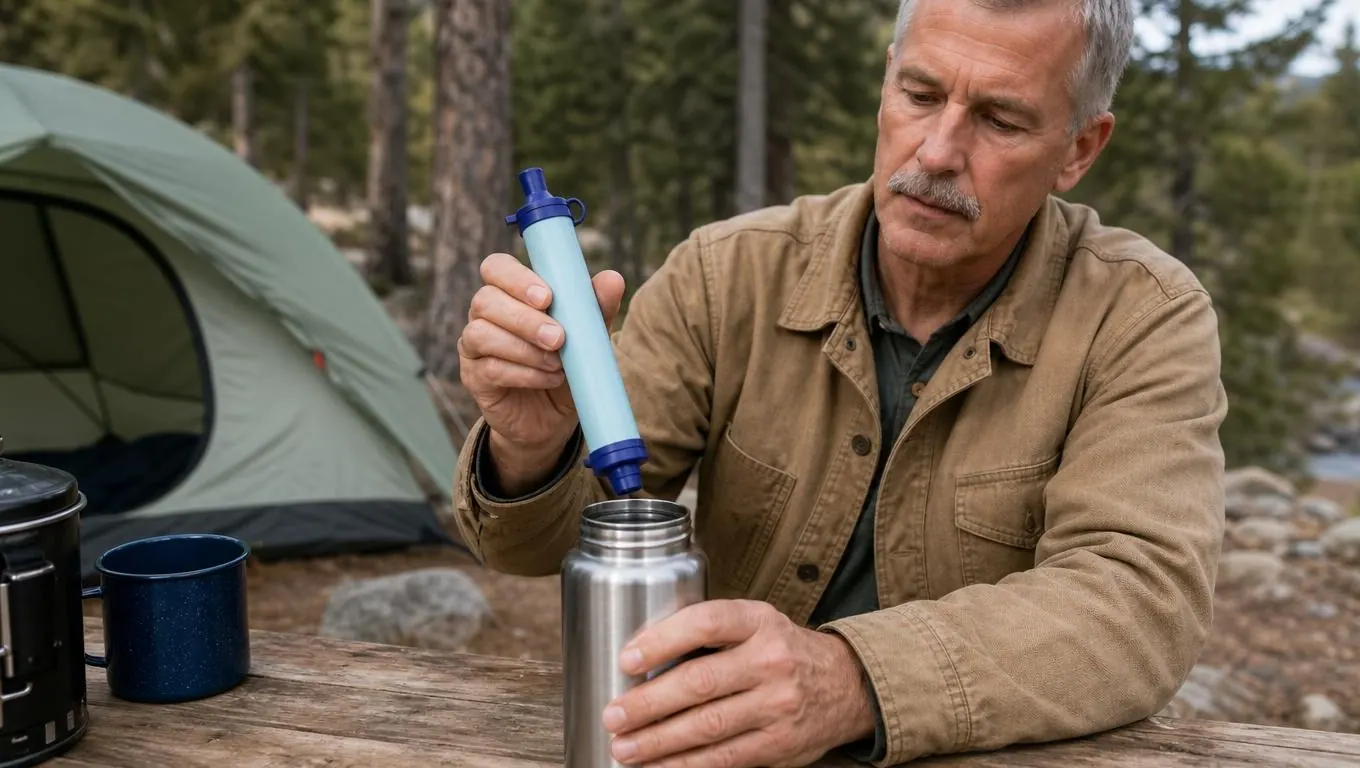
The first thing the reviews do not tell you is how slowly it flows. The LifeStraw works by sucking water through hollow fibers with pores at 0.2 microns, which is small enough to catch most bacteria and protozoa. That is a wonderful thing, and it is also why drinking from it feels like a thick milkshake rather than a straw. You can drink from a stream, but you will be at it a while. For one person, that is fine. For a family, it is a bottleneck. Carol and I both drank from the same source on a warm day, and we took turns the way you take turns with one lawn chair.
The second thing is what it does not remove. The 0.2 micron rating stops bacteria and parasites. It does not stop viruses, which are smaller, and it does nothing for chemicals, heavy metals, or salt. For most backcountry streams in the continental United States, that is the right trade. For a flood, a broken sewer line, or any water you suspect has industrial runoff in it, it is not enough on its own. The packaging does not hide this, but the review sections tend to.
The third thing is the one nobody mentions because it sounds obvious: it is a straw, and a straw requires you to put your face near the water. You kneel, you lean, you drink. If the water is shallow, you are drinking from the top inch, where the warm stuff floats. If the bank is muddy, you are kneeling in the mud. In a calm emergency, that is an inconvenience. In a stressful one, it is the difference between hydrating and not bothering.
And the fourth thing: it filters into you, not into a bottle. There is no way to fill a container with this unless you buy the bottle version or add a separate piece. So it is a drink-now tool. If you want to treat water and carry it back to the family, you need a second step. That is not a design flaw. It is just the job this tool was built for, and it is a smaller job than some reviews imply. There is also the intake slit at the bottom, which is not a wide mouth and does not like murky water full of leaves or grit. The LifeStraw will suck up the floaty stuff and slow down until you blow it back out, which works, but which also means you are drinking from a straw that just had a leaf in it. A bandana around the intake fixes most of it, and I consider that part of the system, not an extra.
The One Thing That Could Ruin a Stored Filter
Here is the one that should be on every review and is not: if this filter freezes with water inside it, the hollow fibers can crack, and a cracked filter is a failed filter. Not 'less effective.' Done. The ice expands, the fibers split, and you will not be able to see the damage. I keep my 72-hour kit by the back door of a house in Tennessee, and that mudroom dips below freezing several nights a winter. That means the LifeStraw has to live somewhere else when the cold comes, or it has to be bone dry before it goes back in the kit. The manufacturer's guidance is that it should not be allowed to freeze, and that if you suspect it froze, you should replace it.
The drying part is its own chore. To dry it, you blow through it until no water comes out, then you let it sit. I store mine in the little tube it came in, uncapped, and I have learned to treat a damp filter the way I treat a damp sleeping bag: it goes back in the kit only when it is dry, or it comes out smelling like a dishrag. None of that is in the marketing.
There is also the rated life to keep in mind. LifeStraw rates it for 1,000 gallons, which is roughly 4,000 liters, a lot of water for one person. It is not a lifetime filter, and there is no gauge on the side to tell you where you are in that 1,000 gallons. You are the gauge. If this is your only filter and you use it hard, write the purchase date on the tube with a marker. I do.
If it freezes with water inside it, the hollow fibers can crack, and a cracked filter is a failed filter. Done. You will not be able to see the damage.
What I Pair It With
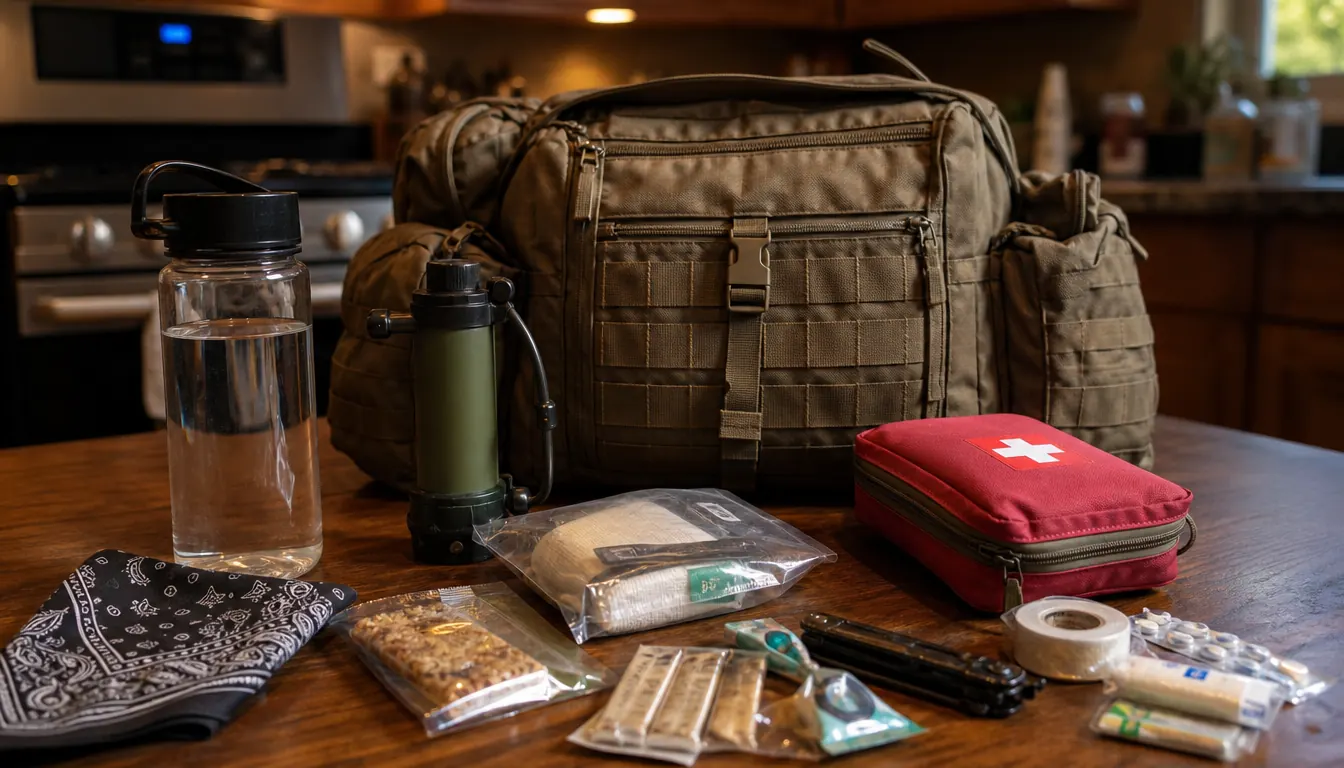
The honest way to think about the LifeStraw is as one layer of a water plan, not the water plan. If the tap stops, my first move is the jugs of water I keep in the garage. My second is boiling, because boiling kills everything and costs nothing but propane. The LifeStraw is my third layer, for the places a pot and a stove cannot go: the car, the walk home, the creek behind the house when the propane runs out.
To make it more useful, I added a few things that cost very little. A wide-mouth bottle so I have something to fill. A bandana to pre-filter the floaty stuff, because the intake is a small slit and it will happily suck up leaves. And a handful of purification tablets as a backup that does not care about viruses, freezing, or cracked fibers. The tablets weigh almost nothing and cost about the same as a candy bar.
Used that way, the LifeStraw stops being a gimmick and becomes what it actually is: a small, dependable, personal filter that gives you clean drinking water almost anywhere, as long as you are willing to put your face near the water and wait.
If the straw shape does not suit you, LifeStraw sells a bottle version of the same filter, and I have looked at it more than once. The advantage is obvious: you can fill it, screw on the cap, and carry clean water with you, which solves the biggest limit of the plain straw. I have not switched, mostly because the plain filter already lives in three places in my life and the bottle is a different tool for a different job. But if you are starting from zero and you want one thing that does both, the bottle is worth a serious look.
Alternatives I Considered
For what it is worth, I did not land on the LifeStraw without looking around. Squeeze-style filters interest me because they filter into a bottle and they last longer on paper. I have not bought one yet, partly because the squeeze bag they ship with is not known for lasting, and partly because for my use, drinking straight from the source is enough. Boiling beats everything for a fixed location, and tablets are the best backup because they are small and immune to cold. If I were filtering for three people instead of two, I would be looking hard at a gravity filter. For one person, on a budget, the LifeStraw is the simplest thing that does the job.
One more honest note: the 4.8 stars are real, and they are mostly earned. The people who rate this filter highly are usually using it the way it was designed to be used, for a single person drinking from reasonably clean outdoor water. The complaints that do show up, about slow flow or awkward angles, are not noise. They are the truth leaking through. The filter works. It is just not a magic wand, and no filter is.
What I Liked
- Stops bacteria and parasites down to 0.2 microns
- Weighs almost nothing and fits in any pocket or pouch
- No pumping, no priming, nothing to break except the filter itself
- Rated for 1,000 gallons, years of use for one person
- Affordable enough to keep a spare in every bag
Where It Falls Short
- Flow rate is slow, drinking takes patience
- Does not remove viruses, chemicals, heavy metals, or salt
- You have to put your face near the water to drink
- Cannot fill a bottle or filter water for a group
- Ruined if it freezes with water inside, and you cannot see the damage
- No way to track how much of the 1,000 gallon rating you have used
Who This Is For
Buy the LifeStraw if you want a cheap, dependable way for one person to drink from a creek in a pinch. Buy it if you are building a get-home bag and you want the water problem solved without adding weight or spending much. Buy it if you are a hiker who wants a backup filter that fits in a pocket. It earns its place in all of those kits, and it has earned its place in mine.
Who Should Skip It
Skip it if you are filtering for a family, because the straw design means one person drinks at a time and the flow rate will test everyone's patience. Skip it if you live somewhere with hard winters and you cannot commit to keeping it from freezing. Skip it if the water you are preparing for could contain viruses, chemicals, or salt, because this filter will not touch those. And skip it if you want to treat water and carry it, because you need a bottle system for that. None of those are reasons to be disappointed in the LifeStraw. They are reasons to buy the right tool for the right job.
The Bottom Line
So what is the honest verdict after a year? The LifeStraw is exactly as good as its rating says, and exactly as limited as its design says. It is a superb personal filter for bacteria and parasites, small enough to live in a glovebox and affordable enough to keep as a spare. It is not a family water system, it is not a virus filter, and it will not survive a hard freeze. None of that is a reason to leave it out of your kit.
I keep one in my Tacoma, one in the 72-hour kit, and one in my pack for the Smokies. I also keep a bottle, a bandana, and a strip of tablets next to them, because I learned the hard way that no single tool solves water. The LifeStraw solves the part it was built for, and it solves it well. Knowing the rest is what the 4.8 stars do not tell you, and it is the part that will actually keep your family safe.
One person, one creek, one dependable filter.
If you want clean drinking water in a pinch without carrying a pump or waiting on a pot to boil, this is the simplest honest option I have tested. Just remember it is a straw, not a faucet.
Amazon Check Today's Price on Amazon →