
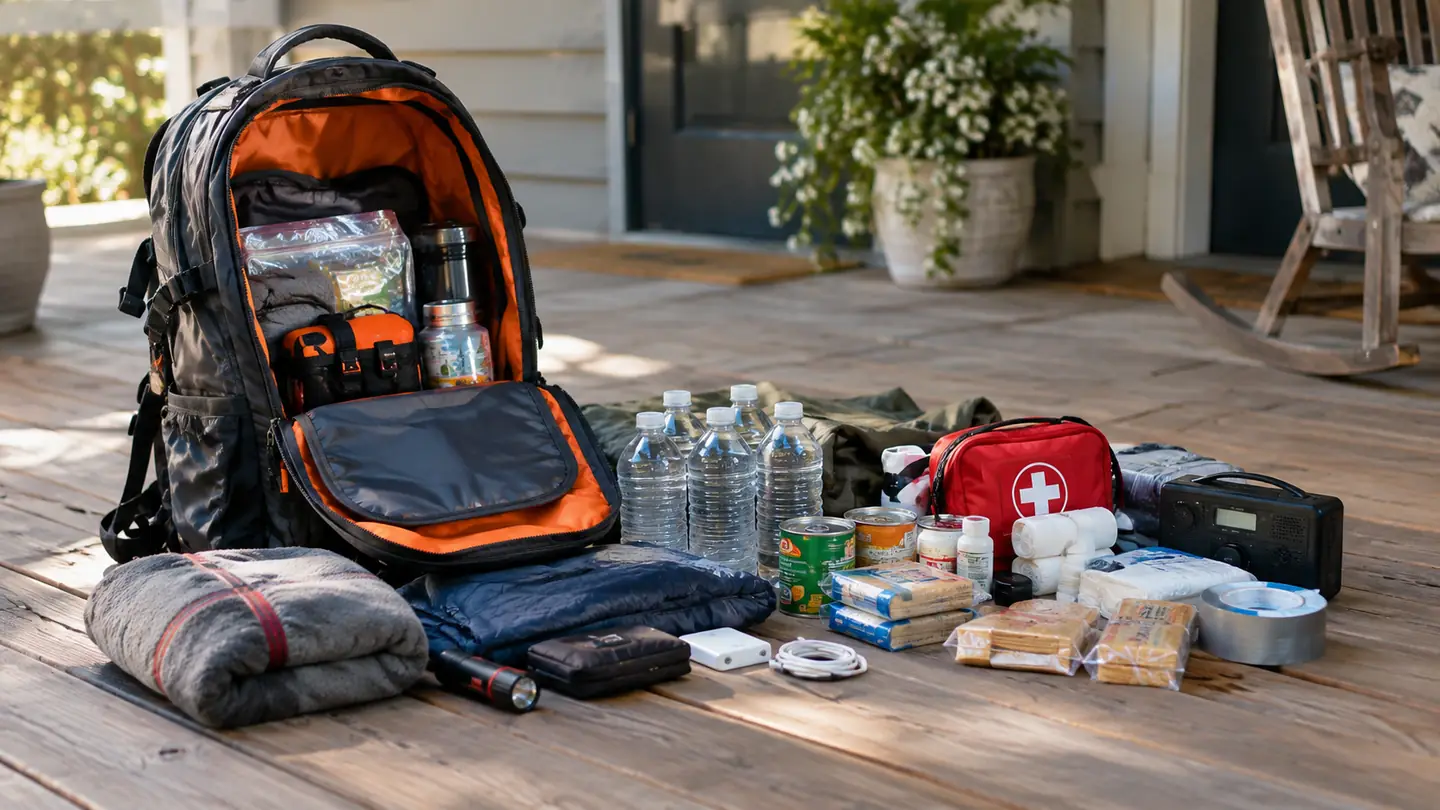
I bought the Ready America 70280 Emergency 2-Person 3-Day Survival Backpack about fourteen months ago, and I have gone through it at least six times since. That is the part most reviews leave out: nobody opens the bag. They take the picture, write the words, and put it back in the closet. I have actually lived out of this kit on two overnight trips in the Smoky Mountain foothills, and I have pulled it apart on the kitchen table more times than I can count. So here is the honest version, the one that tells you what to keep, what to replace, and what to add before you ever need it.
The short version is this. The Ready America 70280 is a genuinely good starting point for a couple that wants a real 72-hour kit without assembling forty items from scratch. The bag itself is solid, the food and water are the real thing, and the price is fair for what you get. But it is not ready to live in your trunk the day it arrives. A few items are filler, a few are undersized, and a few are missing entirely. That is not a reason to skip it. It is a reason to buy it, open it, and spend an hour making it yours.
The Quick Verdict
A solid, honest 72-hour foundation for two people, but plan on swapping a few items and adding a few more before it earns its place by your door.
Amazon Check Today's Price →A real 72-hour foundation, ready to improve
The Ready America 70280 gives you food, water, light, and shelter in one bag. See today's price on Amazon and decide for yourself.
Amazon Check Today's Price on Amazon →How I've Used It
I am Wade Callister, a retired electrical lineman who spent thirty years restoring power after storms. I have seen what happens to families who thought the lights would come back on in a day. An ice storm once left my own house dark for nine days, and that is when I stopped trusting luck and started building real kits. My wife Carol and I keep a 72-hour kit by the back door, and I carry a get-home bag in my 2012 Tacoma year round. A few times a year I do a short overnight in the foothills to test gear the way it will actually be used.
The Ready America 70280 went on two of those overnights with me. The first was in early May, a cool night with a forecast low of 47 degrees. I carried the bag about two miles into the foothills, set up the tent in the dark on purpose, and ate one of the entree pouches cold. The second trip was in late September, warmer and wetter, and I used the tube tent as a ground cloth under the main tent because the forecast called for rain. I slept out of it, ate from it, and used its light in the dark. I also unpacked it completely on the kitchen table, weighed every item in my hand, and asked the same question about each one: would I trust this if the power was out for three days? That question is the whole review.
One thing up front. This kit is designed for two people for three days, and that is exactly what it is. It is not a family kit, it is not a bug-out bag for a week in the woods, and it is not a survival pack for a solo hiker. If you buy it expecting any of those things, you will be disappointed. If you buy it for what it is, a two-person, three-day emergency foundation, it does the job well.
What Nobody Tells You About the Food
The food is the most honest part of this kit, and also the part that needs the most explanation. You get a two-day supply of food and water per person, not three. The kit is called a 3-Day kit, and the box says 2-Person 3-Day, but the food and water inside cover two people for two days. That is the first thing nobody tells you, and it matters.
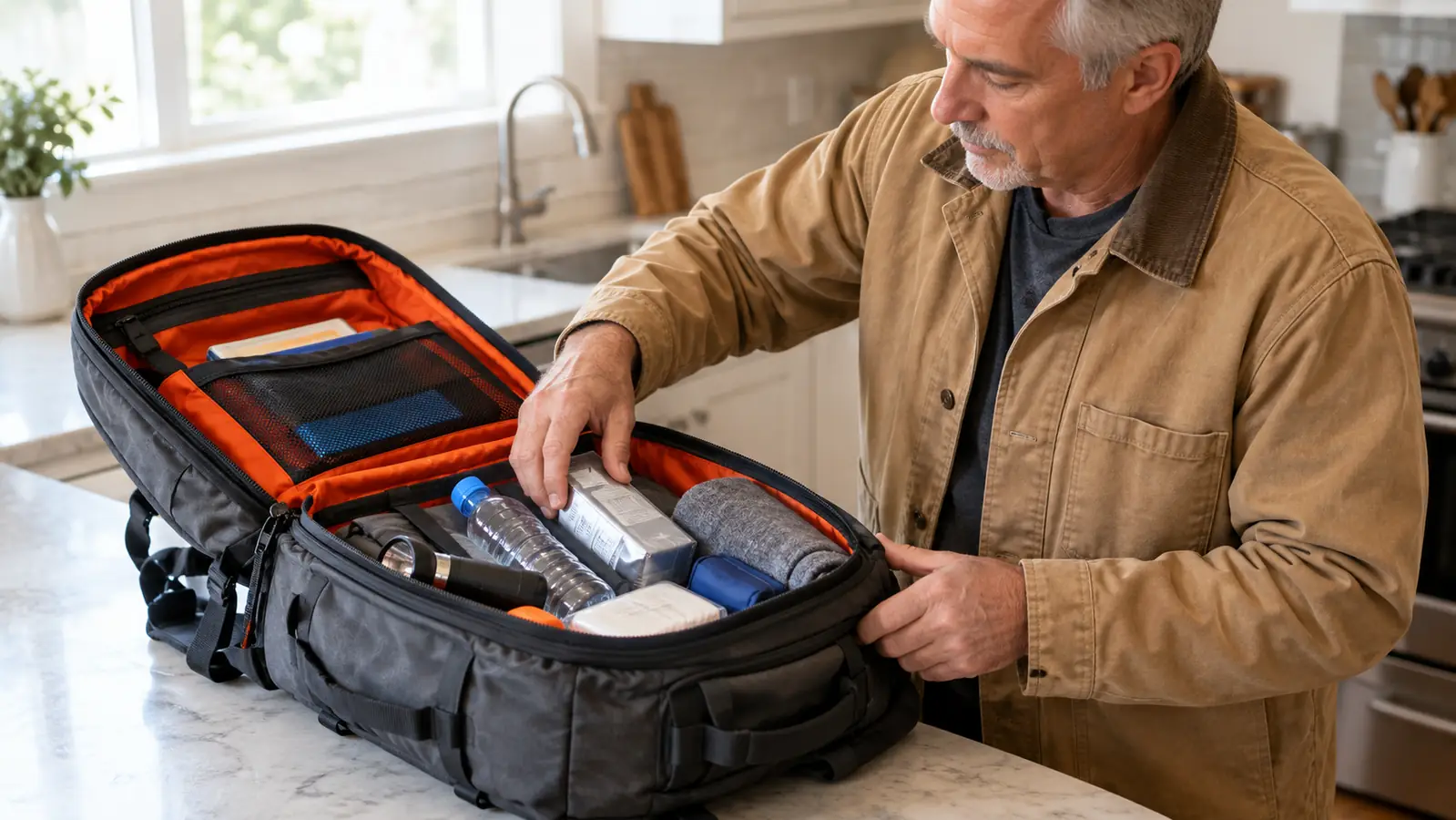
The food itself is decent. You get entree pouches, a snack, a drink mix, and an accessory packet per person. The pouches are the kind you can eat cold or warmed up, and they are not gourmet, but they are real food with real calories. I ate one of the entrees cold on the May overnight and it was fine. Not great, but fine, and in an emergency, fine is exactly what you want. On the September trip I warmed one in a pan of hot water and it was noticeably better, which is worth knowing if you have any way to heat water.
The water is the bigger issue. Each person gets six 8.45-ounce pouches, which is about 50 ounces per person per day. That is roughly half of what an adult needs in a normal day, and more than half of what you need if you are stressed, walking, or dealing with heat. The kit assumes you have access to additional water, and that assumption is not printed on the box.
So here is the honest advice. Keep the food, it is solid. Add water, at least another gallon per person per day. And check the expiration dates on the food the day the kit arrives, because you want to know when it turns over, not discover it in the dark. On my kit, the food dates ran about five years out, which is reasonable, but I wrote the replacement month on a piece of tape and stuck it to the inside of the lid so I do not have to open the bag to remember.
The kit is called 3-Day, but the food and water inside cover two people for two days. That is the first thing nobody tells you.
The Gear That Surprised Me
The Ready America 70280 includes a 2-person tent, two sleeping bags, two foam sleeping pads, a flashlight, a radio, a first aid kit, a 5-in-1 survival tool, a tube tent, an emergency blanket, and a few smaller items. Some of this is genuinely good. Some of it is filler. Let me be specific about which is which.
The tent is the surprise. For a kit at this price, I expected a thin pop-up that would tear the first time I touched it. What I got is a real two-person dome tent with a rainfly, and it held up fine on both overnights in the foothills. It is not a backpacking tent, and it is not built for a decade of heavy use, but for a 72-hour emergency it is more than adequate. The sleeping bags are the same story. They are compact, they zip together, and they kept me warm on the May night that dropped into the upper 40s. They are not winter bags, but they are honest three-season bags.
The flashlight and radio are where the kit shows its budget. The flashlight takes AA batteries and puts out enough light to move around camp, but it is not bright enough to work by for any length of time. I tested it against a cheap headlamp I keep in the Tacoma, and the headlamp won by a wide margin. The radio is AM/FM with a hand crank and a USB port, and it works, but the crank feels flimsy and the reception is average. Both are fine as backups. Neither is something I would trust as a primary light or a primary source of information.
The first aid kit is small but practical. It has bandages, gauze, tape, antiseptic wipes, and a few basics, and it is enough for minor cuts and scrapes. It is not enough for a real medical emergency, and it does not include any medications. If you or your family take daily prescriptions, that is on you, and that is true of every kit on the market.
What I'd Replace First
Here is the part that makes this an honest review instead of a product description. I would replace four things before this kit ever goes in the trunk.
First, the flashlight. Swap it for a small LED headlamp and a spare set of batteries. A headlamp keeps your hands free, which matters when you are cooking, carrying, or helping someone else. The included flashlight is fine as a backup, but it should not be your main light. I keep a headlamp in the front pocket of the bag now, and I have used it more in the last year than I have used the included flashlight twice.
Second, the water. Add at least one gallon per person per day, and store it in bottles you can rotate. The pouches in the kit are a start, not a supply. If you have a water filter or purification tablets, add those too, because you may not have access to clean tap water. I added two one-gallon jugs to the bag, and I swap them out every six months when I check the food dates.
Third, the first aid kit. Add a tourniquet, a roll of medical tape, a pair of trauma shears, and any personal medications. The included kit is fine for scrapes, but it is not fine for a real injury, and the difference is a few dollars and a few minutes. I also added a small tube of antibiotic ointment and a pack of blister bandages, because those are the two things I have actually needed on trips.
Fourth, the radio. The included one works, but I would add a small battery-powered NOAA weather radio as a backup. In a storm, knowing whether the danger has passed is as important as having food and water. I tested the included radio in the basement of my house, where I would actually be during a tornado warning, and the reception dropped to almost nothing. That test is what convinced me to add the NOAA radio.
What I'd Add That Isn't in the Box
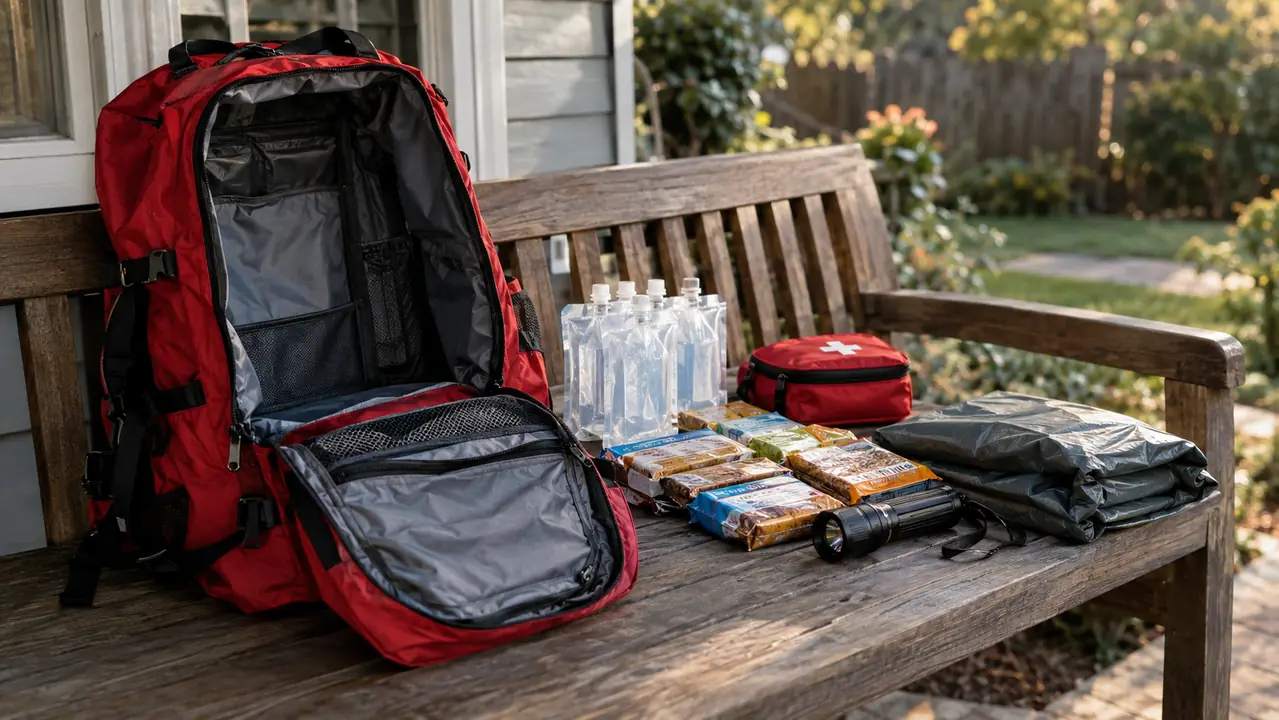
No kit can include everything, and the Ready America 70280 does not try. Here is what I added to mine, and what I would add to yours.
A multi-tool. The included 5-in-1 survival tool is a whistle, a compass, a match holder, and a couple of other small functions, and it is better than nothing, but it is not a real tool. A basic multi-tool with pliers, a knife, and a screwdriver will do more in an emergency than the included tool ever will. I keep mine in the same front pocket as the headlamp, so I do not have to dig through the whole bag to find it.
A power bank. The radio has a USB port, but it is not a reliable way to charge a phone. A small power bank, kept charged and checked every few months, will let you call for help, check the news, and let family know you are safe. I use a 10,000 mAh bank, which is enough to charge a phone three or four times, and I check it on the same schedule as the water jugs.
Cash in small bills. ATMs and card readers do not work without power, and in the first days after a storm, cash is the only thing some places will accept. A little cash in small bills, tucked into the bag, has gotten me out of more than one tight spot. I also added a small notepad and a pen, because you will need to leave notes for family or write down information, and phones die.
A copy of your important documents. A driver's license, insurance card, and a list of medications, sealed in a zip bag, can save you hours of frustration at the worst possible time. I keep mine in the front pocket of the bag, and I check it every time I check the food dates. Carol keeps a copy of hers in the same pocket, so the bag works for both of us without any extra thought.
Who This Is For
The Ready America 70280 is for the couple that wants a real 72-hour kit without building one from scratch. It is for the family that wants a bag by the back door, a bag in the trunk, and a bag at the office, without spending a week assembling forty items. It is for the person who knows that the first 72 hours after a storm are the hardest, and that a little preparation is the difference between stress and peace of mind.
It is also for the person who is willing to spend an hour making the kit their own. The Ready America 70280 is a foundation, not a finished product. If you buy it, open it, check the dates, swap the flashlight, add water, and add a few personal items, you will have a kit that is genuinely ready. If you buy it and leave it in the box, you will have a false sense of security, and that is worse than no kit at all.
Who Should Skip It
If you need a kit for more than two people, skip it. The Ready America 70280 is sized for two, and stretching it to three or four means cutting the food and water in half, which defeats the purpose. Buy two kits, or buy a larger kit, and do it right.
If you need a serious bug-out bag for a week in the woods, skip it. This is an emergency kit, not a wilderness survival pack. The tent and sleeping bags are fine for a night in the backyard or a night in a shelter, but they are not built for a week of hard use in the backcountry.
And if you are not willing to open the bag and make it yours, skip it. The Ready America 70280 is a starting point, and a starting point only works if you actually start. The families I have seen do well after a storm are the ones who knew what was in their kit, when it expired, and how to use it. The ones who did not are the ones I met on the job, standing in the dark, hoping someone would show up.
What I Liked
- Real two-person dome tent with a rainfly, not a thin pop-up
- Food pouches are actual food with real calories, not candy bars
- Sleeping bags zip together and handled a night in the upper 40s
- Fair price for what is in the bag
- Compact enough to keep by the back door or in a trunk
Where It Falls Short
- Food and water cover two people for two days, not three
- Water supply is roughly half of what an adult needs per day
- Flashlight is too dim to work by
- Radio reception drops in a basement, where you would actually use it
- First aid kit is fine for scrapes only
- No multi-tool, power bank, or cash, so plan on adding those
Start with a solid foundation, then make it yours
The Ready America 70280 is a real 72-hour kit at a fair price. Check today's price on Amazon, and plan to spend an hour upgrading it when it arrives.
Amazon Check Today's Price on Amazon →