
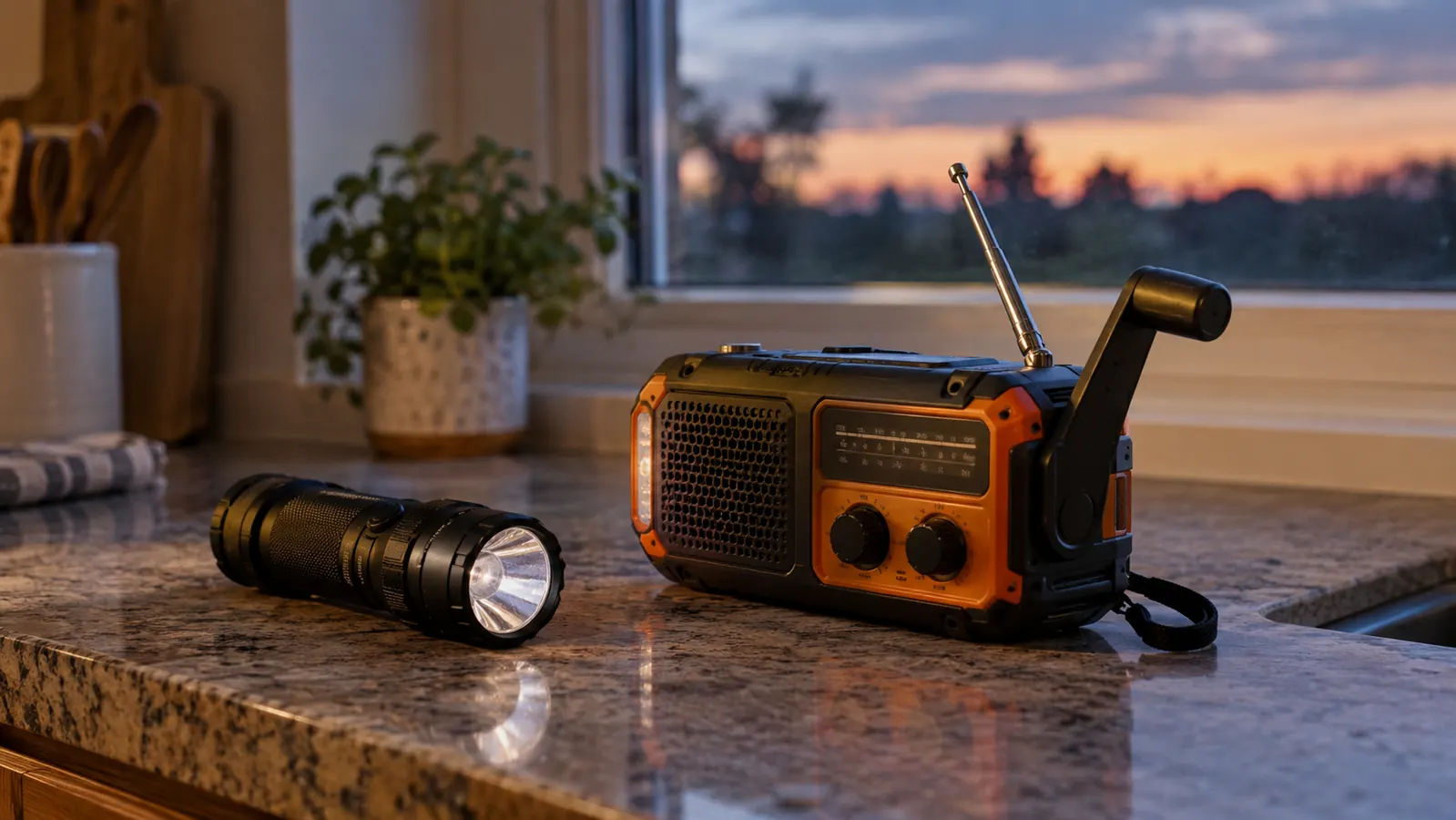
I spent 30 years restoring power after storms, and I can tell you the exact moment a phone stops being useful. It is the moment the battery hits 12 percent, the cell tower goes down, and the only sound in the house is the wind. That is why I keep a FosPower NOAA Emergency Weather Radio in the kitchen drawer, not in the garage. It is not a gadget. It is the difference between guessing what the storm is doing and knowing.
Your phone is a great tool on a normal day. On a bad day, it is a paperweight with a dead battery. Here are ten reasons a weather radio earns its place in your kit, and why the FosPower model is the one I reach for first.
When the tower goes dark, this still works
The FosPower NOAA Weather Radio runs on solar, hand crank, and batteries. It pulls in NOAA broadcasts, AM and FM, and charges your phone in a pinch. That is the radio I keep by the back door.
Amazon Check Today's Price on Amazon →It works when the cell tower does not
A phone alert has to travel from the National Weather Service to a cell tower to your phone. That chain breaks the moment the tower loses power or gets jammed. A NOAA weather radio receives the broadcast directly, over the air, with no middleman. During the ice storm that left my house dark for nine days, the towers were useless for the first 48 hours. I remember standing at the kitchen window on the second morning, watching the trees come down, and the radio never blinked. It sat on the counter giving me the forecast while the phone in my pocket was just a dark rectangle.
The battery is not a countdown timer
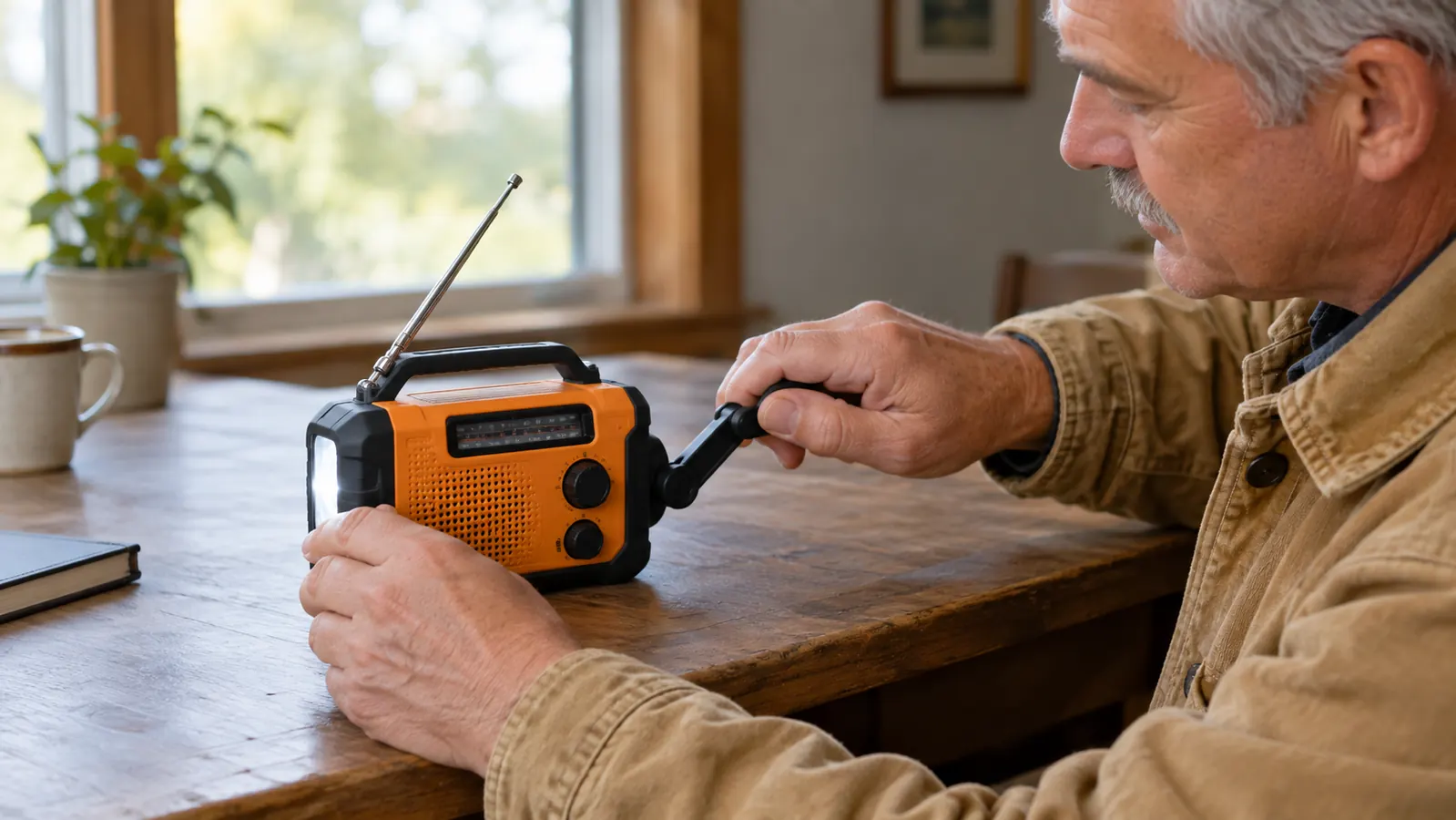
Your phone starts the day at 100 percent and spends it dying. A hand crank radio does not have that problem. Three minutes of cranking gives you a solid stretch of listening, and the built-in solar panel tops it off during daylight. I have used the FosPower radio on overnight trips in the Smoky Mountain foothills and never once worried about the battery. On one October trip, I left it on the tailgate of my 2012 Tacoma for an afternoon, and the panel put enough charge back in that I did not touch the crank until the next morning.
It keeps working when the network is congested
Even when towers stay up, they get slammed. Everyone in the county is trying to call, text, and stream at the same time. Your alert can arrive late or not at all. NOAA broadcasts do not compete for bandwidth. The warning goes out on the radio frequency, and every radio in range gets it at the same second. During a severe thunderstorm watch last spring, my son in Nashville got his alert 20 minutes after I heard mine, and his tower was still up. Mine came through the radio while the power was already out.
It tells you what is coming, not just that something is coming
A phone alert says 'Tornado Warning' and leaves you guessing. A weather radio gives you the full message: the storm's path, the towns in the warning, how fast it is moving, and when it will arrive. That detail matters when you are deciding whether to move the family to the interior hallway or just keep an eye on the sky. One night in June, the radio told me the rotation was tracking two miles north of us. We stayed put. The next morning, the damage was all on the other side of the county line.
It charges your phone instead of the other way around
This is the part people do not expect. The FosPower radio has a USB port, so the same crank that powers the radio can put a little life back into your phone. That one call to your mother to say you are okay can be the difference between a scary night and a terrifying one for the people who love you. During the ice storm, I used it to keep Carol's phone alive long enough to text her sister in Georgia. It is not a fast charge, but it does not need to be. It just needs to be there.
It does not care about the temperature
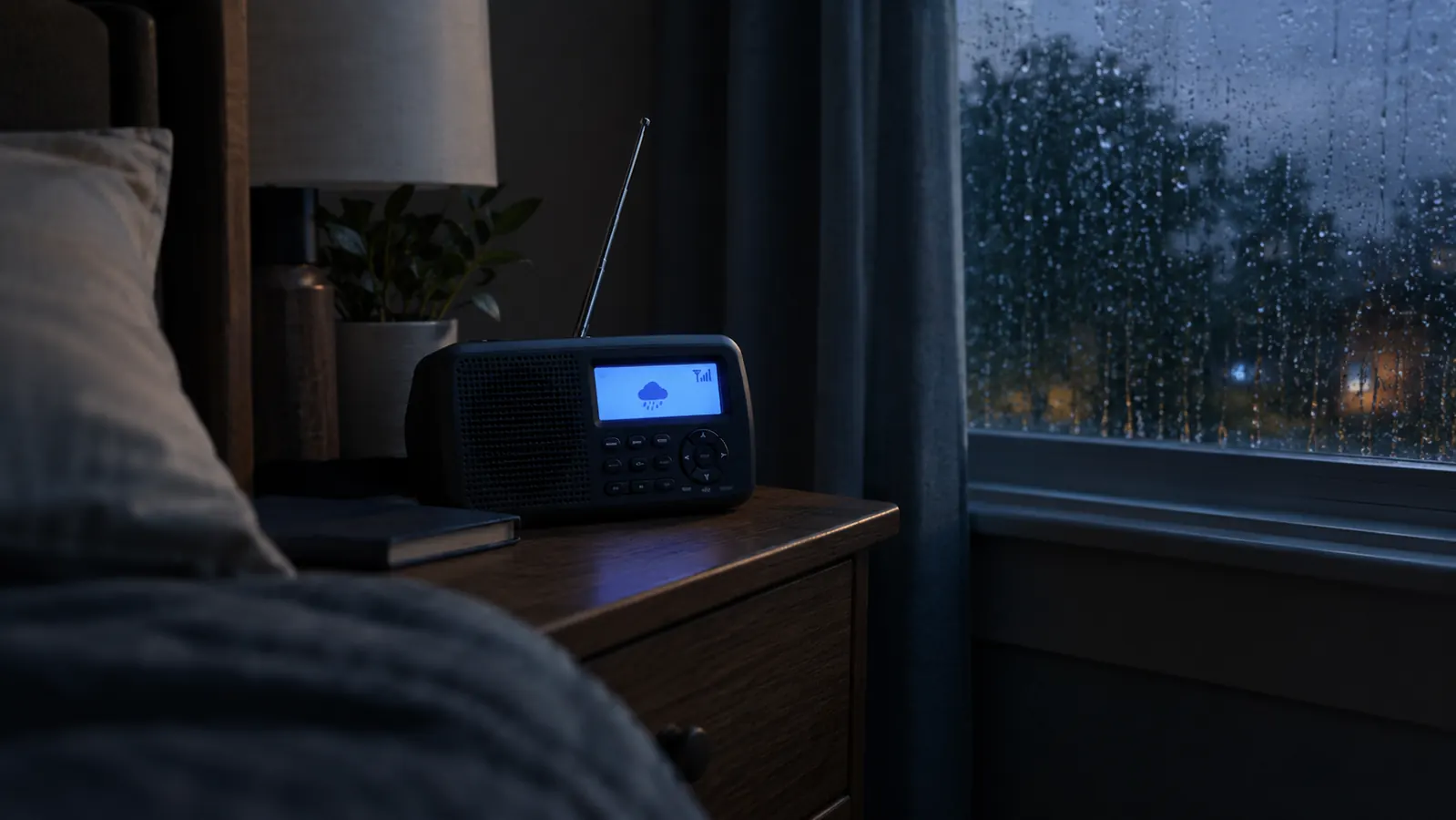
Phones shut down in extreme cold. I have seen it a hundred times on the truck. A weather radio with a hand crank keeps working in the cold, the heat, the rain, and the wind. It is built for the conditions that knock the power out in the first place. I have had mine in a 20-degree work shed, in a truck cab that sat in the sun all day, and on a damp picnic table during a drizzle. It never once refused to turn on.
It gives you something useful to do with your hands
When the power is out and the wind is howling, sitting in the dark with a dying phone is a special kind of helpless. Cranking the radio gives you a job. It is a small thing, but it keeps you calm, and calm is a survival skill. My wife Carol will tell you I am easier to live with when I have a task. During the nine-day outage, I made a habit of cranking for three minutes every evening while the news came on. It gave the night a rhythm instead of just a wait.
It works for the whole neighborhood, not just you
A phone alert is personal. A weather radio is communal. When the power goes out, the neighbors end up on the porch or in the driveway, comparing notes. The FosPower radio has a speaker loud enough that the whole group can hear the update at once. That is worth a lot when everyone is trying to figure out the same storm. On the third night of the ice storm, I set it on the porch rail and six of us stood around it listening to the county update. Nobody had to huddle over a single small screen.
It does not need a signal to be useful
Even with no NOAA broadcast, the radio still pulls in AM and FM. During the ice storm, the local AM station was the only source of information for three days. It carried school closures, shelter locations, and which roads were passable. My phone could not do any of that with a dead battery and no tower. I wrote the station frequency on a piece of masking tape and stuck it to the back of the radio, so I would not have to hunt for it in the dark.
It is ready when you are, every single time
A phone is a tool you have to remember to charge, update, and keep on your person. A weather radio sits in the drawer, ready to go, for months at a time. I check mine twice a year when the clocks change. That is the whole maintenance routine. When the storm hits, it works. I also keep a spare set of AA batteries in the same drawer, and I test the crank once a month while I am making coffee. It takes ten seconds, and it means I never find out the radio is dead on the night I need it.
What I'd Skip
I would skip the idea that you need a radio with every bell and whistle. You do not need a screen that shows radar maps. You do not need a radio that connects to your phone. You need a radio that receives NOAA broadcasts, runs on power you can create yourself, and survives being dropped on the floor. The FosPower radio does exactly that, and it does it without costing a fortune.
Three minutes of cranking gave me the full forecast while my phone sat dead in my pocket. That is the whole argument.
Put one in the drawer before you need it
The FosPower NOAA Emergency Weather Radio is the one I keep by the back door, and the one I hand to neighbors when the sky turns green. It is cheap insurance for the worst night of the year.
Amazon Check Today's Price on Amazon →