
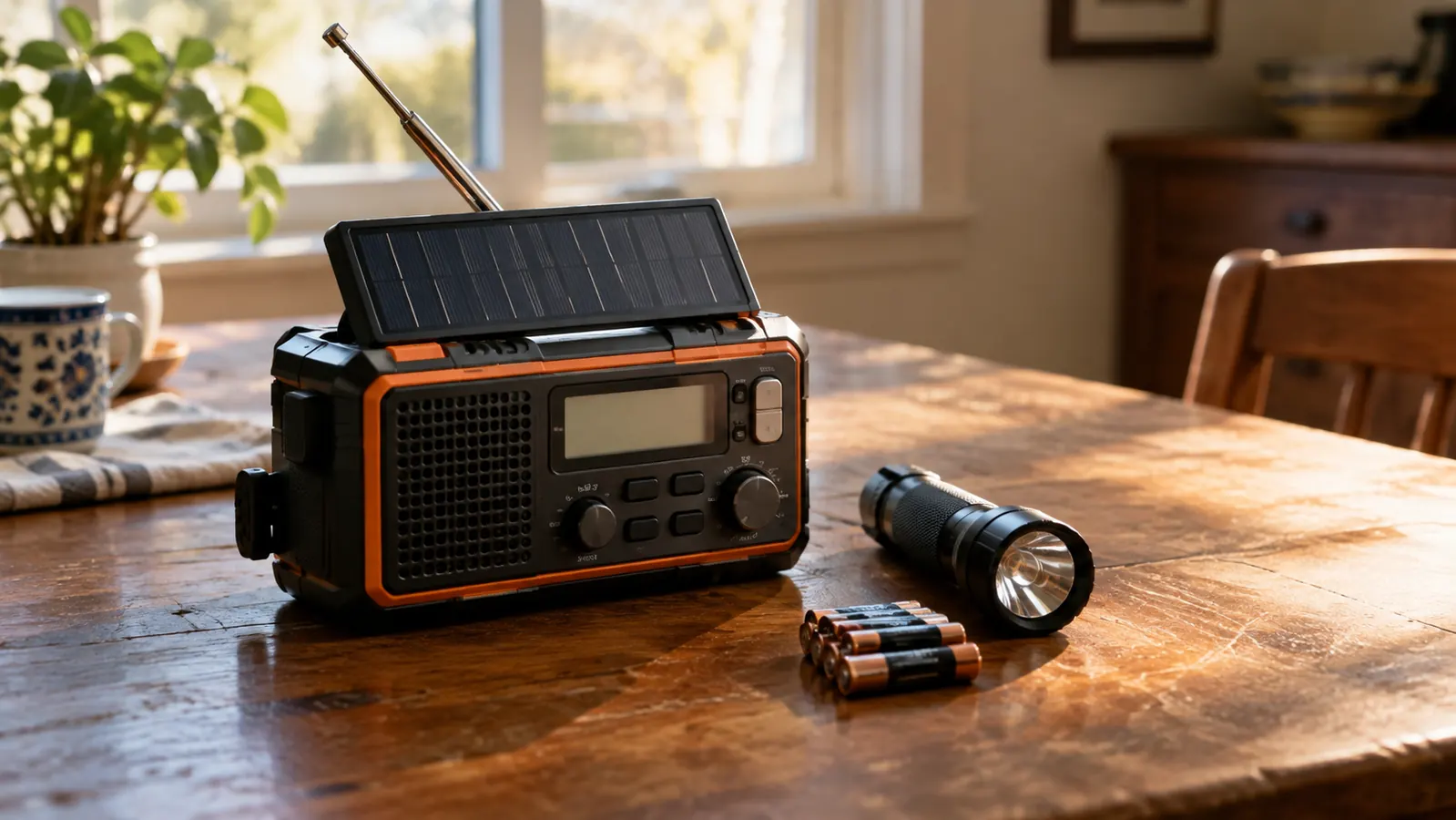
Your phone will not save you when the power is out. It will die on day two, and the nearest working outlet will be miles away. That is why a weather radio with a hand crank and a solar panel belongs in every 72-hour kit. The question is which one to buy. I put the FosPower A1 up against a Midland ER310, tested both the way a retired lineman tests gear, and the answer surprised me: the cheaper radio wins for most households, but not for all of them.
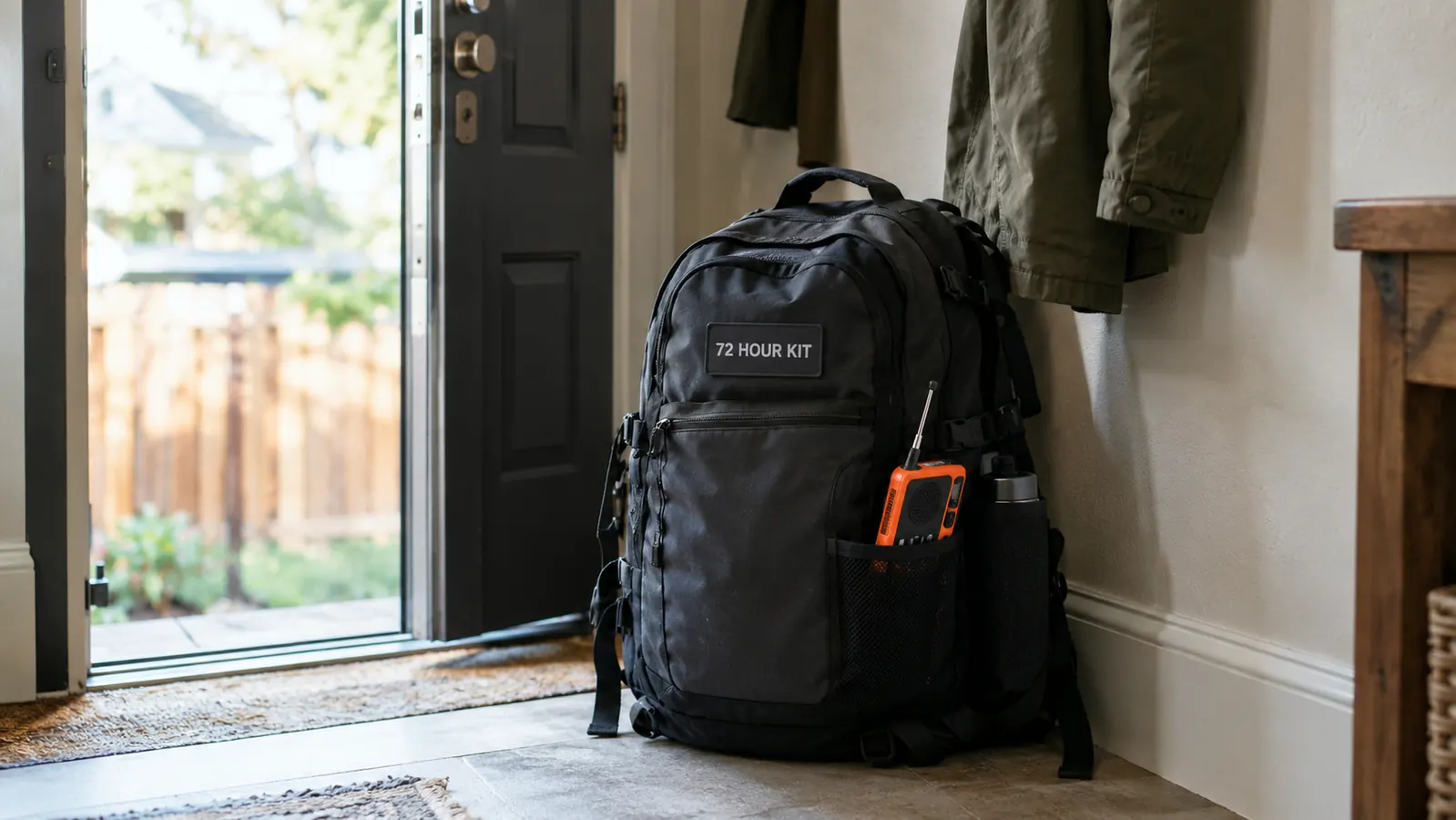
Thirty years restoring power after storms taught me that people do not need a radio that does forty things. They need one that does three things well. It has to tell you what the weather is doing. It has to charge a phone. And it has to keep working when everything else has given up. An ice storm once left my own house dark for nine days, so I keep a 72-hour kit by the back door and my 2012 Tacoma carries a get-home bag year round. I have run both of these radios on overnight trips in the Smoky Mountain foothills and through the same drills at home. Here is what I found.
The Short Answer
If you live where the NOAA signal comes in clean, buy the FosPower A1. It has a bigger battery for charging your phone, a brighter flashlight, a reading lamp, and it usually costs less. If you live in a valley, at the edge of coverage, or anywhere the weather broadcast fades, buy the Midland ER310. Its receiver pulls in weak signals the FosPower cannot hear, and it can run on AA batteries when the built-in cell is flat. Both are good radios. They are just good at different jobs.
Here is the short version in one line. If I could only keep one radio for my own house, I would keep the FosPower A1, because my NOAA signal is strong and I care more about charging a phone than squeezing out the last drop of reception. If I lived in a mountain cove with hills on every side, I would own the Midland and I would not think twice.
How I Tested Both
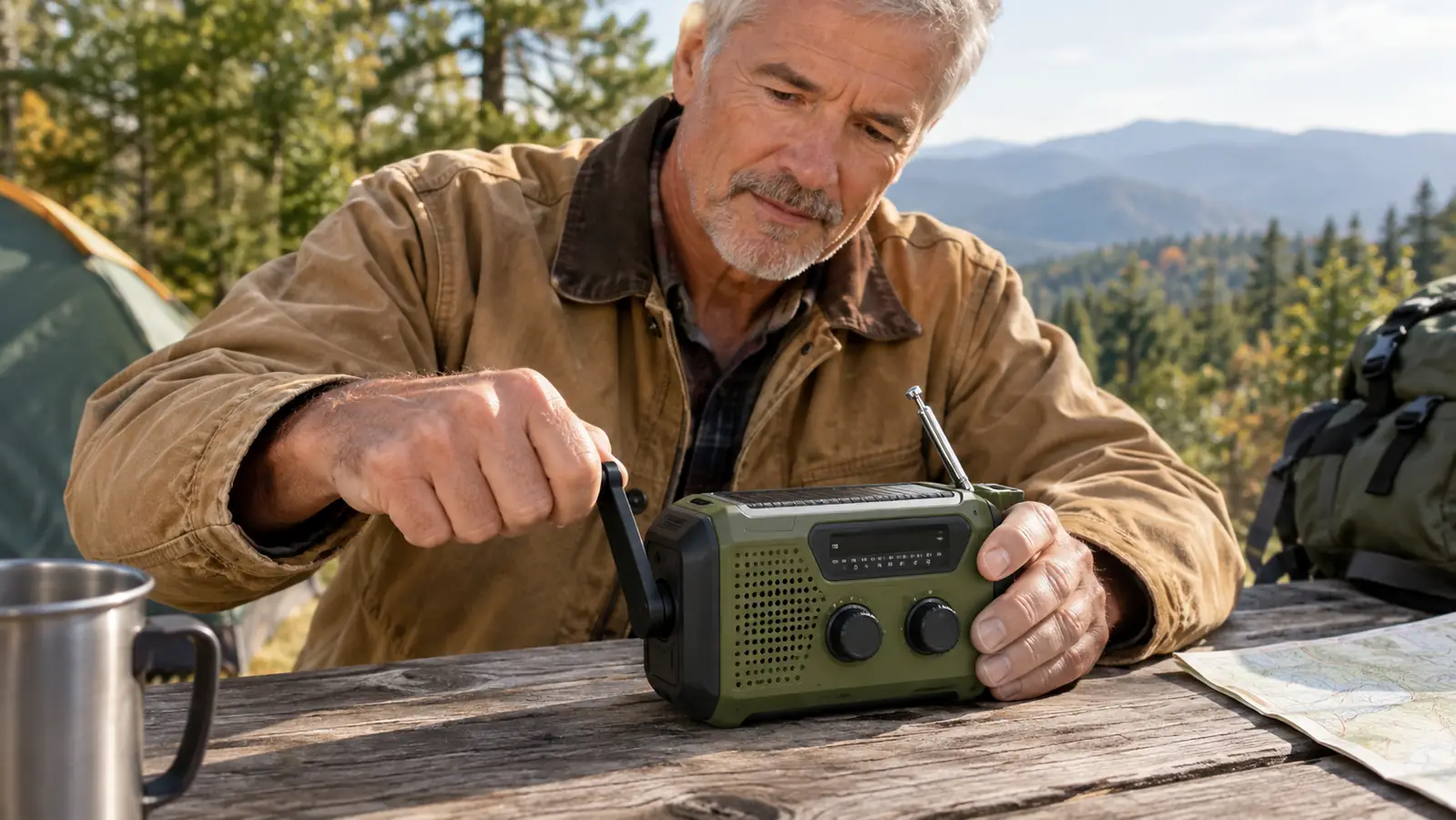
I did not test these in a lab. I tested them the way a storm would. I checked NOAA reception from my basement, from a ridge in the foothills, and from the cab of my truck. I cranked each one for two minutes and timed how long the light stayed bright. I charged a phone from each and watched the battery gauge. Then I packed both into a kit for three months and pulled them out cold to see which one still turned on.
I also ran the test that matters most. I asked my wife Carol to use each one in a dark room without reading the manual. The radio she could figure out at midnight is the one that belongs in a real emergency. She figured out both, by the way, but she reached for the FosPower first because the buttons are laid out the way you would expect and the flashlight is easy to find. That instinct matters when you are operating on no sleep.
I also took both radios on an overnight trip in the Smoky Mountain foothills, the kind of short test I do a few times a year. I left the Midland in the tent and carried the FosPower on a dusk walk to the creek. Both kept working after a night in the damp. Neither lost a charge to the cold. That does not sound like much, but I have seen expensive gear quit for less.
And I did not just test them once. I have kept the FosPower in my kitchen drawer for the better part of a year, and the Midland has spent the same stretch in my shop. I pulled each one out cold every few weeks, turned it on, checked the battery, and put it back. That is the real test for an emergency radio. A radio that works on day one is easy. A radio that still works on day three hundred is the one you want.
| FosPower A1 | Midland ER310 | |
|---|---|---|
| Price | Usually the cheaper of the two, especially on sale | Costs more, but the gap is not huge |
| Battery capacity | 7400mWh built-in, enough to top off a phone | Smaller built-in cell, best for the radio itself |
| NOAA reception | Clear on a strong local signal | Noticeably better on weak, distant signals |
| Backup power | Sealed battery, needs sun or crank when flat | Runs on three AA batteries as a backup |
| Flashlight | Bright LED plus a wide reading lamp | Useful flashlight, no reading lamp |
| Charging options | Solar, hand crank, and USB input | Solar, hand crank, and wall adapter |
| Weather alerts | NOAA alerts with flashing light and tone | NOAA alerts with flashing light and tone |
| SOS alarm | Loud audible alarm | Loud audible alarm |
| Warranty | 18-month warranty and responsive support | Standard manufacturer warranty |
Where the FosPower A1 Wins
The FosPower wins on the job most people actually need: keeping a phone alive. Its 7400mWh battery is bigger than the Midland's, and the difference shows up the moment you plug in a phone. Two minutes of cranking gave me enough power for a stretch of radio or a short text. After a full charge, I took my phone from a quarter battery to full and the radio still had power to spare. In a multi-day outage, that is the difference between calling for help and waiting for help to find you.
It also wins on light. The flashlight on the FosPower is genuinely bright, and the reading lamp underneath is the detail nobody mentions until they are sitting in the dark trying to read a prescription bottle. During my nine-day outage, the thing I wanted most after a working phone was a light that did not run out of batteries. The FosPower gives you both from the same crank.
And it wins on value. Because the FosPower usually costs less than the Midland, you can afford two: one in the kitchen drawer, one in the Tacoma. I have done exactly that. The one in the truck has been through a Tennessee summer in a parked cab and it still turns on. For a family building a realistic emergency kit on a normal budget, that combination of battery, light, and price is hard to beat.
The FosPower also has the basics covered: AM and FM radio, all seven NOAA channels, and a loud SOS alarm. I hope nobody ever has to use the alarm, but I tested it and it is loud enough to carry in the woods. The Midland has the same features, so this section is not where either radio pulls ahead. It just means you are not giving anything up by choosing the cheaper one.
Where the Midland ER310 Wins
The Midland wins where it counts for people in the boonies: reception. Midland has spent decades building radios, and it shows. On a strong local NOAA signal, both radios sound clear. But from my basement, and from a low spot in the foothills, the Midland held the broadcast while the FosPower faded into static. If you live at the edge of a transmitter's range, or in a holler with hills between you and the tower, the Midland is the radio that will actually warn you. That is not a small thing.
The Midland also wins on backup power. It runs on three AA batteries when the built-in cell is flat, and AA batteries are the one thing you can buy at any gas station after a storm. The FosPower is a sealed unit. When its battery is done, you need sun or crank. I keep spare AAs in my kit anyway, so the Midland's flexibility appeals to me. If your plan is to be without power for a week, that AA option is worth real money.
A radio that dies on day three is just another dead gadget. The one you want is the one that still talks on day nine.
The One Thing That Bothered Me
I want to be straight about the FosPower's weakness, because it is the same weakness in a lot of budget radios. The speaker is fine for a kitchen table, but it is not loud. In a quiet room you will hear the weather alert fine. In a windy house with the radio in another room, you might miss it. The Midland is louder and its alert tone is harder to ignore. If you are hard of hearing, or you plan to rely on the alert while you are asleep, that matters.
The other thing worth knowing is that the solar panel on the FosPower is a trickle charger, not a fast one. It will extend the battery on a sunny windowsill, but it will not recharge the radio from flat in an afternoon. The same is true of the Midland. Hand cranking is the dependable way to make power with both of them, and two minutes of cranking buys you a little light or a little radio, not a full phone charge. Set your expectations and you will not be disappointed.
One more honest note on the FosPower. The hand crank folds flush and the radio feels solid in the hand, but it is not built like a tank. Treat it like the household tool it is and it will be fine. I would not throw it down a mountainside, and I would not expect it to survive being run over. The Midland has a similar build. Neither is a ruggedized field radio, and neither pretends to be.
For most households, the FosPower A1 is the smarter buy
It charges a phone, lights a room, pulls in NOAA alerts, and usually costs less than the competition. If your local signal comes in clean, this is the radio I would grab first. Check today's price on Amazon.
Amazon Check Today's Price on Amazon →Who Should Buy Which
Buy the FosPower A1 if your NOAA signal is decent where you live, which covers most towns and suburbs. You get the bigger battery for phone charging, a better flashlight, a reading lamp, and a lower price. It is the radio I keep in the kitchen drawer, and it is the one I would hand to a neighbor who asked what to buy. For the average family building a kit on a normal budget, this is the answer.
Buy the Midland ER310 if you live in a valley, at the edge of coverage, or anywhere the signal is weak. The better receiver and the AA backup make it the more dependable radio in the worst conditions, and that is exactly when a weather radio earns its keep. It costs more and its battery is smaller, but dependability beats price when the alternative is not hearing the warning at all. If you want one radio that will sit in a cabin for years and still work, the Midland is the safer bet.
One more thing I tell people: buy the radio before you need it. When a storm is on the map, every weather radio in every store in Knoxville sells out in a day. I have seen it happen more times than I can count. The time to test the crank and learn the buttons is a sunny Saturday, not the night the lights go out.
Either radio beats a phone that dies on day two
For most of us, the FosPower A1 is the right balance of price, battery, and light. Keep it in the drawer with the spare batteries and check today's price on Amazon.
Amazon Check Today's Price on Amazon →