
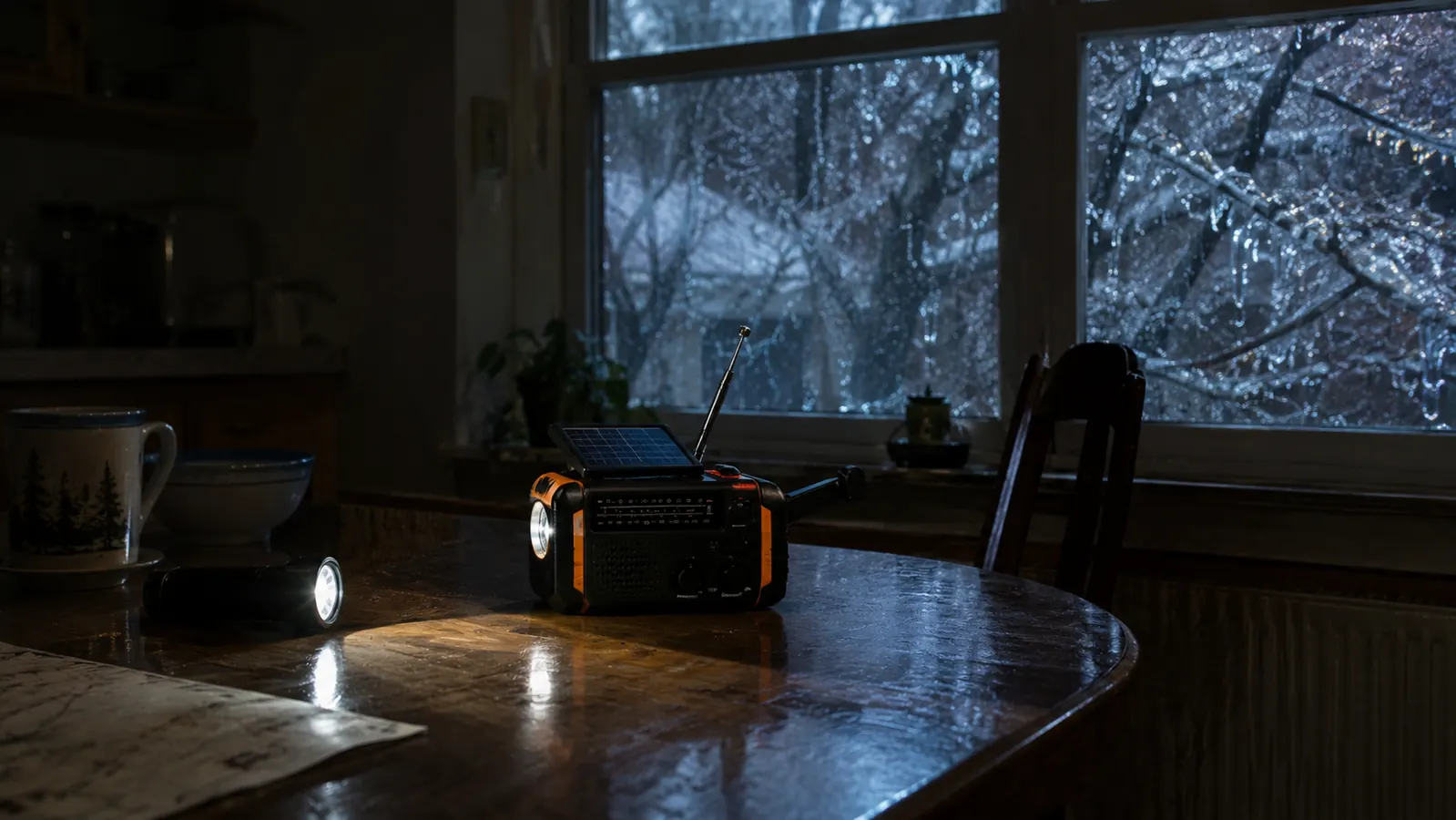
The first sound I remember from that night was sleet ticking against the bedroom window. Then the lights flickered once, held for a second, and went out. I did not need to look outside. Thirty years as a lineman in East Tennessee taught me what freezing rain does to the grid, and I knew we were in for a long one.
Carol found the candles and I walked to the back door where our 72-hour kit stays packed. That kit has lived in the mudroom so long it is part of the house now, but I check it every spring and fall. The FosPower NOAA weather radio was on top, right where I put it after the last test. I carried it to the kitchen table, gave the crank a few turns, and within a minute we had the county emergency broadcast in the room with us.
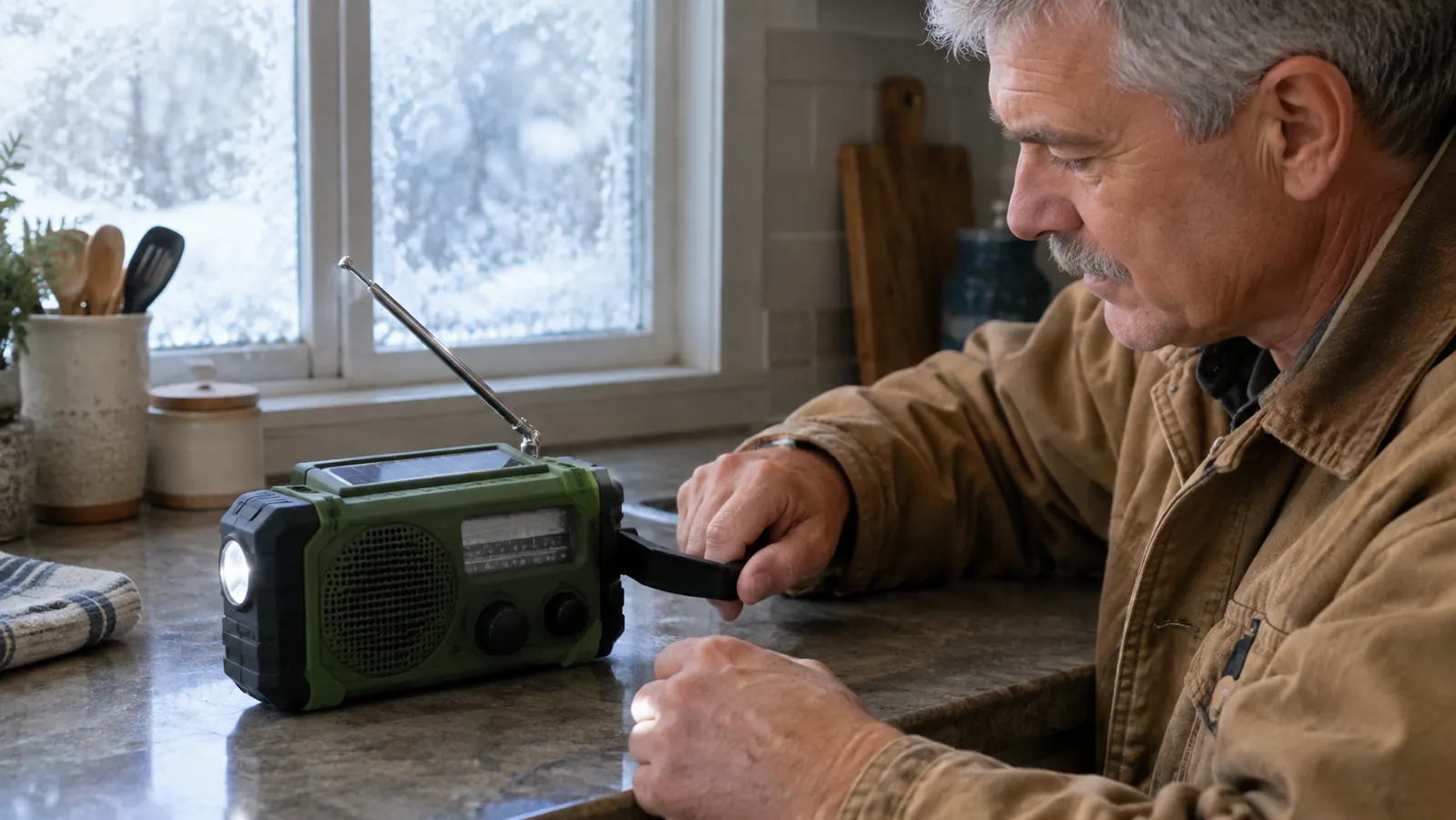
That radio became the center of our kitchen for the next nine days. The ice storm that hit the hills outside Knoxville that February took down more lines than anything I worked in my last decade on the truck. Our house went dark on a Tuesday night and did not come back until the following Thursday. Nine days. For most of that time, the NOAA broadcast was the only steady source of information we had.
The cell towers held on for about a day, then the backups ran out and calls stopped going through. The internet went with them. We had a battery-powered landline handset for a while, but the cordless base needs power, so that died too. What we had left was that little radio, the AM and FM bands, and the NOAA channels that never stopped talking. When the county opened a warming shelter at the high school, we heard about it on the radio before the neighbors down the road heard it from the sheriff's car.
I will be honest with you. I bought the FosPower radio the way a lot of people do, because it was well reviewed and I figured a former lineman ought to own a weather radio. I tested it the day it arrived and then it sat in the kit for two years. That night it earned its place. When the crank got stiff, I found the solar panel caught enough weak winter light on the kitchen windowsill to keep the battery going, and when the sun gave out, I turned the crank again. It kept our phones charged for short calls to family and kept the flashlight beam steady while I checked the breaker panel.
The morning ritual became the seven o'clock NOAA update. Carol would pour the coffee and I would spin the crank and we would sit and listen to the forecast, the road closures, the school announcements. It sounds like a small thing. But when you have been through a nine-day outage, you learn that information is what keeps people calm. The radio gave us a shape to the day. It told us the worst was over, and later it told us the crews were close.
We heard about the warming shelter on the radio before the neighbors down the road heard it from the sheriff's car.
That kind of night is why I keep a FosPower NOAA radio in every kit I own.
It runs on a hand crank, a solar panel, or its 7400mWh battery. It pulls in NOAA, AM, and FM, and it can charge a phone in a pinch. If your 72-hour kit does not have one yet, this is the radio to start with.
Amazon Check Today's Price on Amazon →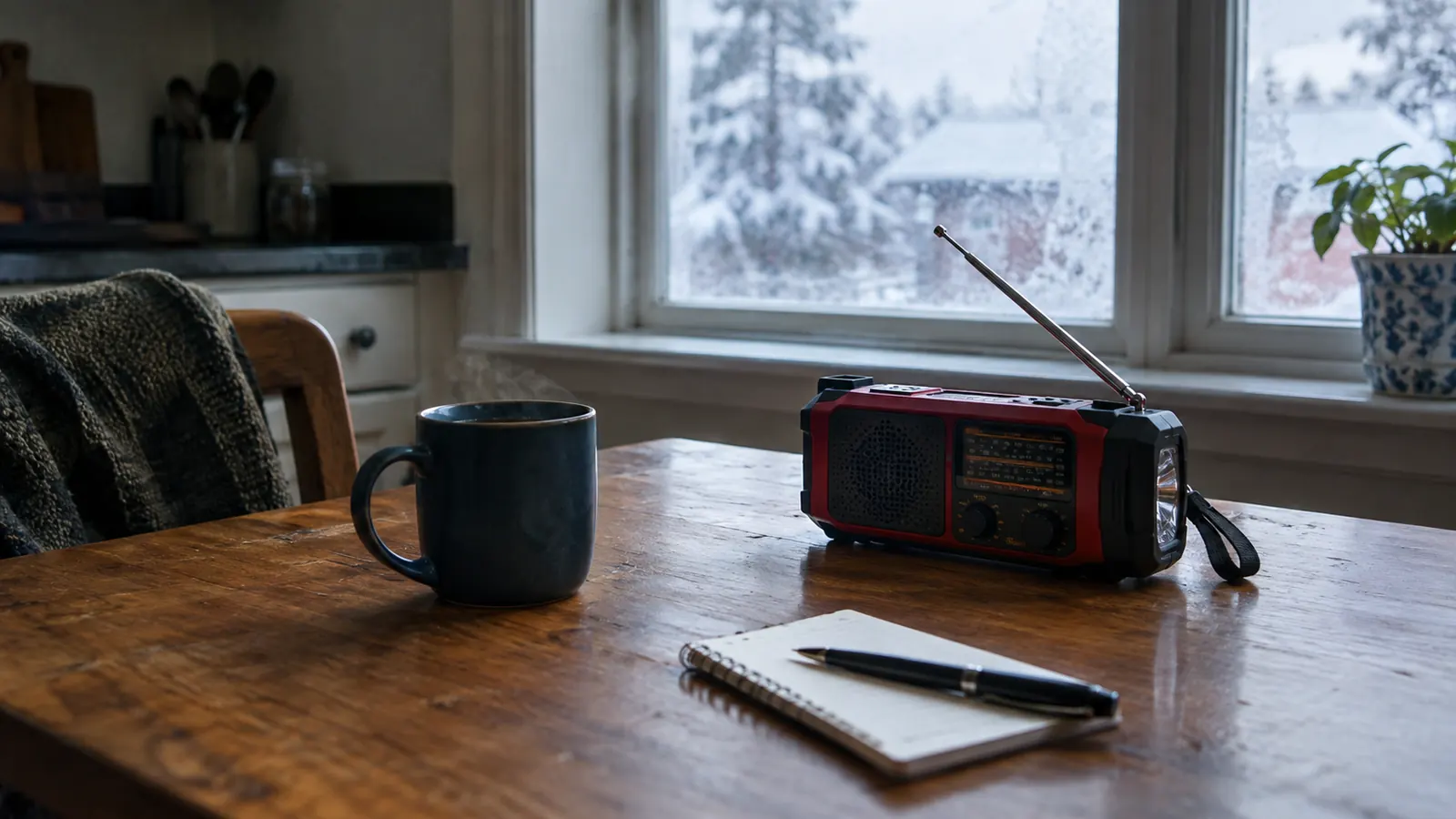
The second week of that outage taught me something about neighbors. Word travels fast in the dark. By the third day, people on our road knew we were the house with the radio. A retired lineman with a weather radio is apparently a public utility. Folks stopped by to ask about the forecast, whether the crews were close, when the school would reopen. I would set the radio on the porch and let them listen to the county update for themselves.
I do not want to oversell it. A hand crank radio does not restore power. It does not melt ice off the lines. It cannot do anything about a tree that came down across the road. What it does is keep you from guessing. In a long outage, guessing is what makes people do foolish things, drive on closed roads, run a generator in the garage, take risks they would never take if they had a clear picture of what was happening. The radio gave us the picture.
That is the thing I keep coming back to, now that the ice is gone and the lines are back up. I have worked on crews that spent eighteen hours straight in the cold so that people could flip a switch and have light. I know what that work costs. And I know that the people who came through that outage best were the ones who had a way to know what was going on. The radio is a small part of a bigger kit, but it may be the part that keeps you calm.
Since that February, I have taken the FosPower radio on my overnight trips into the Smoky Mountain foothills. It rides in the Tacoma with the get-home bag year round. I have tested the crank in the rain, the solar panel on a cloudy afternoon, and the battery over a long weekend. It has never let me down. A weather radio is not the most exciting piece of gear you will ever own. It is simply the one you will be glad you owned when the lights go out and stay out.
What I'd Tell You If We Were Sitting at My Kitchen Table
If you were sitting at my kitchen table, I would tell you this plain. You do not need a basement full of supplies to be ready for a storm. You need the basics done well: water, food, a way to stay warm, a first aid kit, and a way to know what is happening. A weather radio belongs on that list. The FosPower model is the one I reach for because it does the job without fuss, it charges by crank, sun, or the wall when the power is on, and it has more than 37,000 reviews from people who used it in real storms, not just people who store it in a closet. Get one, learn how to use it before you need it, and put it where you can find it in the dark. That is the whole lesson from nine days without power.
Before the next storm, put a radio in your kit.
The FosPower NOAA Emergency Weather Radio runs on a hand crank, a solar panel, or its 7400mWh battery, and it picks up NOAA, AM, and FM. It is the same radio that sat on my kitchen table for nine days, and I would not face another winter without it.
Amazon Check Today's Price on Amazon →