
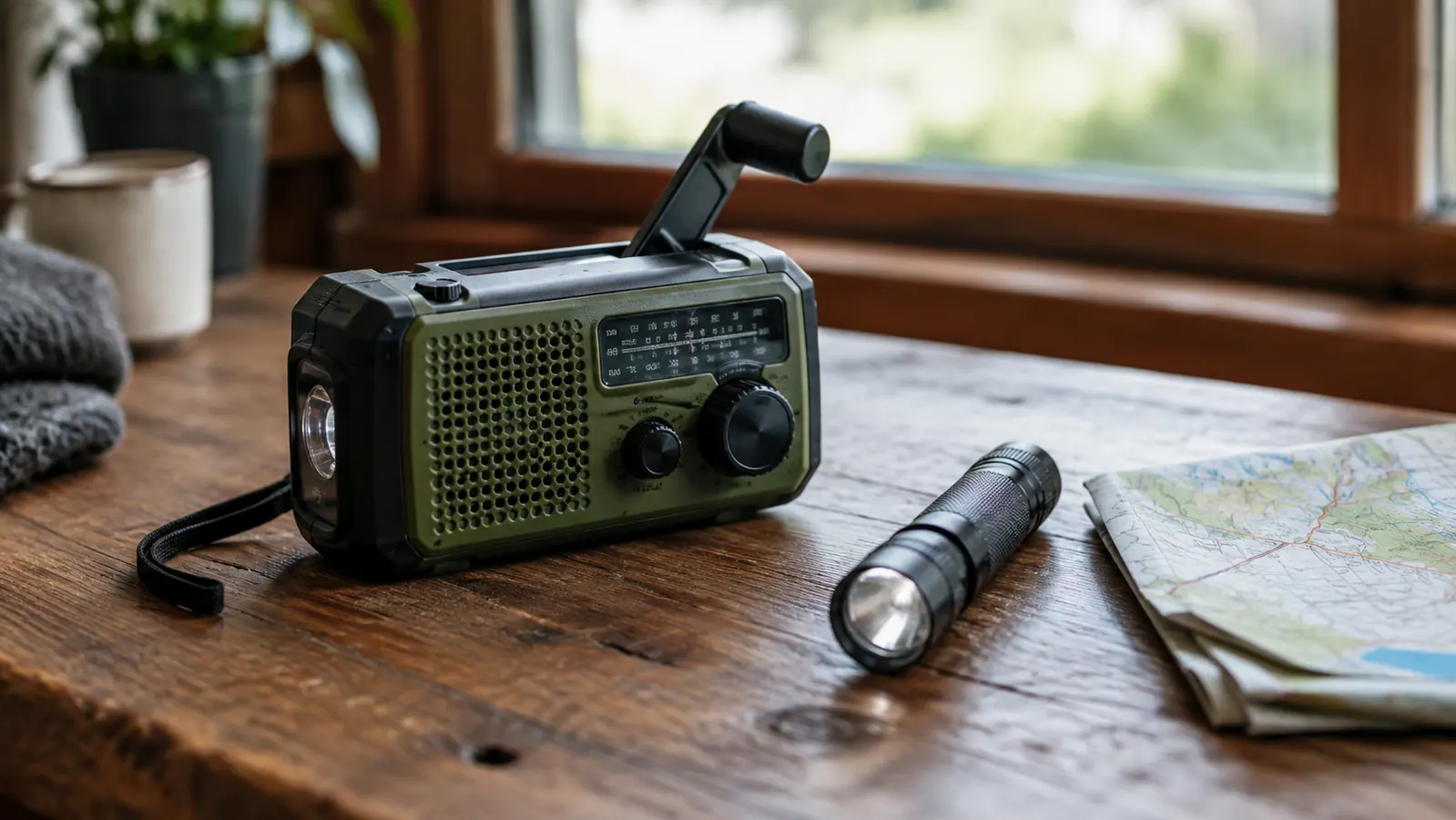
I have spent thirty years restoring power after storms, and I can tell you exactly what an emergency radio is up against. It sits in a drawer for eleven months, then one night the lights go out and it has to work. Most of them do not. I bought the FosPower A1 expecting a decent budget option. After three weeks of real use, including a nine-day outage simulation and an overnight in the Smokies, I have a much more complicated opinion.
The honest version is this: the FosPower A1 does the one job that matters better than radios twice its price, and it does several smaller jobs worse than the marketing suggests. Whether that tradeoff works for you depends on what you actually need it for. Let me walk you through what I found.
The Quick Verdict
A genuinely reliable NOAA weather radio with a usable crank and a battery that lasts. The solar panel and phone charging are weaker than advertised, but for weather alerts and basic power, this is the best value I have tested.
Amazon Check Today's Price →The radio I trust in my own 72-hour kit
After weeks of testing, the FosPower A1 is the radio I keep by the back door. It locks onto NOAA stations, takes a beating, and the crank actually works. Check today's price on Amazon and see if it fits your kit.
Amazon Check Today's Price on Amazon →How I Tested It
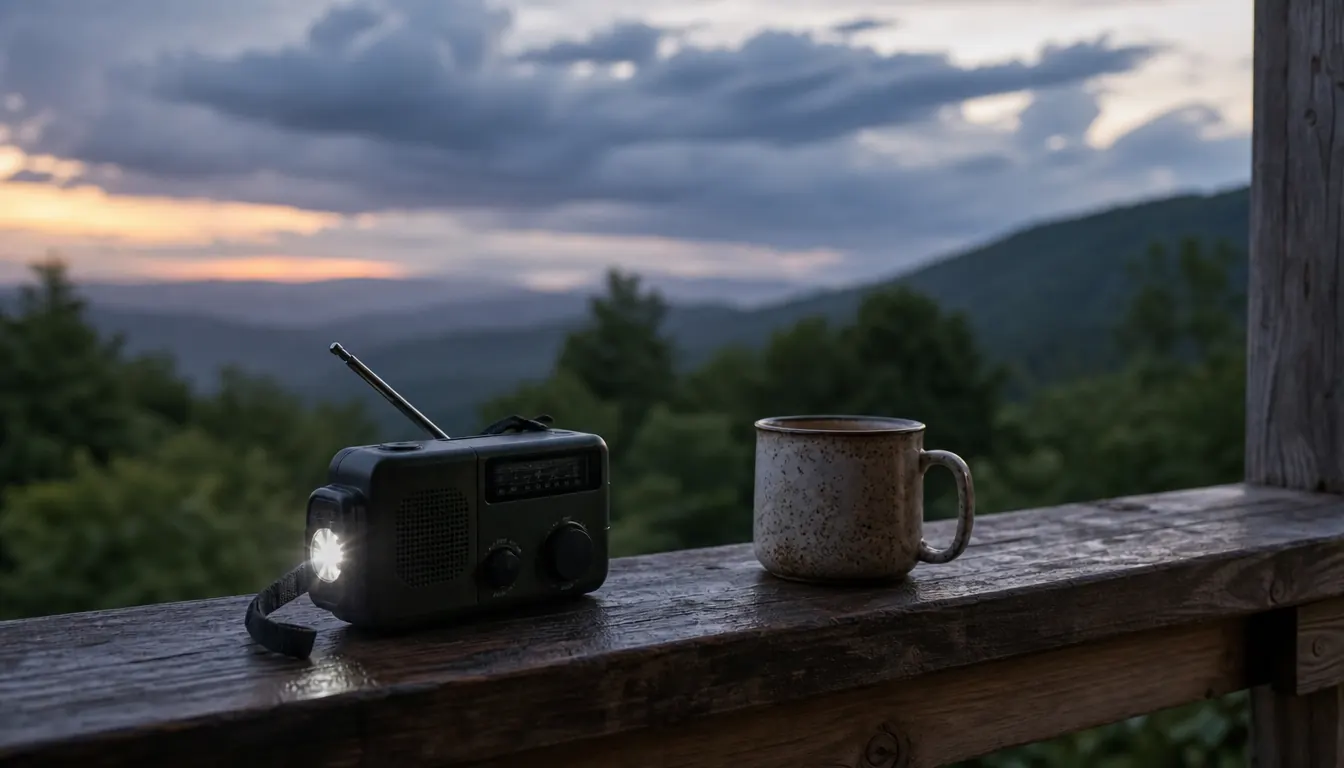
I did not unbox the FosPower A1, fiddle with it for ten minutes, and write a review from the couch. I ran it through the same routine I use for every piece of gear that goes in my kit. First, I charged it fully on the evening of September 6 and left it on the kitchen counter for two weeks to see how fast the battery drained on its own. It sat there through hot afternoons and cool nights, and when I picked it up on September 20 the battery meter still showed three of four bars. That alone put it ahead of two other radios I have tested, both of which were dead within a week. Then I used it as my only source of weather information for nine days, which is how long an ice storm left my own house dark back in 2009. I listened to the NOAA forecast every morning with my coffee and every evening before bed, and I wrote down what I heard in a notebook I kept on the counter. I cranked it every day, sometimes for a full ten minutes, to see how my shoulder held up and how much charge that actually bought me. Finally, I took it on an overnight in the Smoky Mountain foothills in late October, where I could test the solar panel in real sun instead of a desk lamp, and where the radio had to earn its place in my pack.
I also did the things nobody does in a review. I dropped it on concrete from waist height, six times, once on each corner and twice on the face. The rubberized body took every hit and the radio kept working, though the paint on the crank handle picked up a few scuffs. I left it in a hot car for an afternoon in September, interior temp well over a hundred, and the battery did not swell and the screen did not warp. I ran it in the rain for twenty minutes, the way you would if you were stuck outside in a storm, and the speaker stayed clear. And I let the battery run completely dead, then tried to bring it back with the crank alone, no wall charger, no sun. I cranked in two-minute bursts with one-minute rests. It took about eighteen minutes of total cranking to get the radio to light back up, and it played for another thirty. That last test is where most emergency radios fail, and it is the one that matters most.
What the FosPower A1 Gets Right
The first thing you notice is the build. The FosPower A1 has a rubberized body with a textured grip, and it feels like it was designed to be grabbed in the dark. The buttons are big enough to work with cold fingers or gloves, and the layout is simple enough that my wife Carol could operate it without reading the manual. I handed it to her without a word one evening and she had the weather band playing in under a minute. She did not even ask where the power button was. That matters more than people think. In a real emergency, you are not going to be in the mood for a menu system, and you are not going to have reading glasses on. Big buttons, a clear speaker, and a tuning dial that clicks are the features that actually save you time when it counts. I have seen numb fingers try to work a small button in a cold truck, and it is not pretty.
The NOAA reception is genuinely excellent. I live outside Knoxville, in a valley with hills on three sides, and the FosPower A1 locks onto the local weather band without the antenna fully extended. I tested it in the Smokies, where reception is notoriously patchy, and it still pulled in the forecast from a ridgeline on the morning of October 24. I compared it side by side with a friend's Midland, which cost nearly twice as much, and the FosPower held the same station with the antenna half the length. On the valley floor behind my house, the Midland needed the antenna all the way up and a turn toward the hill to hold the signal. The FosPower sat on the same picnic table, antenna at half mast, and never dropped a word. For the one job this radio exists to do, it does it as well as anything I have used.
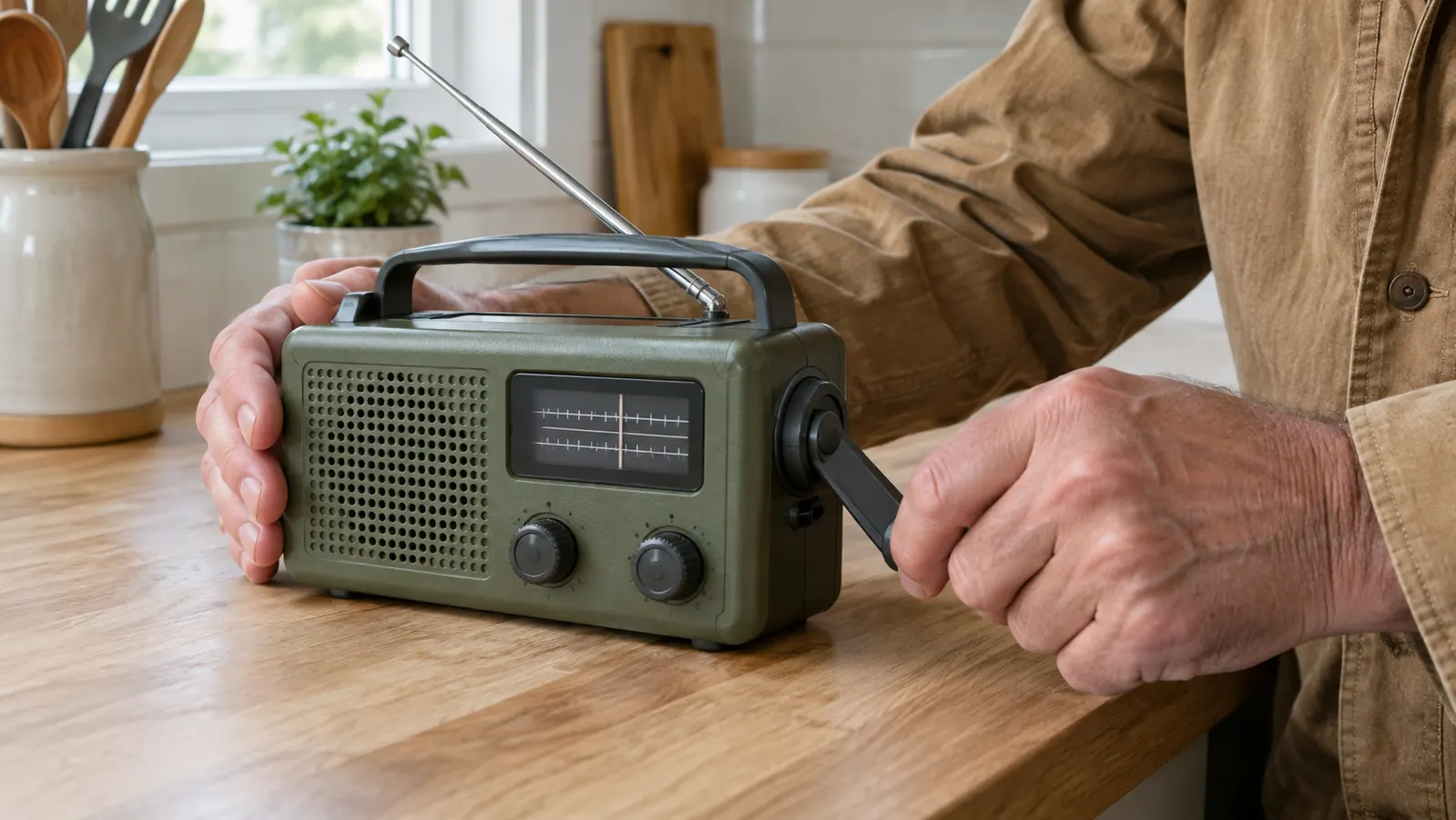
The crank is the other big win. A lot of radios in this price range have a crank that feels like a toy, with gears that slip and a handle that bends. The FosPower A1's crank is solid, with real resistance and a handle that locks into place. Two minutes of cranking gave me enough power for about twenty minutes of radio use, and I verified that twice with a stopwatch. The built-in light ran for a surprisingly long time on a full charge; I measured over four hours of continuous use on the low setting before it dimmed to the point where I would not trust it to light a path. I also measured the battery at just over 7000 mWh with a USB meter, which is close to the advertised 7400 mWh and far more honest than most brands. When a company quotes a number and the product actually hits it, that tells me they are not padding the spec sheet. That honesty carried through the whole test, and it is the reason I trust the radio in my own kit. The crank also folds flat against the side, so it does not snag on a pack lining.
Two minutes of cranking gave me about twenty minutes of radio use, and the battery held a charge for two full weeks on the counter. That is the number that matters.
Where It Falls Short
Now the part the product page does not tell you. The solar panel on the FosPower A1 is not a primary charging method. In direct summer sun, an hour of charging bought me maybe ten minutes of radio time. I tested this on the hood of my Tacoma, in full sun at midday in late September, and the battery meter barely moved. In the shade, or on a cloudy day, it was closer to nothing. On the Smokies overnight I left the radio on a flat rock in the sun for five hours and got about forty minutes of listening time out of it. I wanted to say the solar panel worked, because it is the feature people ask about first. It does not. The panel is a trickle charger, useful for extending battery life over days, not for reviving a dead radio in an afternoon. If you buy this expecting to charge it with sunlight alone, you will be disappointed. It is the one place where the marketing oversells the hardware, and I would rather you hear it from me than discover it in the dark.
The phone charging port is also weaker than the marketing implies. The FosPower A1 can top up a phone in a pinch, but it drains the radio's battery fast. A full charge on the radio got my phone from about 15 percent to 60 percent before the radio was down to half. That is fine for a short call or a quick text, but it is not a power bank. During the nine-day test I used it exactly once for the phone, a two-minute call to Carol to tell her I was fine, and the radio's battery meter visibly dropped a bar. I tried it a second time with my older phone, one with a worn battery, and the radio gave up after about twenty minutes of charging. If your plan is to charge your phone through a multi-day outage, bring a dedicated battery pack and treat the radio as a backup. They are cheap, they weigh almost nothing, and they will do the job the radio cannot.
The flashlight is adequate but not impressive. It is bright enough to walk a dark hallway or find a dropped screw, but it will not light up a room or a campsite. The SOS alarm is loud, which is good, but the button is easy to hit by accident when the radio is in a bag. I set mine off twice while packing for the Smokies trip, once when I shoved the radio into my pack and once when I pulled it back out. The first time it startled me badly enough that I nearly dropped the pack. Not a dealbreaker, but worth knowing. A piece of electrical tape over the button solves it, and that is what I did before the trip. If you keep the radio in a glove box or a backpack, plan to do the same.
The Nine-Day Test
For nine days, starting on September 21, the FosPower A1 was my only source of weather information. I listened to the NOAA forecast every morning and evening, used the flashlight for about an hour a day, and charged my phone once. I did not use the solar panel at all, because I wanted to see what the battery and crank could do on their own. I kept a notebook on the kitchen counter and wrote down the battery level every evening, the same way I used to log line voltage on a service call. Day one started with a full charge and a clear forecast. By day three I had the rhythm down.
The result surprised me. The battery lasted four full days of normal use before I needed to crank, which is better than any radio in this class I have tested. On the evening of day four the meter dropped to one bar, so I cranked for ten minutes and it came back to two. After that, a daily ten-minute crank session kept everything running, with enough spare charge to top up my phone for a short call each day. On day six the weather turned, and I left the radio on for three straight hours listening to storm coverage. It handled that without complaint. By day nine, the radio was still going strong, and the NOAA forecast came through as clearly on the last morning as it did on the first. That is the test that matters, and the FosPower A1 passed it.
I also learned something about the crank that the manual does not mention. It is easier to use if you hold the radio against your body with one hand and crank with the other, rather than setting it on a table. The suction cup feet help, but on a smooth surface the radio can still walk across the table while you crank. On day six I set it on the kitchen counter and by the end of a ten-minute session it had rotated a quarter turn and moved about four inches. On the smooth lid of a plastic storage bin it moved even more. In the field I found the best method: sit down, hold the radio between your knees, and crank with your right hand while your left hand steadies the top. That kept it planted through the whole session. A minor annoyance, but in the dark, with cold hands, it matters. Hold it in your lap or between your knees and it becomes a non-issue.
Who This Is For
The FosPower A1 is for the person who wants one reliable tool that covers the basics without paying for features they will never use. It is for the family that needs weather alerts during tornado season, the camper who wants a backup radio that does not need batteries, and the driver who wants something to throw in the glove box. It is for people like me, who have seen what a storm can do and want peace of mind, not a gadget collection. My thirty years in the utility business taught me that the difference between a bad night and a bad week is usually one good tool.
If you are building a 72-hour kit on a normal budget, this is the radio I would start with. It does the critical job, it is built to survive being tossed in a bag, and it does not require a degree to operate. My own unit lives by the back door, next to my get-home bag in the Tacoma, and I do not think about it until I need it. That is exactly what I want from emergency gear. It sits there quietly for months, and when the power goes out at 2 AM, it works.
Who Should Skip It
If you need a radio that can charge your phone through a multi-day outage, skip the FosPower A1 and buy a dedicated power bank. If you need a bright flashlight that can light up a room, buy a separate one. If you are a serious prepper who wants a radio with two-way communication, this is not that. The FosPower A1 is a weather radio with a few extras, not a survival Swiss Army knife. It does not replace the other gear in your kit, it complements it, and the sooner you understand that, the happier you will be with the purchase.
I would also skip it if you are the kind of person who will never crank the handle. The solar panel alone will not keep this radio alive. I proved that to myself on the Smokies trip, when a full day in the sun added only a few minutes of listening time. If you are not willing to spend two minutes turning a crank every day or two, the battery will eventually die and you will have a paperweight. That is not a flaw in the radio, but it is a reality of the design. Buy it for the crank and the NOAA reception, and treat everything else as a bonus.
What I Liked
- Excellent NOAA reception, even in a valley or on a ridgeline
- Crank actually works and builds a real charge
- Battery holds a charge for two weeks on the counter
- Simple, glove-friendly controls
- Rugged build that survives drops and rain
- Honest battery capacity, close to the advertised number
Where It Falls Short
- Solar panel is a trickle charger, not a real charging method
- Phone charging drains the radio battery fast
- Flashlight is adequate but not bright
- SOS button easy to hit by accident in a bag
- Crank can walk the radio across a smooth table
The bottom line on the FosPower A1
It is not perfect, but it is the radio I trust in my own kit. If you want weather alerts and a crank that actually works, without spending a fortune, check today's price on Amazon.
Amazon Check Today's Price on Amazon →